
Refine by
Dechlorination Articles & Analysis
136 articles found
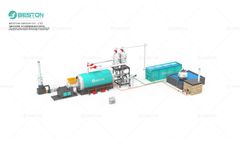
This not only offsets the demand for virgin crude oil but also insulates energy markets from geopolitical supply disruptions.Furthermore, some advanced facilities integrate plastic sorting, shredding, and dechlorination units to improve input quality and process control. These enhancements further reduce environmental risk while increasing output purity and energy ...
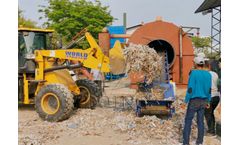
Common plastic types suitable for this process include polyethylene (PE), polypropylene (PP), and Polystyrene (PS) , ABS plastic, aluminum plastic, medical waste, etc. after appropriate pretreatment such as dechlorination. 2. Pretreatment (if necessary): For certain types of pyrolysis vessel, we need to pretreat plastics into small particles, such as semi-continuous and fully ...

Chemical-based technologies such as free chlorine are known to form treatment by-products which are harmful to the environment1,2 and as a result, free chlorine levels are often capped in discharge permits, requiring operators to consistently monitor chlorine use and possibly apply additional dechlorinating chemicals to stay compliant. UV avoids these ...
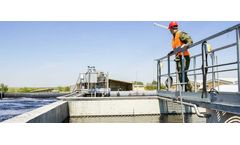
Effluent is a term used to describe wastewater, which is a byproduct of various industrial processes and domestic activities. The treatment of effluent is a crucial process in preserving the environment and ensuring the safety of human health. In this article, we will delve into the basics of effluent treatment and understand its importance. ...

The anaerobic conditions of the site induced reductive dechlorination of TCE by indigenous organisms. However, the conditions and indigenous organisms were incapable of completing the contaminant removal, leaving behind the residual contamination. ...

Known since antiquity as a powerful purification agent, activated carbon is used today in a vast array of applications at the home, municipal, and industrial levels. Activated carbon can be made from any organic material with a high natural concentration of carbon, so the specific chemical structure and properties will vary according to which raw material is selected. Here is what you should ...
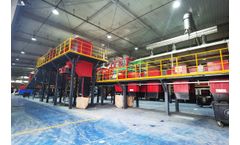
It brings vitality to waste energy and becomes a new growth point in the field of waste utilization.RDF is a solid waste-derived fuel that is reprocessed from raw waste through complex processes such as primary shredding, sorting, magnetic separation, secondary shredding, drying, and granulation. Dechlorination and other pre-treatments are carried out at the same time of the ...

The compound fertilizer produced by ammoniation granulation NPK compound fertilizer production line adopts ammoniation and secondary dechlorination granulation production process. The principle is that potassium chloride and sulfuric acid are added into the reaction tank to heat and react under certain conditions. ...

Abstract Qwik-Zyme P is a biocatalyst product designed to assist in the hydrolysis of complex proteins into free amino acids. In this study, we assessed the impacts of Qwik-Zyme P on poultry protein hydrolysis using oxygen uptake tests on samples collected from an anaerobic lagoon effluent, which enters into an aeration basin. An increase in oxygen uptake rate indicates improved aerobic ...
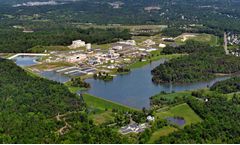
Overview UOSA Instrument Specialist Amanda Fromer uses a mini Sulfite analyzer for maintenance-free monitoring of sulfite residuals after dechlorination at a 54 MGD advanced wastewater treatment plant. Challenge The UOSA Water Reclamation Plant uses sodium hypochlorite for disinfection but is required to dechlorinate prior to discharging or reusing the ...

Baseline [TCE] in bedrock ranged from 55-550 milligrams per liter (mg/L), up to ≈30% of TCE's aqueous solubility limit; dechlorination byproduct cis-1,2-dichloroethene (cis-1,2-DCE) at ≤15 mg/L and Vinyl chloride (VC) not detected above method detection limits (0.25-10 mg/L). ...
Efforts to identify a cost-effective and sustainable alternative to existing remediation strategies included the following in-situ Pilot designed to evaluate feasibility of enhanced reductive dechlorination. The additive chosen was the carbon-carbohydrate-nutrient based formulation ERDENHANCED WHICH affects treatment zone geochemistry and native microbial populations to realize ...
The anaerobic conditions of the site induced reductive dechlorination of TCE by indigenous organisms. However, the conditions and indigenous organisms were incapable of completing the contaminant removal, leaving behind the residual contamination. ...

The vinyl chloride increased as the aggressive cometabolic treatment stimulated some incomplete reductive dechlorination. Down gradient from the source, the concentrations decreased with slight to no increase in daughter products. ...
The vinyl chloride increased as the aggressive cometabolic treatment stimulated incomplete reductive dechlorination by other naturally occuring organisms. Down gradient from the source, the concentrations decreased with slight to no increase in daughter products. ...

Chlorine is widely used in water treatment as a disinfection and oxidizing agent. However, the reaction of free chlorine in water leads to the generation of undesirable by-products and have harmful effects on industrial processes. In high purity water systems, the presence of free chlorine in water may result in the deterioration of treatment units such as ion exchange beds and RO membranes. ...
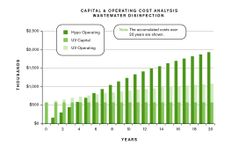
Chemical systems also need storage and dosing equipment, and in some cases, namely for chlorination systems, dechlorination equipment. Therefore, simple designs also mean easier operation for UV sterilizer systems. ...

PROBLEM Public water treatment plant required highly effective control to dechlorinate and pH trim in difficult access situation. Southern Water’s Weirwood Treatment Works supplies direct to the consumer and therefore the highest levels of efficiency and process control are required. ...
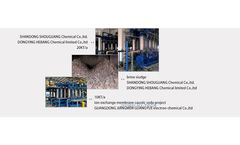
The membrane filtration unit usually treats dechlorinated depleted brine from the chlor-alkali electrolyzer. It is at this location that the Na2SO4 concentration is at its highest and the NaCl concentration is at its lowest. Normally only a portion of the dechlorinated brine flow needs to be passed through the Sulphate removal system, the remainder bypasses the ...
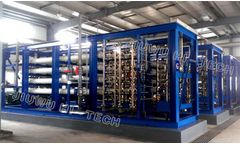
The ceramic membrane filtration unit usually treats dechlorinated depleted brine from the chlor-alkali electrolyzer. It is at this location that athe Na2SO4 concentration is at its highest and the NaCL concentration is at its lowest. Normally only a portion of the dechlorinated brine flow needs to be passed through Sulfate removal system, the remainder bypasses ...