
Dechlorination System Articles & Analysis
11 articles found
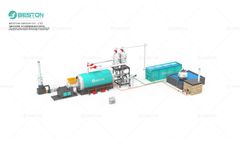
By thermally degrading plastic waste into synthetic crude oil, this system enables resource recovery and waste reduction within a closed-loop paradigm.Plastic Waste Diversion The primary environmental benefit of a plastic to oil plant lies in its capacity to divert plastic from traditional disposal routes. ...
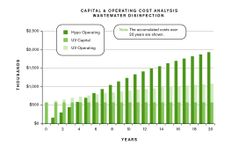
Chlorine disinfection systems are some of the most commonly used and well known disinfection systems, but they have a few downsides with regards to process water treatment. ...

Those concerned about the harmful effects of unfiltered water have a variety of water treatment systems to choose from. Whole-house systems help keep skin healthy and younger-looking not only by treating the water that users drink but also the water they use to bathe and clean. Kinetico’s customized solutions help users maximize water’s ...

The 4-chlorophenol degradation, dechlorination, and total organic carbon removal were monitored to characterize the difference between the two systems. The results indicated that the three-electrode system exhibited higher degradation percentages for 4-chlorophenol compared with that of the two-electrode system. The ...

Since the initial startup, the company has been receiving quality water and experienced minimal troubleshooting with the equipment. A brackish reverse osmosis system is a system that is designed to remove salts, minerals and other impurities from brackish water. ...

Background Chloroethene source area (mainly TCE) is present in low permeability sediments. The objective is to clean up the source and prevent migration of contamination to underlying aquifer, which is a local drinking water source. The selected approach enhances the formation permeability while simultaneously providing an electron donor, chitin, for anaerobic reductive dechlorination (ARD). ...

In laboratory microcosm tests, single additions of corn oil, beef tallow, melted corn oil margarine, coconut oil, corn oil, soybean oil, or partially hydrogenated soybean oil supported complete reductive dechlorination of perchloroethene (PCE) or trichloroethene (TCE) to ethene when a dechlorinating population was present. ...
Results showed that the pre-incubation time of 3 d was needed to activate the reactive sites of Si(0) before the dechlorination of PCE. Addition of low concentration of Cu(II) at 0.06 wt% significantly enhanced the dechlorination of PCE, while high concentration of Cu(II) would occupy the reactive sites of Si(0), and subsequently decreased the ...

The Inn reopened in October 2007. The onsite system functions perfectly. Site conditions Soils are silty sand with rocks and boulders. ...

("CWT") and OCS teams designed the system with an underground equalization tank, 1/8 inch rotating drum screcas, flocculation - flotation ("GEM System") and chlorination - dechlorination. Hybrid centrifugal - dissolved air flocculation- flotation (the GEM System), is the key component of the wastewater treatment plant. The GEM ...

The patent was originally purchased by ARCO. Eventually the patent for the system shifted back to Aqueonics. A typical system can treat 100,000 gallons per day. ...