
Refine by
Desertification Articles & Analysis
66 articles found

Air pollution and climate change contribute to desertification, the process where fertile lands become deserts. As lands dry up, the species that once thrived there either migrate or perish. ...
The consequences of human activities on soil resources resulted in the loss of biodiversity, accelerated erosion, desertification, compaction, nutrient depletion, and loss of soil organic matter (SOM), which is primarily made up of carbon (58%). ...
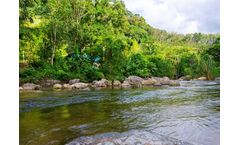
This year saw some record-breaking temperatures hit around the country, with prolonged periods of dry weather and several heatwaves during the summer… which have converged to put even more pressure on water resources all over the UK. Maximum temperatures this summer were far above average for much of England in 2022, with a new record temperature set for the UK at 40.3 degrees C, recorded ...
Climate change and rising temperatures around the world are increasing the severity of drought in urban areas which, in turn, is having an impact on water availability, according to a new report published this month (August). Conducted by Christian Aid, the study found that global water usage and consumption grew at more than twice the rate of population increase throughout the 20th ...
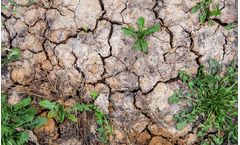
As the climate crisis intensifies around the world, drought conditions are becoming more frequent and drought risk is now expected to increase as a result of climate change in many vulnerable regions, particularly those seeing rapid population growth, food security challenges and vulnerable populations. Water levels are now dropping in rivers, lakes and reservoirs all over the world – and ...
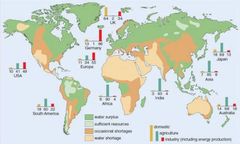
According to the United Nations Convention to Combat Desertification, on current trends, water shortages in some arid and semi-arid regions will displace 24 million to 700 million people by 2030. ...

Goal 15: Protect, restore and promote sustainable use of terrestrial ecosystems, sustainably manage forests, combat desertification, and halt and reverse land degradation and halt biodiversity loss Globally, one fifth of the Earth’s land area (more than 2 billion hectares), an area nearly the size of India and the Russian Federation combined, is degraded. ...

Not only it serves as an enabler for climate change and global warming, but also is the major cause of desertification, food and water shortage, malnutrition and poor air quality index, etc. ...
It’ll span 11 countries measuring 8000 KM long and 15 KM wide. It helps to reverse the desertification as soil holds its ground in case of fast winds and rains. ...

Overuse of surface water bodies, such as lakes and rivers, leads to breaches of critical flow limits in rivers that can push river ecosystems past the tipping point, shutting down hydroelectric power plants, blocking navigation, stopping the natural process of aquifer recharge, and driving desertification. Groundwater depletion from human activity has been shown to make riparian ...
Amid the 2019 drought that hit many Caribbean islands, Ibrahim Thiaw, head of the U.N. Convention to Combat Desertification (UNCCD), posed a question: What is left for the young girl or young gentleman of Haiti if […] they have barren hills that cannot generate food anymore? ...
These concerns were brought to the foreground by the United Nations Convention to Combat Desertification (UNCCD) on June 17, the World Day to Combat Desertification and Drought (WDCDD). UNCCD is now promoting land restoration as a way to prevent desertification and irregular migration. Others pointed to the importance of agricultural practices. ...

Since the 70s’ sections of Hutuo River have dried up and together with ground water level continuously dropping serious land desertification has become one of the primary causes of dust pollution. Improving these section of Hutuo River by constructing wetlands and restoring river ecosystems will play an important role in reviving the river. ...
Some areas in the Middle East-North Africa region are using reclaimed water. Wood production and anti-desertification are two applications for treated wastewater in Tunisia, for example. ...

Organized around four drivers of change—climate; agriculture and pastoralism; megafauna; and imperialism, colonialism, and capitalism (ICC)—our review zooms in on key regions and debates, including desertification; rangeland degradation; megafauna loss; and land grabbing. ...

Reliable temporal modelling of groundwater level is significant for efficient water resources management in hydrological basins and for the prevention of possible desertification effects. In this work we propose a stochastic method of temporal monitoring and prediction that can incorporate auxiliary information. ...

” Support for the methods have come from many quarters, including the Peace Corps, UNICEF and the 2010 U.N. Convention to Combat Desertification. Former U.S. Department of Agriculture Secretary Bob Bergland has called biointensive farming a potential way out for malnourished people worldwide. ...
ByEnsia

With so many unknown species, microorganisms and invertebrates living on our planet, and issues around biodiversity, desertification and deforestation being so profound, as a population we need to be more aware of helping the world around us. ...
China, for example, has undertaken ambitious forest planting programs to combat desertification and soil erosion (although most of these are monoculture plantations rather than diverse forests). ...
ByEnsia
Environmental scientists and academics define climate refugees as people who can no longer guarantee safety or a secure livelihood in their own countries because of drought, soil erosion, desertification, sea-level rise or other environmental issues. But this is an academic definition, not a legal one. ...
ByEnsia