
Refine by
Diatomaceous Earth Articles & Analysis
31 articles found

Whether you are new to growing indoors or a seasoned professional, one thing is for certain – you can’t take your eye off the ball with pest control! One of the most common pests to plague our grow rooms are the white aphid. Secondary to those are black aphids, which are very similar. If you’ve not experienced an aphid attack yet then count yourself lucky. There is no surefire ...
Mealybugs are small but mighty pests that can settle on your plants. If left untreated, they can spell disaster! Nobody wants that now do they!? As with many aspects of growing plants, pest prevention is a great way to minimise the likelihood of infestations. In turn, this saves wasting time and resources treating mealybug populations in your grow space. Although mealybugs can affect outdoor ...
What are Filter Aids in Filtration and How Are They Used? Many of the products you buy and use every day require filtration. Producers start with an amalgamation of ingredients (solids and liquids) that need to be extracted from one another— usually the liquid formed during production. The process of making fruit juices, vegetable oils, baby formulas, wine and beer, vinegar, and even honey ...

Reference data shows that the average annual output of global commercial oils and fats is about 100 million tons, of which about 79% is invested in direct consumption, 13% is invested in the chemical industry to produce surfactants, and about 8% is invested in feed. . 2.2 Food Processing of Fruit and Vegetable Enzymes The core technology of beverage production lies in the stability and ...

Traditionally, beverage producers have approached clarification using a combination of sedimentation, flocculation agents (like isinglass), and filter-based separation solutions, such as sieve operations, diatomaceous earth (DE) beds, and other disposable media and membrane ...
ByTrucent
As the world comes out of COVID hibernation, many craft and small breweries are realizing that off-premises sales and packaged beer are going to continue to be their bread and butter for the foreseeable future. As Jack Hendler (co-founder of Massachusetts-based Jack’s Abby brewery) recently told SevenFifty Daily: “We’re going to be extremely challenged for a long time ...
ByTrucent
By adding filter aid, such as diatomaceous earth, the capacity per m2 filter area can be drastically ...
A well-established and efficient technology is alluvial (or body feed) filtration with filter aids such as diatomaceous earth. Lenticular filter modules (FILTRODISC) can be easily applied to combine the exceptional filtration capacity of filter aids with the advantages of using an enclosed filter housing (DISCSTAR). ...

Clarification fermentation broth is usually done by plate frame filtration, vacuum drum filtration, diatomaceous earth filtration, centrifugation, and other methods. However, neither of these methods can completely and effectively separate the impurities in the fermentation broth, which can easily cause blockage and frequent replacement of the filter medium, ...
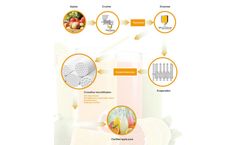
The traditional filtration methods (diatomaceous earth, framed filter) can not completely retain the impurities, can play a temporary clarification. ...

Clarification fermentation broth is usually done by plate frame filtration, vacuum drum filtration, diatomaceous earth filtration, centrifugation, and other methods. However, neither of these methods can completely and effectively separate the impurities in the fermentation broth, which can easily cause blockage and frequent replacement of the filter medium, ...

Clarification fermentation broth is usually done by plate frame filtration, vacuum drum filtration, diatomaceous earth filtration, centrifugation, and other methods. However, neither of these methods can completely and effectively separate the impurities in the fermentation broth, which can easily cause blockage and frequent replacement of the filter medium, ...
According to Beyond Pesticides, the least toxic pesticides include boric acid, desiccant dusts (diatomaceous earth and silica gel), microbe-based pesticides and pesticides made with certain essential oils. ...

Residual moisture needs to be removed by mixing the sample with a drying agent such as diatomaceous earth. This can be omitted by using Freeze Drying: the drying is initiated mainly by direct sublimation of ice at low temperatures. ...
ByBUCHI

Removal of Cryptosporidium-sized microspheres and Cryptosporidium parvum oocysts from swimming pools was investigated using diatomaceous earth (DE) precoat filtration and perlite-sand filtration. In pilot-scale experiments, microsphere removals of up to 2 log were obtained with 0.7 kg·DE/m2 at a filtration rate of 5 m/h. ...
DiatoSorb-W is a diatomaceous earth material that Restek will sell in bulk and in packed columns, uncoated and coated (with a liquid phase of your choice), which will replace Chromosorb-W packings. ...
An evaluation of the effects of calcination temperature and solution pH on the fluoride removal capacity of Al/Fe oxide-modified diatomaceous earth was carried out. The sorbent was observed to be most effective and stable within the pH range 6.70–8.12, where the lowest concentrations of Al and Fe (<1 mg/L) in treated water were recorded. ...
This study investigates the use of diatomaceous earth with chitosan (DE@C) as a modified adsorbent for the removal of SY from wastewater. ...

Standard filtration uses diatomaceous earth (Kieselguhr) into filter-press and consists in the retention of solid particles (yeast cells, macrocolloids, suspended matter) and solutes responsible for haze. ...

Bilfinger Water Technologies, drawing on its experience, succeeded in delivering filter presses meeting the specific needs of the different filtration applications, in particular, with precise dosing of diatomaceous earth and activated carbon. Furthermore, the membrane technology used for the two filter presses permits maximum recovery of oil, as required by the ...