
Diatomaceous Earth Filter Articles & Analysis
8 articles found

FILTRODISC BIO SD is the state-of-the-art technology for alluvial filtration for Plasmid-DNA clarification. It is based on depth filters that capture contaminants in their three-dimensional matrix. The used PURAFIX depth filters are low in extractable ions and pyrogens. By adding filter aid, such as diatomaceous ...
Clarification for vaccines – the economic and efficient removal of cell debris and negatively charged molecules with FILTRODISC BIO SD and FILTRODISC R2U depth filter modules. The purification of vaccines is a critical step during their complex production process. ...
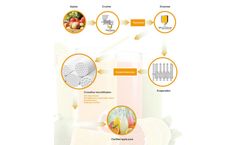
The traditional filtration methods (diatomaceous earth, framed filter) can not completely retain the impurities, can play a temporary clarification. ...

Standard filtration uses diatomaceous earth (Kieselguhr) into filter-press and consists in the retention of solid particles (yeast cells, macrocolloids, suspended matter) and solutes responsible for haze. ...

This type of usage is termed as “admix” or "body feed". Filtration without filter aid, with precoat, and with precoat and body feed. The common filter aids are diatomaceous earth (DE), perlite, cellulose and others. Diatomaceous earth (DE) is the skeleton of ancient diatoms (Fig. ...
Filter aids are used to assist filtration of colloids, extra fine particles, gel like, and highly compactible materials, which are difficult to be filtered due to low filtrate rate, unacceptable filtrate clarity, high cake moisture content, or serious filter medium clogging. ...

For years, coagulation and flocculation, along with settling and granular media filtration, sand filters, and precoat filters using diatomaceous earth, have been the “standard” for removing contaminants from water sources. ...
Nearly all membrane systems, no matter what their raw water source, must utilize some form of pretreatment to remove unwanted organic and inorganic suspended solids. Bag and cartridge filters are efficient at removing suspended solids but must be replaced on a frequent and often costly basis. ...