
Refine by
Dioxin Emissions Articles & Analysis
36 articles found

By converting waste into electricity, waste-to-energy (WTE) plants play a critical role in supporting circular economy and sustainable urban development.However, the incineration process generates complex flue gas streams containing a wide range of pollutants, including:Carbon Monoxide (CO) Nitrogen Oxides (NOx) Sulfur Oxides (SOx) Hydrogen Chloride (HCl) Hydrogen Fluoride (HF) Volatile ...

Unlike incineration, pyrolysis does not produce harmful emissions such as dioxins, furans, or carbon monoxide, which are common byproducts of combustion. ...
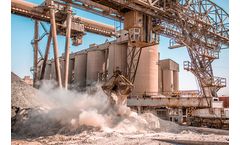
Although a lot of the emitted hazardous gases decomposes in the high temperatures, some may still slip through or react and form new hazardous substances, potentially resulting in emissions of for example dioxins and PCBs. In addition, both the basic reactions forming calcium silicates and the burning of the fuel give rise to high emissions of ...
ByOPSIS AB
Reduced Pollution: Unlike incineration, pyrolysis minimizes harmful emissions like dioxins and CO₂ when managed properly. For example, a 2023 study in Environmental Science & Technology found that pyrolysis of ocean plastics could recover 85% of their energy content while diverting waste from oceans. ...
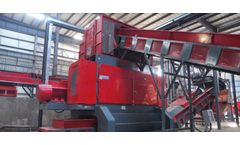
Japan: Over 70% of waste is incinerated, but carbon emissions and ash disposal remain major challenges. India: 35,000 tons of waste are dumped in the open daily, with New Delhi's garbage mountains rivaling the height of the Taj Mahal. ...

A few years ago, OPSIS introduced the DX100 dioxins sampler primarily intended for waste-to-energy facilities required to monitor and report dioxins emissions. ...
ByOPSIS AB

Some of the new conclusions were “associated emission levels” (AELs) on total mercury and dioxins in the emissions to air, both types of compounds being very toxic and bad for the environment. ...
ByOPSIS AB

Monitoring dioxins is very much a family matter at Gasmet’s Spanish distributor Techno Spec where customers benefit from the influence of two generations of analysis ...
Your current method of measuring dioxins is probably not giving you the whole picture about your dioxin emissions. ...

Sludge thermal drying and carbonization technology has the advantages of complete reduction, high heat utilization rate, environmental emission, heavy metal solidification and safe utilization of products. ...
Monitoring dioxins is very much a family matter at Gasmet’s Spanish distributor Techno Spec where customers benefit from the influence of two generations of analysis research. Dr Joan Rivera was probably destined for a career in dioxins monitoring. Not only was his father one of the foremost experts in this field – his mother founded Techno Spec in 1985. To fully understand the story ...
Werner Tirler, also the Director of Eco-Research tells about their experiences of using Gasmet’s dioxin monitoring system, GT90 Dioxin+. According to him, it is a very robust and durable device, which enables reliable sampling of dioxins for his laboratory. ...
In this article we introduce you to the world of continuous dioxin monitoring and the Gasmet GT90 Dioxin+, which is an exceptionally robust dioxin sampling system. Did you know that it was designed to sample even the lowest dioxin and dioxin-like compound concentrations in harsh industrial environments, even in ...
Dioxins and POPs are toxic, persistent, and nowadays ubiquitously present in our environment. Gasmet GT90 Dioxin+ is an exceptionally robust dioxin sampling system that was designed to sample even the lowest concentrations in harsh industrial environments and even subfreezing conditions. Dioxin is an umbrella name for polychlorinated dibenzo-para-dioxins and polychlorinated dibenzofurans. They ...
Read more about our Continuous Emissions Monitoring system. Continuous Dioxin Sampling system – GT90 Dioxin+ This MCERTS certified system for dioxin monitoring is a device designed for long-term monitoring of dioxin emissions in conformity to the European standard EN1948-1 and EN15267. ...
The final draft of the Best Available Technology Reference document for Waste Incineration (WI BREF) was accepted by European Integrated Pollution Prevention and Control Bureau (EIPPCB) on summer 2019 and the WI BAT conclusions published on 3rd December 2019, under the IED Directive 2010/75/EU. This BAT conclusions covers the incineration and co-incineration of waste, including the following ...

However, measuring just the concentrations of the ‘common’ pollutants does not qualify the full environmental impact of an emission release point. The mass reporting given by the stack flow measurement when linked to gas and dust CEMS, as well as the dioxin and mercury emissions, are also highly important. ...
ByENVEA
However, measuring just the concentrations of the ‘common’ pollutants does not qualify the full environmental impact of an emission release point. The mass reporting given by the stack flow measurement when linked to gas and dust CEMS, as well as the dioxin and mercury emissions, are also highly important. ...
ByENVEA
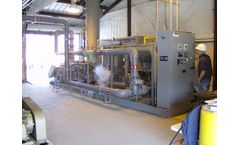
The vapor treatment portion of the project combined ceramic core flameless thermal oxidation (FTO) with acid gas scrubbing, vapor conditioning, and a carbon adsorption polishing step to control potential dioxin emissions. SOLUTION Working with several environmental engineering firms and the US Army Corp of Engineers, Global Technologies supplied a 1,000 SCFM ...
Chlorine Dioxide - CIO2 Scrubber Packing at Kraft Pulp Mills Elemental Chlorine Free - ECF - bleaching of wood pulp using Chlorine Dioxide, CIO2, as the primary bleaching agent eliminates dioxin emissions. This is a reflection of the fact that as a bleaching agent CIO2 is 10 times more reactive than elemental Chlorine, Ck. ...