
Refine by
Dioxins Analysis Articles & Analysis
12 articles found

Monitoring dioxins is very much a family matter at Gasmet’s Spanish distributor Techno Spec where customers benefit from the influence of two generations of analysis ...
Can I let you in on a secret? Your current method of measuring dioxins is probably not giving you the whole picture about your dioxin emissions. A typical waste incineration plant will run for about 8000 hours per year. Many waste incineration plants are still using the old method of periodic sampling. With periodic sampling, dioxins are only measured for 6-8 hours at a time. You don’t need ...

Client: Waste-to-energy plant (France) Context: Upgrading of pollutants control systems Solution: A shelter gathering all analyzers and dioxin samplers The waste-to-energy plant in Evreux (France), which began operating in 2003, treats household residual waste and non-hazardous industrial waste from the south of the Eure, i.e. more than 200 municipalities. It belongs to the ...
ByENVEA
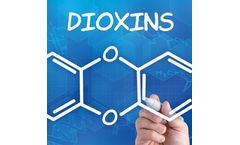
New regulations such as the European “Waste Incineration BAT Conclusions” (read more on that in this blog article) call for long-term sampling of "polychlorinated dibenzo-p-dioxins and -furans" (PCCD/F), but let's call it "dioxin" for simplicity. ...
ByOPSIS AB
Monitoring dioxins is very much a family matter at Gasmet’s Spanish distributor Techno Spec where customers benefit from the influence of two generations of analysis research. Dr Joan Rivera was probably destined for a career in dioxins monitoring. Not only was his father one of the foremost experts in this field – his mother founded ...
Eco-Research’s core business includes carrying out both local, national and international research projects. As an environmental analysis laboratory, monitoring dioxin is an elemental part of their day-to-day operations. ...

Abstract / Summary In these application notes, learn how Waters latest technologies are being applied to the analysis of dioxins, polar pesticides, polyfluoroalkyl substances (PFAS’s), Polycyclic aromatic hydrocarbons (PAHs), pharmaceuticals and personal care products (PPCPs), microcystins, veterinary drugs, and other environmental contaminants. ...
This is imperative for laboratories to not only meet tighter regulations around allowable pesticide residues, but to also be able to quantify banned and restricted analytes, even when they are only present at trace-level concentrations. Take for example, dioxins. Dioxins are a group of chemically related compounds, known to be toxic and persistent as ubiquitous ...

Dioxins and furans are produced by an incomplete combustion of organic and chlorinated compounds Generated by stationary sources such as waste incinerators, cement/metal working industry… Dispersal in the environment as aerosols, accumulation in the food chain ...

Municipal Solid Waste (MSW) in Patna is disposed of in an unscientific manner without considering environmental impacts. The wastes are dumped in the low-lying areas without compliance of the MSWM Rules, 2000. The dumped wastes are mixed with biomedical wastes making it hazardous. Ambient air quality and ground water were analysed at two dump sites to study the possible impacts of MSW. The ...
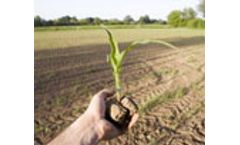
Detectable levels of dioxins have been reported in biosolids, but very little information is available on the effect of long-term application of biosolids on dioxins accumulation in soil and uptake by plants. We analyzed dioxins in soil and corn tissue samples from field plots after 30 continuous applications of biosolids at 0 (Control), 16.8, and 67.2 Mg biosolids ha−1 yr−1 resulting ...

The strategy and action plan for reducing the release of dioxins in China are the most important components of the NIP. Three problems are key points for developing such strategy and action plan—what are the key sources for applying the best available technology/best environmental practice (BAT/BEP) to reduce the release of dioxins? How about the capacity for ...