
Dispersion Modeling Aermod Articles & Analysis
24 articles found

With jet engines emitting CO2, NOx, PM2.5, UFPs, and ground support equipment (GSE) running on fossil fuels, the impact on human health, environmental sustainability, and regulatory compliance is a growing concern. Studies using AERMOD and CALPUFF models reveal that pollutants disperse unpredictably, affecting workers and nearby communities. ...
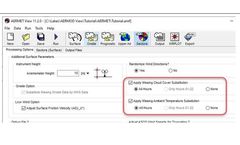
When conducting an air dispersion modeling analysis, it is very important that the meteorological data quality is as high as possible. AERMET – the meteorological pre-processor for the AERMOD dispersion modeling system – contains internal options which can boost data quality by filling short gaps of ...
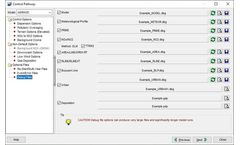
When conducting an air dispersion modeling analysis with the AERMOD modeling system, modelers may encounter situations where they want to validate or verify the model’s calculations. ...

The movement of COPCs in the environment can be a complex process so modelers can use the AERMOD model to conduct the air dispersion modeling. ...
All of these influences have resulted in significantly longer AERMOD model run times as compared to the predecessor regulatory model, ISCST. ...
In order to develop these custom real-time air dispersion modeling and forecasting systems, extensive knowledge on air dispersion modeling, meteorology, computer science, and web and database development is required. Two examples of these types of systems are: Real-Time Air Dispersion Modeling ...
Most AERMOD dispersion modeling is conducted using meteorological data from a nearby airport. ...

EPA’s preferred near field (i.e., less than 50km) air dispersion model AERMOD and the meteorological preprocessor AERMET was released on December 24, 2013. ...
Agenda Introduction to Modeling (short course) Top 10 List – Questions you should beasking your dispersion modeler Introduction to Modeling Definition Why Model? Types of Models AERMOD background Definition Dispersion ...
Specifically, AERMOD no longer turns off downwash above the EPA formula height. Rather, the AERMOD code allows the Plume Rise Model Enhancement (PRIME) algorithms within the model to determine when and how to apply downwash. ...
The recommendations generally conform to the guidance in the 40 CFR Part 51 Appendix W Guideline on Air Quality Models. The current version of AERMOD (v11103, issued April 13, 2011) is the preferred regulatory model for 1-hr SO2 NAAQS designation modeling. ...

Implementation of the 96/62/EC air quality directive in Poland imposes new requirements that cannot be met by the present Polish regulatory climatological dispersion model that is mandatory in emission permit procedures. For use in the air quality management system, newer models have been recommended. This inevitably brings questions regarding ...

Characterizing the spatial variability of air pollutants in an urban setting is critical for improved air toxics exposure assessments.3,4 Current approaches for characterizing ambient air toxics concentrations rely on developing a detailed emissions inventory and applying a dispersion model such as AERMOD. Previous modeling ...

ISC-AERMOD dispersion model was used to predict air dispersion plumes from an diesel power plant complex. ...
Chuck’s On The Horizon Issues AERMOD Proper use of terrain andmet data NSR Reform Proposal Debottlenecking Aggregation Netting Dispersion Modeling Update On November 9, 2006, AERMOD willreplace ISC as the approved RegulatoryGuideline Model (Guideline on Air QualityModels, 40 CFR 51 ...
Abstract For over two decades, the Industrial Source Complex (ISC) dispersion model has been the primary model used to predict ambient air impacts from stationary sources. Recent advances in dispersion modeling theory have resulted in the creation of a new type of modeling algorithm referred to ...
EPA requires that facilities located within 200 km of Class I areas or others with visibility degradation issues conduct long-range dispersion modeling studies. CALPUFF, an EPA-approved model for long-range transport modeling, is a non-Gaussian, non-steady state, puff model that operates in a Lagrangian ...
The paper introduces a formal archive for intercomparison of conventional regulatory dispersion models. It stems from an initial intercomparison, for the UK Environment Agency, of the USEPA's ISC and AERMOD models with the ADMS model, in common use in the UK. The objective is to compare the ...
In the near future AERMOD PRIME will officially replace the Industrial Source Complex Short-Term model, Version 3 (ISCST3) as the preferred Environmental Protection Agency (EPA) air dispersion model. Unlike the ISCST3 model that requires the simple selection of urban or rural default settings, the ...
Abstract In the near future AERMOD PRIME will officially replace the Industrial Source Complex Short-Term model, Version 3 (ISCST3) as the preferred Environmental Protection Agency (EPA) air dispersion model. Unlike the ISCST3 model that requires the simple selection of urban or rural default settings, the ...