
Refine by
Dissolved Organic Matter Articles & Analysis
138 articles found
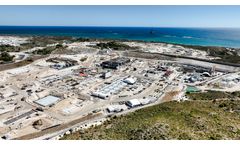
Post‑treatment chemicals are then applied only as required to align with the Australian Drinking Water Guidelines, allowing water quality to be optimised through design rather than chemical correction alone. Desalination removes organic matter and dissolved minerals from seawater, producing water that is extremely pure but corrosive and ...

Nutrients accumulate here as sinking organic matter slows. Hypolimnion: Cold bottom layer, isolated from surface oxygen inputs. As organic matter decomposes here, dissolved oxygen depletes — often to levels that trigger phosphorus release from sediments. ...
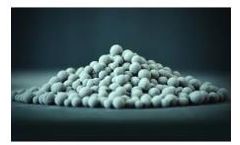
When engineers evaluate technologies for mercury remediation, discussions frequently focus on removal efficiency or binding strength. Laboratory studies often report sorption capacity and distribution coefficients (KD), which describe how much mercury a material can bind and how strongly it partitions from water onto the ...

Wastewater treatment is a complex topic that involves numerous processes, components and equipment that all have the singular goal to turn any liquid into water that can either be reused or returned to the water cycle. There are even a lot of wastewater treatment systems that everyone from households to industries use to meet their wastewater treatment needs. These technologies include the ...

Quantum Disinfection™ (QD) is a revolutionary technology that utilizes principles from quantum mechanics to achieve unparalleled disinfection capabilities. This innovative approach harnesses the movement of electrons to create catalytic active surfaces that can instantly disintegrate any microorganism upon ...

Ultra Pure Water (UPW) is critical in industries where even the smallest impurities can have significant consequences. It is used in semiconductor manufacturing, pharmaceuticals, and high-end laboratories-applications that demand the highest level of purity. Achieving and maintaining this purity requires a complex process and advanced monitoring tools. This blog explores the UPW process and ...

The study of isotopes in soils has become an essential tool in understanding both geological time scales and contemporary environmental processes. By utilizing various isotopes, researchers can glean information about such varied topics as soil formation, nutrient cycling, and past climate conditions. This article focuses on prominent isotopic systems employed in soil studies, including ...

Secondary Treatment (Biological Treatment)The secondary treatment focuses on removing dissolved organic matter and biodegradable pollutants through biological processes. ...

CHALLENGES The main challenge of this project was to channel the water discharges from the new bathrooms located in an industrial warehouse that was separate from the main plant, at the same time, integrate the water discharge from the bathrooms located in the old industrial warehouse, resulting in a reception of approximately 100 cubic meters of wastewater per day. ...

As water scarcity becomes a growing global concern, we’re turning to innovative solutions to meet our needs. Seawater reverse osmosis (SWRO) stands out as a leading technology for transforming seawater into usable fresh water. But, did you know that this membrane filtration process is more involved than simply pushing saltwater through a membrane? This is where seawater RO pretreatment ...

TDS is an abbreviation for Total Dissolved Solids, which is a measurement of all inorganic and organic components present in water and it is measured in milligrams per litre (mg/L) or parts per million (ppm). Minerals, salts, metals, Calcium, sodium, magnesium, potassium, iron, lead, arsenic, carbonates, bicarbonates, nitrates, sulphates, and chlorides or other ...
ByWaltr

Imagine a world where every drop of water is treated as the precious resource it is. Now, consider the challenge many municipalities face: treating wastewater efficiently without breaking the bank. The answer? Cost-effective municipal wastewater treatment solutions. Municipalities are constantly under pressure to meet regulatory standards and serve their communities sustainably. But ...
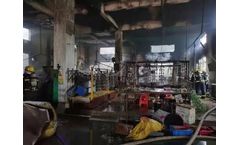
Its working principle involves the removal of particulate matter, gases and organic matter from the waste gas through the contact and absorption of water or washing liquid. ...

The oil and gas industry produces billions of gallons of heavily contaminated wastewater that could be recycled into a valuable resource The oil and gas industry is an extremely water-intensive one. Millions of gallons are used during the hydraulic fracturing process, and billions of gallons of wastewater are generated from these activities. Around 250 million barrels of produced water are ...

Aquatic organisms, such as fish, invertebrates, and plants, rely on this dissolved oxygen to carry out their life-sustaining metabolic processes, primarily respiration. ...

Overview Tempe Town Lake is an artificial lake located near the urban core of Tempe, AZ, derived from the damming of the Salt River. It was constructed in 1999 primarily for the use of recreation such as fishing and boating. This lake is Arizona’s second most visited tourist attraction that generated a cumulative economic impact of over $1.5 billion dollars since its creation, so it is ...
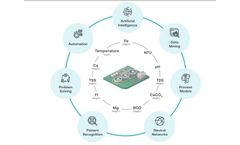
In order to meet drinking water quality criteria, suspended and dissolved impurities such as silt, algae and organic matter must be removed. ...
What is Conductivity? Specific conductance, or conductivity, with regards to water quality is the measurement of how many and how mobile ions are in solution. The more ions that are present and the faster they can move, the higher the conductivity. This water quality parameter is measured in Siemens/cm (S/cm), or more commonly microSiemens/cm (µS/cm). Conductivity is also the inverse of ...

When measuring chlorophyll levels using the C-FLUOR, a red excitation configuration is recommended for use in aquatic habitats that have high dissolved organics. Unlike blue excitation, red excitation does not have as much interference from dissolved organic matter (DOM) because DOM particles absorb blue ...

When measuring chlorophyll levels using the C-FLUOR, a red excitation configuration is recommended for use in aquatic habitats that have high dissolved organics. Unlike blue excitation, red excitation does not have as much interference from dissolved organic matter (DOM) because DOM particles absorb blue ...