
Refine by
Distance Sensor Articles & Analysis
50 articles found
More than 70% of all products containing ingredients were bulk solids at some point, according to Bulk-Online.com. The term “Inventory Record Accuracy” was coined to describe the discrepancy between recorded quantity and actual inventory quantity physically stored. In the retail world, inventory record accuracy can mean an average loss of revenue of 1.75%. Industry 4.0 and ...
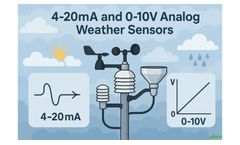
It is preferred in industrial applications because it minimizes signal loss in long-distance and noisy environments.Advantages:Reliability in long-distance transmission Resistance to noise and interference Easy fault detection SEVEN Sensor products supporting 4-20 mA: 3S-IS-T-I Irradiance Sensors 3S-MT-PT1000-I Temperature ...
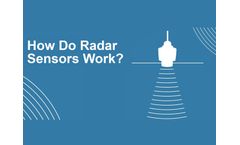
Want to learn more about how radar measurements work? Curious about radar sensors’ strengths and limitations? You’re in the right place! Senix’s compact non-contact radar sensors—or CNCRs—utilize an 80 GHz radar signal to gather level measurements of bulk solids and liquids. ...
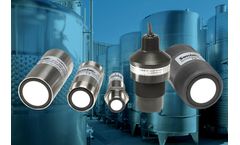
Due to their unique operational characteristics, Senix ultrasonic distance measurement sensors find use in a wide range of industrial and scientific applications where measuring without making physical contact is critical. As a result, Senix produces several variations of sensors to meet different measurement requirements and restrictions. While ...
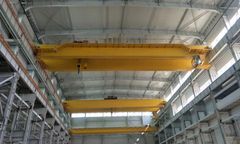
Proximity sensors detect the distance between the crane and nearby structures or personnel. ...

Introduction Ever wondered how machines “know” when an object is nearby without touching it? Inductive proximity sensors are behind this magic in factories, electronics, and automation. They detect metal objects without contact and are critical in precision operations, quality control, and safety. This blog explores how these sensors work, the different types, and their ...
Introduction Ever wondered how machines “know” when an object is nearby without touching it? Inductive proximity sensors are behind this magic in factories, electronics, and automation. They detect metal objects without contact and are critical in precision operations, quality control, and safety. This blog explores how these sensors work, the different types, and their ...
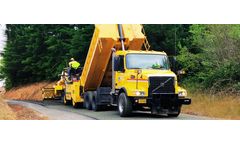
Challenge Due to the challenging environment, finding a suitable distance sensor was difficult. Laser-based distance sensors were tested to manage spacing; however, high temperature and dust caused interference, leading to unreliable readings and system faults. The laser sensors also required regular cleaning and ...
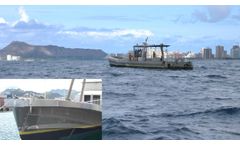
A manufacturer of high-speed foiling vessels needed a sensor to monitor the distance between the hull and the water surface. ...
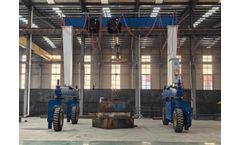
Sensors These are the “eyes” of the system and can include:Ultrasonic sensors: Measure the distance between the crane and obstacles. Laser distance meters: Provide high-accuracy detection of nearby objects. Radar sensors: Operate effectively in poor visibility environments such as rain, dust, or fog. ...
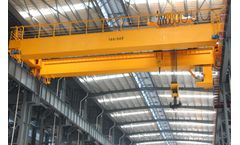
Sensors and IoT Devices Smart EOT cranes are equipped with an array of sensors that capture critical parameters:Load sensors measure the weight of the lifted load to prevent overloading. ...

With the integrated design of the sensor and converter, a failure may require replacing the entire unit. 2. ...
This design allows the transmitter to be installed at a distance from the sensor, providing flexibility in challenging installation environments. Key Features Separate Sensor and Transmitter: The sensor is installed directly on the pipeline to measure the flow of conductive liquids. ...
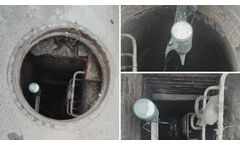
A city required accurate and reliable monitoring of the sanitary and storm water levels in manholes to enhance water management efficiency, prevent flooding, and proactively monitor infrastructure for maintenance requirements. A variety of level sensors were tested with varying results. Sensors that involved direct contact with the water proved to be maintenance ...
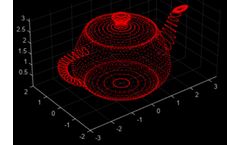
The camera lens collects the reflected light and displays it on the sensor. LiDAR works similarly. When a LiDAR laser beam hits an object, such as a tree or building, some of the light is reflected from the sensor [5]. ...
Time-of-flight is used to calculate the distance between the sensor and the solid layer surface. Applications Liquid-solid interface monitoring is beneficial for many applications, such as: Environmental Monitoring: Monitoring sediment accumulation in ponds, lakes, and other natural water bodies helps with environmental conservation efforts by providing data on ...
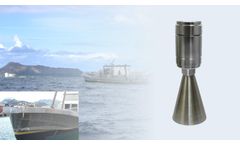
A radar level sensor is mounted on the vessel exterior, aiming at the water. It emits microwave pulses that reflect off the water surface and return to the sensor. By measuring the time taken for the pulses to travel to the water and back (time-of-flight), the sensor calculates the distance using the speed of light. This data is ...
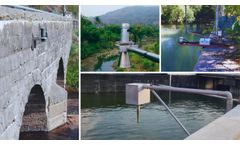
They offer precise depth measurements that enhance safety and efficiency, particularly in challenging or unfamiliar environments. ABM’s radar sensors are used in speed boats to monitor the distance between the boat and the water surface. ...
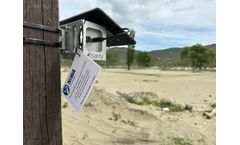
NIWA has pioneered the use of dense air quality sensor networks to uncover block-by-block air pollution patterns within towns across New Zealand. 40 Clarity Node-S solar-powered air quality sensors deployed 3x Higher PM2.5 levels detected in air pollution hotspots compared to cleanest areas 6 km Maximum distance NIWA deployed Clarity ...
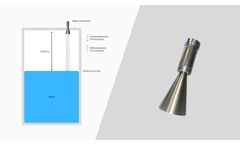
A radar level sensor is a device that utilizes radar technology to measure the level of a substance, such as a liquid or solid, in a container, tank, bin or vessel. ...