
Refine by
Dna Structure Articles & Analysis
37 articles found

In the world of biochemistry and structural biology, understanding the complex forms of biomolecules is critical. ...

Mobile genetic elements shatter the concept of fixed location genes on chromosomes 1974: Institute for Genetics, Justus-Liebig University, Giessen, Germany. Prof. Fritz Anders (1) passes two papers to his student: “Please read these (2, 3)…. and provide a summary of them next week in our Journal Club!” Published two decades earlier and authored by Dr. ...

Viruses can be broadly categorized into six main groups: Double-Stranded DNA Viruses: These viruses possess a double-stranded DNA genome and rely on host cellular machinery for replication. Single Positive-Stranded DNA (+ DNA) Viruses: Their single-stranded DNA serves as a template for creating a complementary ...

Oligonucleotides are typically composed of short-chain nucleotides (deoxyribonucleotides or ribonucleotides) of less than 20, serving as short RNA and DNA oligomers. They can be used as probes to determine the structure of DNA or RNA, and are used in processes such as gene chips, electrophoresis, and fluorescence in situ ...

Histones are a class of core proteins, mainly found in the cell nucleus of eukaryotes. They bind with DNA to form nucleosomes, thereby organizing DNA compactly into a chromatin structure. ...
Post-translational modifications (PTMs) of histones are crucial for protein structure regulation, playing key roles in gene expression regulation, DNA repair, cell signaling, and more. ...

Proteins are composed of long chains of amino acids, which fold into unique and complex shapes. These folded structures allow proteins to bind to specific targets, whether that be other proteins, small molecules, or even DNA and RNA. ...

Single-Stranded DNA: The Dynamic Blueprint of Life DNA, the blueprint of life, typically manifests in a double-stranded format, where two complementary DNA strands intertwine to form a classic double helix structure. ...
It can efficiently identify multiple chimeric transcripts and DNA structural variants, especially when coupled with long RNA-seq reads and true chimeric mRNAs. ...
They can produce proteins with different structural features, enzymatic activities, subcellular localization, or interaction partners. ...
BioID2 BioID2, a smaller biotin ligase R4OG mutant derived from A. aeolicus, lacks the DNA-binding structural domain present in traditional biotin ligases. ...
Host Cell Residual DNA (rcDNA) refers to fragments of DNA derived from host cells that may be present in biological products. ...
Protein-DNA docking is a complex and critical technique used in the field of structural biology. It involves the study of the three-dimensional structure of biological macromolecules, which play vital roles in many biological processes such as transcription, replication, and DNA repair. ...

DNA is the most important genetic information material, any damage to DNA will cause cell mutation or death. The mechanism of DNA damage by silver nanoparticles may be that silver nanoparticles can interact with parathion compounds in DNA. ...
Additionally, prokaryotes possess another DNA-containing structure called plasmids, which consist of looped chromosomes. ...

At the University of Tokyo, Professor Osamu Nureki's team worked to identify the structure and function of proteins involved in genome editing. In a recent study by the team, they discovered the 3D structure of protein TnpB, a possible precursor to the CRISPR-Cas12 enzyme. ...

These enzymes catalyze chemical reactions that modify the structure or sequence of DNA, including replication, repair, recombination, and transcription. ...
It effectively acquires and analyzes biological data such as nucleic acid sequences and protein structures, so as to conduct comprehensive and accurate biological analysis. ...
Epigenetic changes do not alter the structure of DNA, but do alter the way DNA is modified. Thereby, those changes include DNA methylation, histone modifications and non-coding RNAs. affects gene regulation. ...
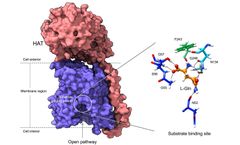
Thanks to recent high-resolution structural techniques such as cryo-electron microscopy, combined with computational modeling and the design of these protein mutants, researchers have been able to observe the structure of a member of this protein family in atomic detail and decipher its function. ...