
Refine by
Drinking Water Data Articles & Analysis
32 articles found
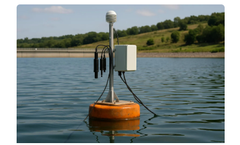
Real-time water quality monitoring enables drinking water utilities to detect contamination risks before they impact treatment operations. ...

Environmental professionals are navigating a deluge of environmental data coming in. Pair this with a rise in regulatory requirements and increasing stakeholder scrutiny, and without the systems and processes in place to manage this data, environmental professionals are stuck spending valuable time and resources wrangling their data into shape to ...
ByacQuire

Climate change is primarily a water crisis. Extreme weather events are making water more scarce, more unpredictable and more polluted. These impacts throughout the water cycle threaten sustainable development, biodiversity, and access to water and sanitation. ...

Streamlining data management, bringing down departmental silos and implementing 21st century water management at Nova Scotia's largest utility. “One of the difficulties with diving into the digital world is that you end up having an app for this, and then an app for that. The fact that Klir had so many different modules that can talk and communicate with each other was really appealing to ...
ByKlir

Delivered by Idrica experts with ongoing supervision to ensure proficiency in all management areas. Increase in the volume of water produced. Automation of water supply, treatment and storage infrastructures. Continuous expansion of the drinking water network’s coverage. Statistical data collection and ...
ByIdrica

“We need to invest in clean, safe drinking water”, Gov. Cuomo stated in his annual budget address. ...

According to new study, the water contamination disproportionately affects poor and Hispanic Americans Runoff of agricultural fertilizer is a major source of nitrate pollution in drinking water. A new study in the journal Environmental Justice has determined that 5.6 million Americans served by community water systems (CWSs) ...

This study compares the performance of a novel most probable number (MPN) method (Legiolert™/Quanti-Tray®) with Standard Methods for the Examination of Water and Wastewater 9260 J for the enumeration of Legionella pneumophila from potable and nonpotable waters. Data from the study showed that Legiolert exhibited higher sensitivity for the detection of L. pneumophila for potable water and ...
Hundreds of waterborne disease outbreaks (WBDO) of acute gastroenteritis (AGI) due to contaminated tap water are reported in developed countries each year. Such outbreaks are probably under-detected. The aim of our study was to develop an integrated approach to detect and study clusters of AGI in geographical areas with homogeneous exposure to drinking ...
Water treatment processes are required to be in statistical control and capable of meeting drinking water specifications. ...
” Industry Sectors in Need of the AOS Filter System Municipal Drinking Water A New York Times analysis of EPA data on drinking water quality points to a tremendous need for improvements to current water treatment infrastructure, as suggested by the numerous violations of the Safe ...
The article aimed to find the causes of microbial contamination of drinking water source, by exploring the influencing factors of water on the incidence of diarrhea in children. Random stratified-cluster sampling was used to study Li and Han communities of rural Lingshui County with regard to water quality and environmental ...
At present this contribution may also be estimated by Gallionella spp. counts by quantitative real-time polymerase chain reaction. Based on field data of drinking water treatment plants from the Netherlands and Belgium, it appears that at pH ≈ 7.5 biological iron(II) oxidation is the main iron(II) removal process. ...
One debated concern is that hydrofluorosilicic acid, used to fluoridate water, contains arsenic and poses a health risk. This study was undertaken to determine if fluoridation contributes to arsenic in drinking water, to estimate the amount of additional arsenic associated with fluoridation, and compare this to the National Sanitation ...
Giardiasis is the most commonly reported intestinal parasitic infection in the United States. Outbreak investigations have implicated poorly maintained private wells, and hypothesized a role for wastewater systems in giardiasis transmission. Surveillance data consistently show geographic variability in reported giardiasis incidence. We explored county-level associations between giardiasis ...
Targeted stormwater event-based monitoring of adenovirus, Cryptosporidium and Campylobacter, the human health reference pathogens of viruses, protozoa and bacteria, respectively, was undertaken to determine numbers prior to water recycling via an aquifer. This allowed the determination of a 95th percentile of reference pathogen numbers in stormwater (2 n/L for adenoviruses, ...
A quantitative polymerase chain reaction (qPCR) method for the rapid detection of MA, MI, and MAP can be used to provide data supporting drinking water biofilms as potential sources of human exposure. ...
Manganese and iron are both internationally known causes of aesthetic issues in drinking water, however, there are limited data supporting their specific aesthetic guidelines, of which typical values are 0.05 mg/L Mn and 0.3 mg/L Fe. ...

Challenge: A state environmental agency contracted with Antea Group to assist in the execution of a state-wide clean drinking water program. Program objectives included the development of an efficient and standardized program to monitor for chemical and biological contaminants across more than 6,500 public water systems. ...
Samples were collected from household faucets used for drinking water, and sent to the USA for analysis. The only site found to have a concentration above the 10 μg/L World Health Organization provisional guideline for arsenic in drinking water was Cerro Alto, where the average concentration was 47.5 μg/L. A health ...