
Refine by
Drinking Water Industry Articles & Analysis
160 articles found
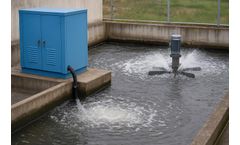
Aeration is a crucial aspect of water treatment. It enables oxygen transfer and improves water quality. ...

For a detailed framework on diagnosing and resolving lake algae problems, guidance is provided in industry resources on algae control and nutrient management. The EPA’s nutrient criteria guidance for lakes and reservoirs explains why sustained nutrient management is essential for protecting aquatic life and drinking water sources. ...
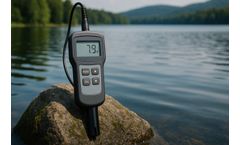
During algal blooms, the daily swing can be more pronounced. In industrial and drinking water treatment, pH changes during algal activity can affect coagulation efficiency, chemical dosing, and overall operational stability. A detailed LG Sonic guide on pH and algae in industrial water is available for further ...
The SUNMOY HF300D water well drilling rig has completed production and testing, ready for shipment to Usca Ctalin in Romania. This high-performance rig will support advanced water well drilling projects across the ...

Introduction When operators and lake managers type “what dissolves algae” into a search bar, they are really asking how to protect water quality. Green surface scums and dense blooms reduce recreation, clog treatment plants, and sometimes release toxins that threaten people and animals. It is not only an aesthetics problem. It is a public health and operations challenge, especially ...
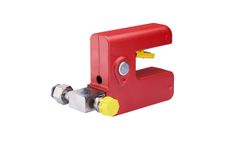
The Ecomondo trade fair: Lutz-Jesco will be presenting system solutions from a single source whether for disinfecting process water, bleaching textiles or manufacturing primary materials such as PVC: chlorine gas is central to a range of industrial processes. ...

A pH sensor is a core tool for measuring the acidity or alkalinity of a solution, and its characteristics directly determine its performance in various industrial and scientific applications. Accurate pH measurement is critical in fields such as environmental monitoring, water quality control, food production, and chemical processes. ...
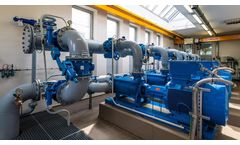
Stadtbetrieb Bornheim AöR relies on standardized system from NIVUS Initial Situation and Task The Bornheim municipal utility is responsible for more than 200 km of branched sewer network as well as drinking water and waste water connections for almost 50,000 inhabitants on an area of around 83 square kilometres. Due to the discontinuation of analogue telephone connections, the networking ...
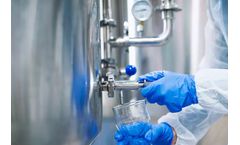
What is Water Treatment? Water treatment is the process of making contaminated and impure water suitable for drinking, industrial use, irrigation, or other purposes. It involves eliminating harmful impurities like bacteria, viruses, chemicals, and pollutants and improving the quality of water. ...
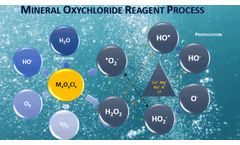
Technical and Operational Superiority of Mineral Oxychloride Reagents Over Chlorine Dioxide for Water Treatment Abstract This scientific article presents the technical and operational advantages of mineral oxychloride reagents over chlorine dioxide (ClO2) in water treatment. Mineral oxychlorides are advanced oxidation agents that deliver superior disinfection, biofilm removal, and residual ...
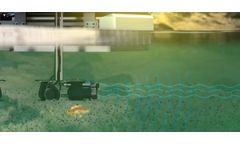
Summary Harmful algae are adaptive organisms that thrive in changing water environments. Traditional algae control methods lose effectiveness as algae develop resistance. Interactive algae control uses ultrasound with dynamic frequency adjustment to target diverse algal species. The MPC-Buoy with Interactive Algae Control combines real-time monitoring and adaptive treatment to deliver ...
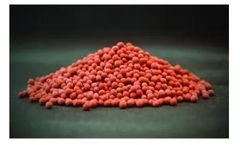
Problem A Midwestern USA municipal water plant experienced copper as a regularly occurring contaminant in its potable water system. ...
Chemical dosing Chemical dosing is the process of precisely injecting chemicals into a water system to achieve specific treatment objectives such as disinfection, pH correction, and scale inhibition. ...
•Application: sewage treatment, wastewater discharge, drinking water network, industrial wastewater, etc. 2. Chemical industry In chemical production, Magnetic Inductive Flow Meter is used to measure the flow of various acid and alkali solutions, solvents, chemical raw materials, reaction liquids, etc. ...
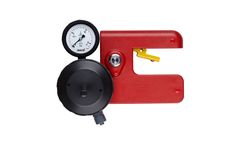
Chlorine gas plays a key role in the disinfection of drinking and industrial water. However, handling the chemical can pose considerable health risks – from irritation of the eyes to fatal pulmonary oedema. ...
Introduction: In today’s competitive commercial real estate landscape, efficiency is not just a luxury—it’s a necessity. Efficient resource management directly impacts a building’s operational costs, environmental footprint, and overall sustainability. One crucial yet often overlooked aspect of this efficiency is water storage and management. GRP (Glass Reinforced ...
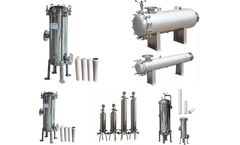
Cartridge filters with varying levels of pore sizes (micron ratings) can trap these particles effectively. Common applications: Drinking water systems, industrial water treatment, and HVAC systems. 2. ...

Imagine turning the vast, salty oceans into an endless supply of clean water for drinking and industries alike. That’s the reality of seawater reverse osmosis desalination. ...

What are Industrial Pumps? An industrial pump is a critical mechanical device used for many applications in various sectors, crucial for transporting liquids, gases, and semi-solids and ensuring the smooth operation of many industrial processes. They are indispensable for enhancing efficiency, safety, and environmental compliance across diverse industries. As a couple of examples, manufacturing ...
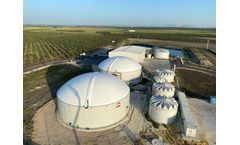
In the water treatment industry. Choosing the right equipment is essential to ensure the efficiency and durability of installations, especially in challenging environments such as coastal areas or islands where salty air can accelerate the corrosion of materials. In this scenario, W-TANK modular tanks made of Glass Fiber Reinforced Polyester (GRP) stand as the best solution, thanks to their ...