
Refine by
Drying Crop Articles & Analysis
47 articles found

These airborne particulates settle on crops and vegetation through dry or wet deposition, directly affecting plant growth and eventually entering the human body through the food chain—posing serious health risks. ...

The addition of biochar to soils can increase crop yield by fostering an environment where plants can thrive, even in nutrient-poor conditions. ...
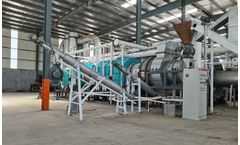
This translates into more efficient nutrient use by crops, leading to increased agricultural productivity. Sustainable Farming Practices The integration of wood charcoal making machines into agriculture fosters sustainable practices. ...
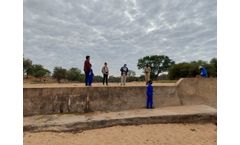
It contributes to adaptive capacity by enabling rural communities to satisfy domestic water requirements in drought periods, farmers to grow crops in dry seasons, livestock to survive through the dry season, rivers to flow all year round, and hydroelectricity to be generated. ...

From Leasing to Wind Farms to Owning His Own. Cosmos, Minnesota (USA), sits along the South Fork of the Crow River. Grain is the lifeblood of the small city, having been founded in 1867 by a pair of wheat farmers. ...
ByEocycle

In mid-May, the roll-up film of the Rovero Rain canopies is pulled over the arches to protect the fruit from birds and precipitation. "A dry crop keeps fungi at bay," he says. "These cause yield loss and limit shelf life." ...
ByRovero
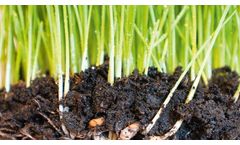
Knowing, not estimating , means better soil health and profitability Farming in Western Canada means working in a climate of extremes–hot or cold, wet or dry. It’s a conundrum that drives agriculture innovation, new technologies and precision agronomy practices on behalf of Prairie farmers that’s appreciated around the world. ...

The system uses environmental data and crop information to guide users in proper cultivation management.Eight Types of sensors for greenhouse remote monitoring system 1. Temperature and humidity sensor The biggest advantage of using greenhouses to grow crops is that they can provide ideal temperatures for plant growth and development. ...
The system uses environmental data and crop information to guide users in proper cultivation management.Eight Types of sensors for greenhouse remote monitoring system 1. Temperature and humidity sensor The biggest advantage of using greenhouses to grow crops is that they can provide ideal temperatures for plant growth and development. ...

Gardeners and farmers have debated the clash between sustainable agriculture and energy crop cultivation technologies that allow bioenergy and biomass crops to be grown on agricultural land. ...
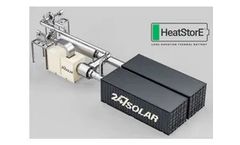
Remote towns and villages require round-the-clock clean power too, at affordable cost. Solar PV and wind are incomplete solutions. Conventional batteries help but for just a few hours. Backup gensets rely on expensive, dirty ...

Traditionally, farmers hang hemp plants in barns, where it would take 7-10 days for the crop to dry. This process is time-consuming, expensive, requires a great deal of resources to maintain and limits the amount of hemp farmers can produce at each harvest. ...
As planting season approaches, it’s crucial to think about drying before you plant your crop. If hemp is dried cleanly, properly, and promptly, there will be minimal damage or loss. ...
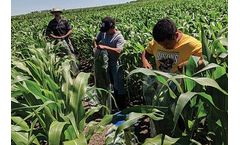
These maps provide a broad snapshot of soil moisture and an indication of the amount of stored moisture that will be available for the crop yield across a wide area,” he says. “Fall soil moisture does not disappear over the winter and will still be there for the crops the next spring in Western Canada. It is also starting to become clear that ...

“Part of the problem is people don’t trust the information,” says Ryan Hutchison of South Country Equipment in Saskatchewan. He was at Crop Connect 2019 in Winnipeg to give a presentation called Crop Intelligence — Trusting the Data. ...

During irrigation, drones have sensors that can identify which parts of a field are dry or need improvements. Once your crops are growing, drones allow the calculation of relative size and health of those crops, making it simple for you to give your crops what they need. ...
ByGrowers

Little snowpack in the Andes has meant no snowmelt for irrigation, so small farmers did not bother to plant crops. Even cacti are drying up and dying. Four hundred thousand families, about 1.5 million Chileans, are getting by on a 50 L/d water ration from tanker trucks. ...

Farmers should continue to monitor the condition of each field and be prepared to make adjustments in prioritization as they harvest to minimize risk of grain loss. Drying can be expensive, but a deteriorated crop may leave more revenue in the field. ...
Snow might still be on the ground, but it’s never too early to think about the year ahead. Many producers have their crop plans already in place. Last fall’s early snow means spring fertilizing is on the radar for a lot of farmers. ...

In addition, the design will use dry storage mediums- ceramic pellets or firebrick- and these are estimated to cost less than the state-of-the-art molten salt materials used in the latest CSP plants, he said. ...