
Refine by
E Coli Counting Articles & Analysis
32 articles found
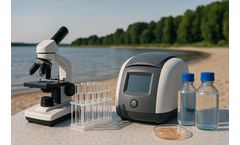
As the summer season approaches, monitoring bathing water quality becomes a critical public health and operational priority. Increased attendance at beaches, lakes, and rivers elevates the risk of bacteriological contamination, requiring vigilant oversight by water quality authorities and analytical laboratories. Reliable results with short turnaround times are essential to support timely public ...

Natural Feed Additives for Poultry The poultry industry is undergoing a significant transformation as producers seek sustainable, antibiotic-free solutions to improve bird health and productivity. One of the most promising strategies is the use of natural feed additives for poultry, which are increasingly recognized as effective alternatives to synthetic growth promoters and antibiotics. These ...

Problem: High fecal coliform and E. coli counts, ...
Synopsis: The Dosing of Bio Organic Catalyst has been started in the Lake The automatic Dosing has been ongoing for over four months starting from January 2022 and there is improvement in the water clarity. The aquatic life in the lake is being maintained and no chemicals are added to the water to keep it aesthetically clean. The water at the lake is pumped from various lifting stations across ...

UV acts by inactivating microorganisms and reduces the various coliform, E. coli, or heterogenous plate counts used to evaluate discharge. ...

The Water Services Division of Public Works mission is to protect the health, safety and welfare of Fulton County’s citizens through systematic planning, construction, maintenance and operation of the water, wastewater and storm water infrastructure in the most sustainable, efficient and environmentally sound manner. Fulton County Public Works is staying on the cutting edge with its use of ...

ETV (Environmental Technology verification Programme) has been establish to facilitate the deployment of innovative or improved environmental technologies through performance verification and dissemination of information. The goal of the ETV Program is to further environmental protection by accelerating the acceptance and use of improved and cost-effective technologies. The accredited ...
The parameters that were measured were total suspended solids, BOD, ammonia, nitrogen, and phosphorus. Eschricia coli (E. coli) colonies were also measured. The sludge blanket depth was measured before the aerator was turned on and again at the 60 day point. ...
Man-made lagoons have been used worldwide for the treatment of domestic and industrial wastewater, it seems, forever. All waste lagoons were first designed and thoughtfully planned considering their locations, soil makeup, and waste reduction processes prior to being implemented. The biological process of organic waste reduction is always a consideration of waste lagoon designs. There are three ...
Due to the track being predominantly used for horse racing, there is a high amount of fecal coliform, especially of the Escherichia coli species, bacteria in the water that drains from the track. During the racing season, fecal coliform and E. coli counts increase dramatically and the subsequent drainage of these lagoons can ...

Secondly, using an indirect method, where the E. coli concentrations were estimated from the volume of wastewater retained by the lettuce and the E. coli concentration of the wastewater. ...
Escherichia coli (E. coli) is one of the most commonly adopted indicators for the determination of the microbiological quality in water and treated wastewater. ...
Surface water samples in Vietnam were collected from the Saigon River, rural and suburban canals, and urban runoff canals in Ho Chi Minh City, Vietnam, and were processed to enumerate Escherichia coli. Quantification was done through membrane filtration and quantitative real-time polymerase chain reaction (PCR). Mean log colony-forming unit (CFU)/100 ml E. ...
A combination of propidium monoazide (PMA) with real-time quantitative polymerase chain reaction (PMA-qPCR) was optimized to enumerate only viable Escherichia coli in anaerobic digestion processes. Repeating the PMA treatment twice and a final concentration of 100 μM resulted in an effective exclusion of DNA from heat-treated E. coli cells. ...
A total number of heterotrophs, Escherichia coli and intestinal enterococci counts were determined by standard cultivation methods in samples from five locations along the river. ...
Although the water from abstraction wells showed a 97% and 82% lowering of E. coli and Enterococci counts, respectively, from that of the source ponds, they did not satisfy the WHO drinking water standard. ...
The household biosand filter (BSF) is a highly utilized point-of-use water treatment tool. The effect of ambient temperature on the ability of the BSF to remove microbes from water is unclear. Model filters were distributed among different temperature-controlled laboratories and dosed daily with surface water amended with sewage. Comparison of the total coliform and Escherichia coli counts in ...
However, linear models are found to be weak at capturing the infrequent ‘very poor’ water quality occasions when Escherichia coli (E. coli) concentration exceeds 610 counts/100 mL. This study uses a classification tree to increase the accuracy in predicting the ‘very poor’ water quality events at three Hong Kong beaches affected ...
A stochastic model for estimating the ratio between a fecal indicator and a pathogen based on left-censored data, which includes a substantially high number of non-detects, was constructed. River water samples were taken for 16 months at six points in a river watershed, and conventional fecal indicators (total coliforms and general Escherichia coli), genetic markers (Bacteroides spp.), and ...
In this study, microbial quality and antimicrobial resistance of faecal bacteria from a Portuguese river were assessed. River water samples collected upstream and downstream of a wastewater treatment plant, throughout a 3-month period, were used for the enumeration of Escherichia coli and Enterococcus spp. The highest numbers found for E. coli and enterococci were 1.1 × 10⁴ and 1.2 ...