
Refine by
E Waste Batteries Articles & Analysis
12 articles found
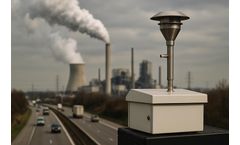
The following elements are measured by Xact and their typical source associations:Al — CrustalSi — Crustal, brakes, road dustP — Sea salt, volcanic activityS — Ship emissions, secondary aerosol, coal combustion, fireworksCl — Sea salt, secondary aerosol, brick kiln, steel production, garbage burning, fireworks, road de-icerK — Biomass burning, waste incineration, coal combustion, ...
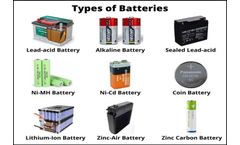
With the rapid expansion of the global electric vehicle market, the recycling of EV batteries has become increasingly prominent. EV batteries contain a large number of valuable metals. Recycling and processing these batteries is not only about resource reuse, but also conducive to environmental protection. So, how much profit can be made from recycling EV batteries? What materials can be ...
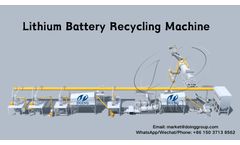
The recycling value of lithium-ion batteries can be considered huge due to the recovery of valuable materials such as lithium, cobalt, nickel and copper, which are key ingredients in the manufacture of new batteries and other electronic devices. These metals have enormous economic value, and recycling them can reduce reliance on expensive and environmentally damaging mining activities. Regarding ...
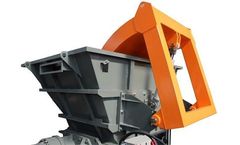
An important company based in Emilia Romagna, specialised in the recovery and disposal of special hazardous industrial waste turned to us for a solution for the shredding of hazardous waste for bulk reduction, in line with 4.0 Industry requirements. In view of the type of application, a twin shaft shredder from the 2R series, 150 HP, with hydraulic drive, fitted with 4×75 mm tips, was ...
We continue to pursue multi-year waste reduction initiatives that promote easy-to-open recyclable packaging and to ship products in their own packages without additional shipping boxes. ...
ByICM AG
The non-ferrous metals that are used in traction batteries will benefit clearly from the trend towards sustainable mobility, these are for the current generations of Li-ion battery technology mainly Nickel, Cobalt, Copper. ...
ByICM AG
Recycling areas: AluminiumCableElectronic Waste (WEEE)Tyre Company name: Remat Bucuresti Sud S.A. Located: Bucharest, Romania Founded: 2003 Employees: 180 REMAT Bucuresti Sud S.A is a part of REMATHOLDING CO. SRL group. REMATHOLDING was founded in 2003 as a recycler of metallic and non-metallic scrap. Today they have the most compact and extended waste collecting network in the South and ...
The EU's focus on resource preservation and reuse has put manufacturers under increasing pressure over the past two decades to meet strict legislative requirements on environmental reporting. This has created a tricky path for producers to navigate as reporting requirements differ in each country. Depending on the size of your company, you could have come back to work this January facing hundreds ...
The following presentation was given in the form of a speech by Zero Waste Europe Director, Joan Marc Simon at the ‘Resourcing the Future 2016’ conference organised by CIWM in London. Is the Circular Economy strategy on the right track? Yes, but it is still too slow, in need of some fine-tuning and to escape bad habits from the past. The exercise we are undertaking is an ambitious ...
Manufacturers must comply with legislation to declare the amount of packaging they’re placing on the market. The problem is the rules dictating what companies need to declare are different in every single country. Global health, beauty and home care product market leader Amway has appointed Lorax Compliance to provide software and services to ensure the corporation meets its worldwide ...
This publication is part of a series of reviews by the European Environment Agency (EEA) of waste prevention programmes in Europe. The review process covers programmes in the 28 European Union (EU) Member States and the three European Free Trade Association (EFTA) countries, namely Iceland, Liechtenstein and Norway (Table 2.1). This second review covers the 27 national and regional programmes (1) ...
Waste that reflected the average UK composition of household waste was treated by autoclaving at the three set pressure/temperature levels of 2.7 bar/130 °C, 6.2 bar/160 °C and 15.5 bar/200 °C. The biodegradable fraction of the autoclaved household waste ('floc') was manually separated by screening and underwent characterization for its Cd, Cr, Cu, Pb, Hg, Ni, and Zn content. Autoclaving did not ...