
Refine by
Ecodesign Articles & Analysis
37 articles found
Technologies like ECOSORT TEXTIL help accelerate fashion brands’ adoption of ‘ecodesign’, considering recycling from the moment a garment is conceived. ...

Despite this, only 1% of recycled clothing today is turned into new garments. RECYCLING AND TEXTILE ECODESIGN Most of the clothing consumed is composed of a mixture of textiles, with polyester as the dominant fiber, making its subsequent sorting for recycling difficult. ...

The new TIER2 ecodesign norm for transformers is a set of standards and regulations that are intended to improve the environmental performance of transformers. The norm was developed by the European Commission, and it establishes minimum requirements for the energy efficiency, sound power, and no-load losses of transformers. The main goal of the TIER2 ...
ByProtrafo
THE FUTURE IN WASTE MANAGEMENT: ECODESIGN AND BIOPLASTICS So what is the key to such innovation in the 4th stage of the waste management process? ...

"The Afnor XP X30-901 proposes a 3 x 7 matrix covering the three dimensions of sustainable development (environment, economy, society) and the seven action areas of the circular economy: sustainable procurement, ecodesign, industrial symbiosis, service economy, responsible consumption, life extension, and effective management of materials and products at the end of their life ...
This is to prevent the emission of Fluorinated greenhouse gases (F-gases), a powerful greenhouse gas with a terrible impact on the environment. The 2021 Ecodesign of Energy-related Products and Energy Information Regulation: must be understood and applied by companies operating in retail. ...
This Directive fills the regulatory gap at EU level between large combustion plants (> 50 MWth), covered by the Industrial Emissions Directive (IED) and smaller appliances (heaters and boilers Ecodesign Directive. ...
ByENVEA
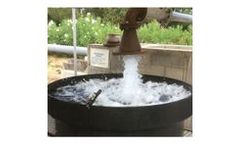
Find out about the different laws governing the management of water pollution risks, as well as the FILTRELEC ECODESIGN® F1500 high flow hydrocarbon filter. Reminder on the legislation: what does the Clean Water Act say? ...

The phases of Circular Economy are as follows: Ecodesign Production or Reprocessing Distribution Consumption Reuse, repair, reduce… Recycling The following areas must be covered, in order to close the circle: Optimisation of the use of natural resources and sustainable management. ...
ByTECAM

Strategic Care Project Motivation In Europe is now a clear societal need for take-back and recycling of electronic products. “Closing the loop” would serve several (partly interlinked) goals, such as: Reduction of the amount of materials and environmentally relevant substances going to landfill, Control of environmentally relevant substances (inorganic) or annihilation of such ...
A closed loop product life cycle can be divided into two branches: The traditional approach of EcoDesign (production – destribution – consumption), The End-of-Life Management (optimisation of re-use of products, components and materials). ...
How will the transition to a circular economy reduce costs and create jobs? Waste prevention, ecodesign, re-use and similar measures could bring net savings of €600 billion, or 8% of annual turnover, for businesses in the EU, while reducing total annual greenhouse gas emissions by 2-4 %. ...

pubRef=-//EP//TEXT+MOTION+P8-RC-2015-0363+0+DOC+XML+V0//EN) About SGS Product Sustainability Services Product sustainability services from SGS (http://www.sgs.com/en/Sustainability/Facilities-and-Production/Product-and-Packaging/Product-Sustainability-and-Procurement.aspx) expand clients’ range of environmentally responsible and sustainable products with a practical approach to ...
BySGS

In this article, Paul Olagnier, Product Stewardship Manager, discusses “The Ecodesign Directive” (2009/125/EC). This Directive sets stringent energy and resource efficiency requirements for many products placed on the European market, while its sister, The Energy Labelling Directive (2010/30/EU), requires that manufacturers and importers display energy consumption on ...
. +33 141 248 702 Email: [email protected] Website: www.sgs.com/ecodesign SGS is the world’s leading inspection, verification, testing and certification company. ...
BySGS

Globally, firms are increasingly adopting ecodesign practices in order to design products with lower environmental impact. This paper reports on a study which investigated the adoption of ecodesign practices among a sample of 30 South African electronic design firms, explored through a mixed methods approach. Key findings indicate relatively low awareness of ...
This paper aims to propose a new solution based on the progressive evolution of the environmental performance of the organisation considered by way of the design, deployment and enrichment of a 'classic' ecodesign tool. This is developed by a multi–functional team and acts as a learning vector within the company. This approach is called 'the environmental Trojan horse strategy' ...
EcoDesign is not easily fitting in the Innovation process, mostly owing to the dedicated time and resources required for learning and applying the EcoDesign–related knowledge when fast decision–making is occurring in early stages of product development and as there is only a low level of information on the new product to be made. In this paper, we propose a way ...
This paper points out the necessity for designers to have method to develop new concept of remanufacturable systems.Keywords: ecodesign, design for remanufacturing, LCA, life cycle assessment, economic assessment, DfX, design for X, RSC, reverse supply chains, supply chain management, SCM, espresso machines, product ...
Minimum environmental performance standards are also recommended to be set on all types of products, through for instance an extension of the scope of the Ecodesign Directive. The Ecodesign Directive is currently applicable for energy-using products and products having an indirect impact on energy use and is in the process of being reviewed. Nevertheless, ...