
Refine by
Effluent Control Articles & Analysis
77 articles found
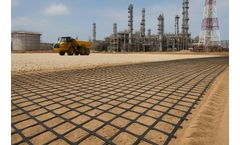
Environmental protection: Used in landfill capping, effluent treatment pond reinforcement, and erosion control, aligning with environmental compliance requirements in regional projects. Installation Process and Quality Control at the Reliance Project Site Site survey and subgrade assessment: Soil tests captured CBR, moisture content, and ...

Ferrous ions play a crucial role in numerous environmental and industrial processes, and their accurate measurement is essential for water quality monitoring, industrial effluent control, and research applications. In this blog post, METASH, a high performance laboratory analysis equipment exporter, will share the detection of ferrous ions using double beam ...

Problem: Installing of our first full scale TurboScrubber® plant on a 3MW developmental Gasifier plant. ...
Client: Go Green Fuels (division of Advanced Plasma Power) Site: Swindon Application: Syngas contaminant removal ...

Wastewater: Monitoring the flow of raw sewage, treated effluent, and sludge in wastewater treatment plants. Stormwater: Measuring stormwater runoff in urban drainage systems. 2. ...
Wastewater Treatment Plants: Magmeters are extensively used in wastewater treatment for monitoring and controlling the flow of effluent. Their accuracy is vital for managing treatment processes and ensuring regulatory compliance. ...

Develop and implement appropriate control measures to mitigate identified risks, such as engineering controls, administrative controls, and personal protective equipment (PPE). ...
The process consists of several key stages:Material Feed: Contaminated soil or waste material is fed into the Thermal Desorption Unit, where it undergoes a controlled and elevated temperature environment.Heating and Vaporization: The material is subjected to high temperatures, typically ranging from 200 to 1,000 degrees Celsius, causing the contaminants to vaporize. ...

Our new factory effluent treatment and monitoring installation at Yorkshire ...
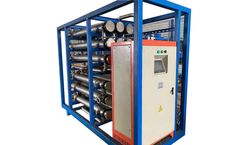
It has been verified from practical experience that for oil production sewage from oil fields and oily sewage from oil refineries, when the oil content in the influent is several hundred to tens of thousands of mg/L, the effluent can reach below 50 mg/L. (2) There are many kinds of organic matter in COD industrial wastewater, and the composition is also very complex. ...
ByYASA ET
Decant/draw cycle: The clarified effluent is withdrawn from the top of the tank without disturbing the settled sludge at the bottom of the tank. Idle cycle: This stage refers to the time between removing clarified effluent and filling the reactor. The length of this stage can vary, and it can be utilised to perform sludge wasting. ...
ByCoftec
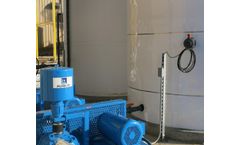
As a discharge requirement the local POTW requested a wastewater plant for effluent control prior to release. Without an operating facility an estimated flow along with surrogate numbers for TSS and BOD were utilized in designing the treatment system. ...

The National Pollutant Discharge Elimination System (NPDES) requires power plants in the U.S. to control their levels of harmful pollutants released in surface waters according to the specific effluent limitations. ...
Blowers within basin air lines and SBR jet motive pumps and in basin piping with jet nozzles provides the aeration and mixing for the treatment process. Treated effluent is decanted through a Solids excluding fixed wall decanter which is mounted on each reactor tank end wall. This end wall is a common wall with the basement wall of the control building. ...

SolarBees continue to provide water quality benefits more than 10 years after deployment. Topics: cyanobacteria, odor control, effluent storage basins, irrigation, reservoir circulation. Reservoir Overview: Effluent storage basins used for irrigation. Pond #4: ~36 Surface Acres Pond #5: ~29 Surface Acres. ...
Long-term cyanobacteria (blue-green algae) and odor control achieved. Topics: cyanobacteria, blue-green algae, odor control, effluent storage basins, irrigation Basin Overview: Two effluent storage basins of similar size and depth. P1 Area: 3.6 acres P2 Area: 3 acres Max Depth: 8 feet Each basin receives 1.2 MGD of ...
Control of nutrient flow The governments focus their efforts mostly on controlling pollution from point-sources of nutrients. ...

The usual approach to this problem is to feed sulfite in sufficient concentration to de-chlorinate the effluent. However, sulfite is an oxygen scavenger, and large residuals can result in reduced dissolved oxygen in the receiving stream, replacing one problem with another. Many plants have attempted to use ISE based probes for control but these devices cannot ...
There are typically several elements to consider in the measurement: Input -- what goes into an activity to produce an output Output -- the result of the activity on the input Activity -- the transformation from input to output Mechanism -- what makes the activity happen Control -- constraints on the activity Time -- how long the activity occurs Also, KPI should follow ...

This incorporates wastewater catchment, conveyance, trade effluent control, preliminary and primary treatment, secondary and tertiary treatment, reclaimed water reticulation and utilization. ...