
Refine by
Effluent Irrigation Articles & Analysis
72 articles found
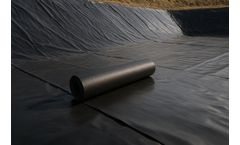
Oxidation ponds provide intermediate storage and degradation basins for farm effluents while preventing contamination of irrigation water sources. Recommended thickness: 1.0–1.5 mm HDPE.Hazardous Waste DisposalHazardous or radioactive waste requires stringent impermeability. ...
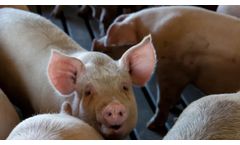
Therefore, we need to follow the idea of developing circular economy, ecological agriculture and comprehensive utilization of resources, combined with the actual situation of pastures, it is recommended to use two-phase anaerobic and two-phase aerobic processes to treat aquaculture wastewater, and the effluent reaches the standard of farmland irrigation and ...
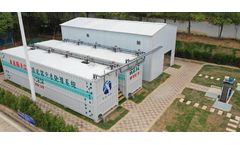
Aspiral wastewater treatment at service areas along China’s Hubei highway system allows effluent to be returned safely to the environment or used locally for agricultural irrigation In a country facing freshwater shortages, China’s five-year plan’s priorities promise further expansion of wastewater reuse In recent decades, China has ...
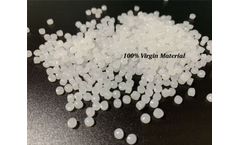
It has been proved that Fabtech owns the multi-disciplined technology of the lining and covering of dams, reservoirs, landfills, effluent lagoons, tunnels, irrigation channels, and tanks. Always at the front of the root barrier system industry, it has installed over 10 million sqm of HDPE liners and covers in Australia, the Pacific Rim, UAE, Eastern Europe, and ...

As a result of this initial success the system was expanded in 2004 as part of the Omaha South Stage 2 development. KEYWORDS Subsurface drip irrigation (SDI), golf course, effluent reuse, Omaha Introduction Omaha Beach is a popular coastal residential resort located on a narrow spit of land about an hour north of Auckland, near Warkworth, and is situated on ...
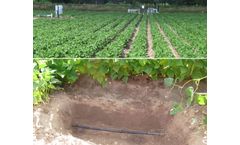
Three physical characteristics, unique to SDI, contribute to its advantages and to minimizing nitrate-N leaching: (1) Reduced evaporation; (2) Larger wetted soil volume and surface area than surface drip irrigation; and (3) Deeper rooting. A major factor in the environmental problems associate with animal effluent disposal arises from run-off caused by rain ...
Effluent water is available for use after proper treatment. Different classes of effluent exist. ...
As such, irrigation is construed to be the primary component for effluent reuse and is the focus of Hawaii's reuse guidelines. ...

However, when water conservation is a significant issue, or when primary options for effluent dispersal preclude conventional dispersal methods, then irrigation, and more so, subsurface drip irrigation, becomes a very attractive conservation and/or effluent dispersal component. ...

Project: Municipality Location: Bowen Island, BC Capacity: 240 m3/d (63,000 gpd) Contract: Design-Build-Operate Key Features: Modular and Expandable; Odour and Noise Abatement; Sludge Dewatering; External Membrane MBR Treatment; Effluent Reuse for Irrigation;Septage Receiving Station. This advanced wastewater treatment plant serves a commerial center, a ...

Decentralized water reuse helps stadium facilities improve water sustainability In a move to increase sustainability, more and more major stadiums in the United States are investing in stormwater management infrastructure, including elements like grass buffer zones that use natural processes to treat stormwater. Some of these innovative systems have been praised for their aesthetic qualities as ...

The wastewater is treated to tertiary standards and much of the effluent is used to irrigate a bluegum plantation. The PWTech Hybrid BNR Process is integral to the wastewater treatment plant operation. ...
All are conventional process wastewater treatment plants with a series of lagoons that achieve locally compliant effluent. But the combined-technology approach has gone beyond compliance and achieved irrigation-quality effluent. ...

Due to the necessary capacity increase, the effluent for the upgraded plant was required to meet a more stringent quality than the existing facility. In addition, the Township was considering the option of using final effluent as a source of irrigation water for a local golf course. After an assessment by the consulting engineer, the preferred ...

Topics: cyanobacteria, odor control, effluent storage basins, irrigation, reservoir circulation. Reservoir Overview: Effluent storage basins used for irrigation. ...
Topics: cyanobacteria, blue-green algae, odor control, effluent storage basins, irrigation Basin Overview: Two effluent storage basins of similar size and depth. P1 Area: 3.6 acres P2 Area: 3 acres Max Depth: 8 feet Each basin receives 1.2 MGD of effluent from the WWTP which then recharge water reclamation facilties at ...

MABR-based plant provides high effluent quality with low energy expenditure, as well as low odor and noise Background Outang Village in China's Zhejiang Province is a rural residential area adjacent to Qu River. ...
Similarly, the horizontal levee further treats effluent from the wastewater treatment plant. Rather than being discharged directly into San Francisco Bay, the effluent irrigates and fertilizes the ecosystem that develops on the slope of the levee, which in turn further purifies the effluent as it makes its way to the bay. ...
Sewage could instead be treated for sanitary discharge into the sea, or, as envisioned by the Pathway, it could be reused for agricultural irrigation. Technological Advances As the Caribbean faces a current drought and the prospect of more frequent droughts with climate change, a decentralized wastewater treatment strategy is particularly well suited to many islands. ...

With around 50-80 dry tonnes of biomass yield per hectare every year, Arundo donax (giant reed) is way ahead of its competitors. Of course, this yield depends on climate and applied agricultural technology. In this article below, the studies carried out concerning the biomass yield and economics of Arundo donax are presented. Biomass production in the Mediterranean: Italy, Spain and Sicily ...