
Effluent Nitrogen Articles & Analysis
102 articles found
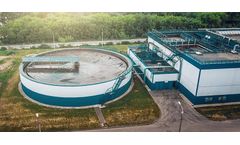
When nitrogen removal must be increased to comply with effluent regulations, Fluence solutions can update conventional activated sludge treatment systems Excess nitrogen in treated effluent is a key contributor to eutrophication in rivers, lakes, and coastal areas. ...
OxyMem MABR Combined biological treatment for carbon and nitrogen removal which brings effluent to required discharge standards, all incorporated into a single compact structure. ...
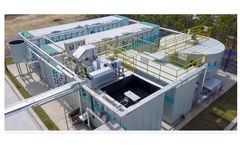
What are some of the environmental and health issues surrounding nitrate in groundwater, and options to resolve them? Nitrogen is a naturally occurring element that is essential for life on Earth. ...
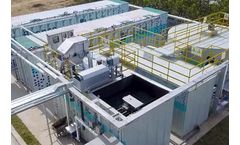
The process of removing dangerous nitrogen compounds from effluent is becoming increasingly efficient with new technologies like MABR Although nitrogen is a nutrient critical for all life, too much of it in water presents a number of dangers to ecosystems and human health. In response to a global increase in nitrogen ...

Measures to improve indirect emissions mainly refer to improving the utilization rate of effluent waste heat and afforestation. How do wastewater treatment plants in Denmark respond? ...
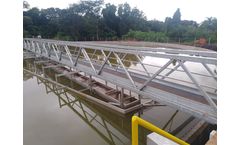
Challenges The existing wastewater treatment at the plant was rudimentary: Three dissolved air flotation (DAF) systems separated suspended solids from the effluent before it was discharged into an aerobic lagoon. The treatment didn't meet new, stricter discharge standards, particularly limits for nitrogen and phosphorus. ...
As the concentration of nutrients, namely nitrogen and phosphorus, increases in surface water, ecosystems are damaged in return. ...

Abstract : A microbiotest battery consisting of 4 Toxkit microbiotests (Algaltoxkit F™, Daphtoxkit F™ magna, Protoxkit F™ and Thamnotoxkit F™) and one rapid electrophysiological test, based on membrane response of Nitellopsis obtusa cells (Charatox), was used for the assessment of the acute toxicity of complex effluents in Lithuania. According to the ...

MABR-based plant provides high effluent quality with low energy expenditure, as well as low odor and noise Background Outang Village in China's Zhejiang Province is a rural residential area adjacent to Qu River. ...

Problem The City of Ocala, Fla., faced tighter effluent nitrogen limits due to the presence of springs in the St. John’s River basin. ...

Here you can see how she uses the organic liquid fertilizer or effluent to nourish her food garden. The biodigestion process does not destroy the nutrients of the food, rather the effluent is packed with nitrogen, potassium and phosphorous. ...

“Knowing the instantaneous final effluent quality, we can immediately take corrective process measures to improve process performance and final effluent ...
When they break down NO3 to metabolize oxygen, nitrogen gas is released. Chemical reduction: In these processes, chemicals such as acids are used as reducing agents to form ammonia or elemental nitrogen. ...
When they break down NO3 to metabolize oxygen, nitrogen gas is released. Chemical reduction: In these processes, chemicals such as acids are used as reducing agents to form ammonia or elemental nitrogen. ...
What’s more, the membrane surface quickly accumulates a biofilm of bacteria that establishes a simultaneous nitrification-denitrification (SND) process to produce a high-quality, low-nitrogen effluent suitable for reuse in irrigation. The MABR process is also low-maintenance. ...
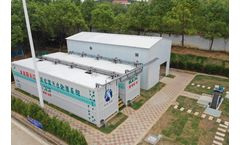
This unique process allows MABR to reach very low Total Nitrogen (TN) levels of <3 mg/l and enables up to 90% removal of Total Phosphorus (TP). ...
The OxyMem MABR combines bubble-less aeration and fixed films to provide treatment process for carbon and nitrogen removal bringing the effluent to required discharge standards, in a compact ...
Advanced technology treats difficult effluent for reuse and eliminates the need to buy imported water Background Tadel SA is a fish flour and fish oil processing company in Rocafuerte, Ecuador. ...

.): 11.5 Pre-Deployment Conditions: The anoxic portion of the basin was not able to achieve de-nitrification, effluent Total Nitrogen (N) was 15 mg/l. Objectives: Reduce effluent Total N to 8 mg/l or less by converting the main basin to three (3) zones as follows: Zone 1: 0-1 mg/l DO for de-nitrification. ...
Other benefits of Next FOG STOP™: Increased dissolved oxygen Reduced effluent nitrogen, phosphorus and BOD levels Improved sludge settling Greater throughput Why Native Bugs? ...