
Effluent Turbidity Articles & Analysis
42 articles found

Summary Drinking water systems face challenges like harmful algal blooms (HABs), harmful byproducts (DBPs), and stricter regulations. Chlorine, a common treatment, often creates DBPs, which pose health and environmental risks. It is also less effective against recurring algae issues and can damage infrastructure. Sustainable alternatives, such as LG Sonic's ultrasound technology, offer a ...

Turbidity Meter Working Principle Turbidity meters operate on the principle of light scattering. ...
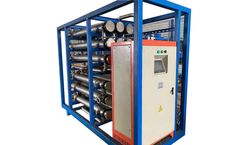
The removal rate of chromium ions by electroflocculation technology can reach more than 95%. (4) Turbidity, suspended solids electro-flocculation technology is very effective for colloidal particles and various impurity particles in water because of its efficient flocculation. ...
ByYASA ET
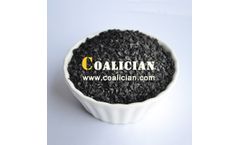
Low uniformity coefficient anthracite typically produces consistent improvements in turbidity removal, due in part to more efficient solids loading. Plus, low uniformity coefficient media produces smaller changes in effluent turbidity during periods of peak influent turbidity. ...

Multi-media filter is a process of using one or several filter media to pass water with higher turbidity through a certain thickness of granular or non-granular material under a certain pressure, thereby effectively removing suspended impurities and clarifying the water. Commonly used Filter materials include quartz sand, anthracite, manganese sand, etc., which are mainly used ...

Problems in the aerobic tank will also lead to abnormal conditions in the sewage treatment operation and affect the effluent indicators. "What are the problems? "What is the original cause? ...

New Next-Gen Intelligent Optical Sensor Delivers Precise Turbidity Measurement Water treatment engineers tasked with assuring reliable potable water treatment from ground or surface sources and storage reservoirs as well as those responsible for suspended solids in municipal or industrial wastewater effluent will find the smart TR80 Turbidity ...

The remaining four filter basins had 16” of new anthracite installed over 8” of new filter sand. Filter Turbidity: Figure 1 shows the performance of the Ceralite media versus one of the typical anthracite filters It shows that Ceralite performs equally with anthracite of the same effective size. The effluent turbidity data ...
These on-line measurements were required to both evaluate the filter performance overall but also to facilitate State Approval. Turbidity Typical raw water influent turbidities during the pilot test ranged between 0.28 NTU to 0.44 NTU. The requirements of the Enhanced Surface Water Treatment Rule required the turbidity to be equal to or less ...
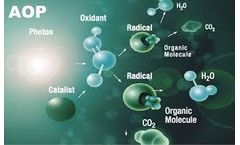
Solids Without effective primary and secondary processes, the turbidity of the effluent in the AOP systems could be higher than desired. At higher levels of turbidity, the absorption of UV radiation by the oxidizing compounds is hindered. ...

This particular dosage is required to ensure that the effluent is fully destabilized. If too much chemical is added, the solution will restabilize at the opposite charge of the original mixture. ...

The city installed a new water reclamation facility (WRF) to treat effluent from its wastewater treatment plant (WWTP), which would supply the cooling tower needs of an electrical generation plant. ...

It is supplied by surface water with a peak raw water turbidity of 110 NTU and average raw water turbidity of 35 NTU. The raw water is flash-mixed with aluminum sulfate as a coagulant prior to entering two identical settling basins, which are each divided into two sections. ...

In wastewater treatment, turbidity is often used as an indicator of effluent quality, rather than an absolute performance metric, although correlations have been found between turbidity and suspended solids. ...
The alternative use of effluent turbidity to determine the dilution field of a domestic marine outfall located off the city of Rio de Janeiro was evaluated through field work comprising fluorescent dye tracer injection and tracking with simultaneous monitoring of sea water turbidity. ...
Experiments were run on 23 ceramic filters – 10 replicates, one single filter, and two blanks – for approximately 10 days. Influent and effluent turbidity, E. coli, and MS2 concentrations were monitored regularly. ...
For chemically enhanced primary treatment (CEPT) with microsieving, a feedback proportional integral controller combined with a feedforward compensator was used in large pilot scale to control effluent water turbidity to desired set points. The effluent water turbidity from the microsieve was maintained at various set points ...

The quality of the raw water varies through the year. The turbidity can be up to 10 NTU and the colour as high as 100 mgPt/l in extreme periods. ...
A mathematical–statistical tool represented by CCD was employed to assess the interactive effects of the three key independent operational parameters, inclusive of biocarrier filling ratio (0–70%), aeration rate (0.21–0.63 m3 h–1) and RRT (1–15 days), on the removal efficiency of chemical oxygen demand (COD), biochemical oxygen demand (BOD), total Kjeldahl nitrogen (TKN), total phosphorus (TP) ...
The different MBRs were analysed comparatively between them and with a conventional MBR in order to check the effects of the irradiated waves on membrane integrity, effluent quality and process performance. Effluent turbidity and chemical oxygen demand, total and volatile suspended solid concentration and activated sludge viscosity were affected ...