
Refine by
Electrolysis System Articles & Analysis
45 articles found
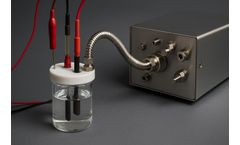
Multifunctional electrocatalysts are essential for efficient water electrolysis and fuel-cell operation. This study reports the solution-phase synthesis of an ordered Pd3Ni intermetallic (Pd3Ni-IM), historically challenging due to the tendency of adjacent transition metals to form disordered alloys. ...

In late November 2025, we completed the first installation of our newly released ECL Series—integrated with a HPR-40 DEMS—at the Helmholtz-Institute Erlangen–Nürnberg for Renewable Energy (HI ERN). This installation brings together: HPR-40 DEMS ECL-Static ECL-Insight ECL-Probe Designed to integrate seamlessly with the HPR-40 DEMS, the ECL Series enables ...
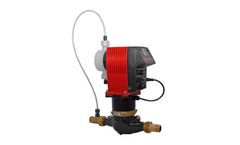
On display: a dosing pump from the Magdos series and the Minichlorgen T chlorine electrolysis system. These systems promote healthy plants, stable yields and sustainable operation. ...
Gold refining units are divided into two systems: electrolysis and hydrometallurgy. The electrolysis system is introduced first.Zhengzhou Jinquan Gold Refining Unit, with its high current density technology (cathode current density reaching 1000 A/m²), can refine crude gold (≥95% purity) to over 99.99% purity, meeting the ...

Lutz-Jesco will also be presenting dosing pumps from the Memdos Smart series for dosing aggressive chemicals as well as electrolysis systems from the Easychlorgen and Minichlorgen series, which safely produce the disinfectant sodium hypochlorite from commercially available salt. ...

Situation HyCC develops green hydrogen projects to make the industry more sustainable and to build a circular economy. Six projects are now under development, including one in Germany and five in the Netherlands. The latter includes two in Delfzijl, two in the North Sea Canal area near Amsterdam, and in Rotterdam they have the H2-Fifty project on Rotterdam’s Maasvlakte. The so-called ...
UAE Offshore Electro Chlorination System Electrolysis Sea Water ...
The customer asked us to evaluate the Electrocoagulation for the Treatment of Bio-Diesel Effluent and to be able to drain the treated water into the sewer ...
The customer asked us to evaluate the ELECTROCOAGULATION for the emulsion breaking and the main objective of the company that produces about 3000 tons / year of emulsions is to be able to avoid disposal, which has a very high cost and to send the water after the oil separation, to its chemical physical ...
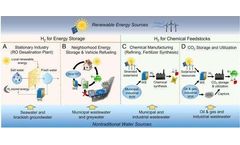
As the world intensifies its focus on green hydrogen production, a critical factor that often goes unnoticed is water treatment. The process of producing hydrogen through electrolysis involves complex chemical reactions and precise atomic calculations, making water treatment an essential part of the equation. In this article, we will discuss how understanding the atomic composition of water can ...
As the world intensifies its focus on green hydrogen production, a critical factor that often goes unnoticed is water treatment. The process of producing hydrogen through electrolysis involves complex chemical reactions and precise atomic calculations, making water treatment an essential part of the equation. In this article, we will discuss how understanding the atomic composition of water can ...
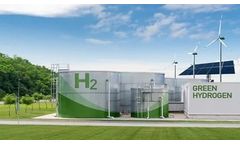
As governments and manufacturers continue their search for clean, sustainable energy solutions, green hydrogen is proving a viable option that can help decarbonise the planet. Green hydrogen is produced through the electrolysis of water using renewable sources of electricity and has the potential to significantly reduce CO2 emissions. Throughout the production process, the purity and quality of ...
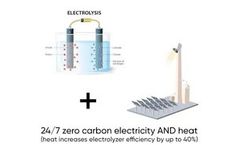
Green hydrogen is the ideal replacement for today’s fossil fuels, yet green hydrogen currently accounts for less than 1 percent of all hydrogen produced. Most of today’s hydrogen is made using dirty processes. For hydrogen to be called truly green, its production must be powered by renewable sources using a process, like electrolysis, that produces zero emissions. ...
The ability of mixed ionic and electronic conducting (MIEC) perovskite oxides (ABO3) to support both electronic and ionic conductivity, as well as their favourable catalytic properties and chemical and redox stability, make them promising electrode materials. MIEC perovskite oxides have received substantial attention in multiple applications in energy conversion and storage devices, such as solid ...
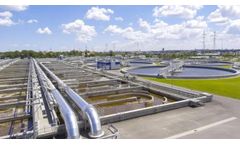
Chemical wastewater refers to the wastewater produced in the production process of chemical plants, such as oily wastewater from the production of ethylene, polyethylene, rubber, polyester, methanol, ethylene glycol, oil tank farms, air separation and air compressor stations, etc. After biochemical treatment, it can generally meet the national secondary discharge standard. Now, due to the ...
Green hydrogen, produced from water electrolysis using renewable energy sources, is being explored as a strategy to reduce the dependence on fossil fuels and decarbonize chemical processes. From an environmental standpoint, this approach is extremely attractive given that mild conditions are used during electrolysis and there are no greenhouse gases produced when using the hydrogen in a fuel ...
ByB&W Tek
Green hydrogen, produced from water electrolysis using renewable energy sources, is being explored as a strategy to reduce the dependence on fossil fuels and decarbonize chemical processes. From an environmental standpoint, this approach is extremely attractive given that mild conditions are used during electrolysis and there are no greenhouse gases produced ...
Electrocatalysis is the study of the catalyst material used at the electrode surface, or as the electrode, in an electrochemical reaction. The rate and mechanism of the electrode reactions at the electrode-electrolyte boundary also form part of the ...

What is a Fuel Cell? Fuel cells generate electricity through an electrochemical reaction rather than combustion. Inside a fuel cell, hydrogen and oxygen are combined to generate heat, water and electricity. They represent a clean, efficient, dependable, and quiet source of power that does not need to be recharged, but can continue to produce electricity as long as fuel is ...

For 10 years now Aliaxis has been supplying plastic piping solutions for the installations of the Russian chemical manufacturing plant JSC Kaustik in Volgograd, which is part of the NIKOCHEM Group. This long-term partnership is the result of a continuous and close collaboration on product specifications with the technical engineers of JSC Kaustik and their technology provider. Together with this ...