
Refine by
Electromagnetic Radiation Articles & Analysis
43 articles found

This technical digest covers the fundamentals of raman spectroscopy and instrumentation. Topics include the history of raman spectroscopy, what raman is and how it works, raman instrumentation, and common applications. ...
ByB&W Tek
The combination of two well-known analytical techniques, electrochemistry and spectroscopy, gives rise to spectroelectrochemistry (SEC) – an established scientific methodology. This hybrid technology offers researchers the best of both worlds by being able to record both an optical and an electrochemical signal at the same time to obtain new data [1]. This article begins with a ...
ByB&W Tek

Test content Radiation emission test: this is the key test to assess the level of airborne electromagnetic radiation from a energy meter. ...

At the same time, IR has the advantages of simple operation, high wavelength accuracy, good resolution, fast scanning speed, high sensitivity, etc., and is widely used in various fields of production and scientific research.The principle of IR for determining protein secondary structure is based on electromagnetic radiation, with a wavelength range between 4000 ...

Plasma emission spectrometry Principle: the atoms atomized and excited to the high energy state of phosphorus in the ICP light source produce electromagnetic radiation with characteristic wavelength when they transition to the ground state, and the emission intensity is proportional to the concentration of phosphorus atoms. ...
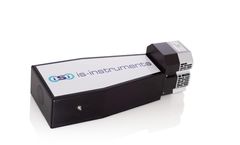
In its broadest sense, spectroscopy is used to investigate and measure spectra produced when a substance interacts with or emits electromagnetic radiation. All known matter absorbs or emits light and will give off a unique spectrum depending on the frequency at which the interaction with light occurs. ...
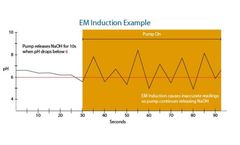
This article focuses on the common causes of noise in analog devices related to water quality measurement, but the concepts and preventative measures are applicable to any electronic measuring device. We go over the types of electromagnetic interference along with how to identify and prevent them. Additional tips for designing a noise-resistant system are provided toward the end of the ...

Also, it refers to the limits or extreme difference between the specified frequencies of a measured spectral range (that is, high versus low frequencies over a spectral range).DetectorA device sensitive to electromagnetic radiation at the wavelength region of interest. The output of the device is usually an electrical signal proportional to the intensity of the ...
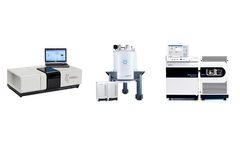
The goal of any optical spectrometer is to measure the interaction (absorption, reflection, scattering) of electromagnetic radiation with a sample or the emission (fluorescence, phosphorescence, electroluminescence) of electromagnetic radiation from a sample. Optical spectrometers are concerned with ...
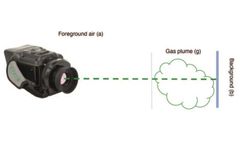
The rising demand for quantifying leaks and emissions of methane and volatile organic compounds (VOCs), in terms of emission rate, raised the question of whether quantification-optical-gas-imaging (QOGI) software was capable of estimating emission rates remotely and accurately. This article describes, in detail, the science and calibration procedures of a quantification approach. ...
ByOPGAL
A laser is a device which can generate a beam of light based on the stimulated emission of electromagnetic radiation. The term is actually an acronym which stands for Light Amplification by Stimulated Emission of Radiation, coined in 1957 by physicist Gordon Gould. ...
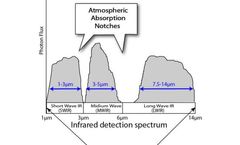
Opgal offers two types of OGI cameras; cooled (EyeCGas 2.0 & EyeCGas 24/7 PRO) and uncooled (EyeCGas Mini & EyeCGas 24/7). This article will help you better understand the difference between the two technologies, including the benefits and limitations of each. What is the difference between them? The answer is not complicated; however, to understand the answer, we’ll summarize the ...
ByOPGAL

Plasma comprises charged particles as well as a range of other active components that are thought to interact with the body to produce desired affects in plasma medicine such as; electric current, UV radiation and reactive gas species these components are thought to be able to act synergistically. ...

Solar thermal collectors are extremely efficient at capturing solar radiation, which is mostly comprised of electromagnetic radiation on the infrared (IR) and ultraviolet (UV) bands. Only 47% of the solar energy that bombards the earth daily actually reaches the surface of our planet, with high volumes of EM radiation being lost ...

However, since all VOCs emit an electromagnetic thermal energy in specific spectral region, it can be seen against the cooler sky background using a thermal camera with the proper filter, transmitting thermal energy in the specific wavelength range. ...
ByOPGAL

The two sides of the slide can be set up with three sections of adjustable time, adjustable power, and adjustable pressure. Electromagnetic radiation conforms to GB/T18555-2001 (providing third party normal institution inspection certificate). ...

Radiant Heat, however, is the transfer of energy in the form of electromagnetic radiation or infrared wavelengths. The infrared wavelength can be directed toward a target with a reflector. ...

In early 2016, the US Environmental Protection Association (EPA) published the QuadOa regulations, designed to reduce the level of greenhouse gases (GHG) released into the atmosphere by the oil and gas industry. In early 2017, the implementation of these regulations is far less clear. Nonetheless, some clarity remains. Natural gas’s reputation as the ‘clean’ fossil fuel ...
ByOPGAL

There is at least one computer, some even two or three in front of people, ozone, electromagnetic radiation and electronic fog and other pollution accompanied heat waves by chassis fan, mixed with dirty air release to everyone in the work. ...
ByOlansi

Ultraviolet light, also known as ultraviolet energy, is a form of electromagnetic radiation that comes from the sun. Although invisible to the human eye, its impact can be felt and seen on the skin. Sunburns, excessive tans and damages skin tissue are the most common results of too much exposure to ultraviolet light. Electromagnetic ...