
Refine by
Elevating Platform Articles & Analysis
29 articles found

Introduction: The quest for innovative solutions to tackle Volatile Organic Compound (VOC) emissions has led to the exploration of airborne platforms equipped with Optical Gas Imaging (OGI) technology. This article delves into the potential of using airborne platforms as a viable tool for VOC emission reduction, with a specific focus on how OGI enhances detection, monitoring, and mitigation ...
ByOPGAL
Working at height is a dangerous activity. Many hazards can arise while you work at height, some of which are well-known and others that aren’t so obvious. It is important to know these dangers so that you can take the necessary precautions to ensure your safety. Here are common hazards of working at height: ...
This was a very cumbersome process especially if you were on an elevated ...

In contrast, passenger elevators can range from low to high travel, small elevators for 4 or 6 people, or large elevators for transporting people, shopping carts, etc. ...
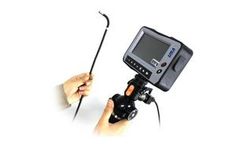
This was a very cumbersome process especially if you were on an elevated platform. As stated earlier, the new borescope models provide on board image capture and video recording capabilities which is a significant improvement over the older fiberscope models. ...
Plain Mild Steel Grating Steel Grating- Basic Steel Grating Materials,Can be Galvanized,Black Painted Mild steel grating is very strong and safe for the support of floors, platform stair treads and elevated walkway. It is a low cost flooring metal with no galvanizing or hot dipped coating protection, suitable for common industrial uses. ...

Injuries from falls at the workplace are unfortunately all too common. In fact, according to the US Bureau of Labor Statistics, there were over 240,000 nonfatal workplace injuries involving falls, slips, and trips in the US in 2019. OSHA regulations require that fall protection be provided anywhere employees are working at or above elevations of four feet in most general industry workplaces, ...
ByTractel
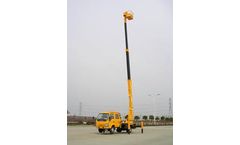
Because of the tremendous capabilities and working heights of aerial platform trucks, elevating platform devices are highly engineered products that must be strong but lightweight. ...
OSHA loading dock safety rules require that open docks four feet or more above ground level or the platform floor have standard safety gates, guard railings or their equivalent to prevent serious worker injuries from falls. In addition, manufacturers must make sure that workers maintain a safe distance from the edge of: Ramps or platforms on an ...
ByTractel
As a business owner or safety manager, you are aware of your obligation to minimize fall hazards for your employees. You faithfully follow OSHA requirements for fall protection, and safety is of paramount importance in your facility. That means you’ve installed guardrails around dangerous machinery, equipment, and materials. You’ve protected the leading edge of elevated surfaces like ...
ByTractel
Mezzanines are useful highly useful areas of any industrial facility or warehouse, but they present an added fall hazard. Workers on mezzanines are always at risk of falling, and personnel nearby are exposed to risk from falling tools, debris, and equipment. Good news: facility managers can manage and minimize all these risks by investing in protective equipment like a mezzanine safety gate, ...
ByTractel
Few things are more alarming to a safety manager than receiving news of an unexpected OSHA audit. With little time to prepare for an unannounced visit, you are left to face OSHA inspectors without the chance to make sure all the proper fall protection measures are in place and up to code. The key to staying one step ahead is to schedule your own internal OSHA fall protection audit before OAHS ...
ByTractel
We’ve come a long way since Upton Sinclair’s 1906 novel, “The Jungle” – which highlighted some of the dangerous working conditions in American food processing at the turn of the century. While the book is widely remembered for exposing the meatpacking industry’s less-than-sanitary processes (which ultimately led to the development of the FDA), it also brought ...
ByTractel
Most people assume modular safety rails are used only to protect workers from falling from elevated structures and platforms. While this is important, employers must protect employees from falling onto machines and equipment, regardless of height - and a modular guardrail system is a great solution for those often-unique hazards. ...
ByTractel
From heavy equipment to dust, gas, liquid metal, noise, heat, chemicals, and working at heights, steel manufacturing employees face a variety of health and safety risks every day. While a wide range of safety precautions are essential, including the use of a fall safety harness and safety lanyards, industrial swing gates, and more, it’s even more important to cultivate a culture of safety ...
ByTractel
Whether your facility is adding new work areas, expanding the equipment line with new installations, or introducing elevated storage systems, utilizing a modular guardrail system enables you to meet OSHA fall protection standards throughout the facility’s layout. ...
ByTractel
Many warehouses utilize mezzanines and elevated platforms to store equipment, materials, and supplies since growing upwards is more efficient than expanding the warehouse’s footprint. These platforms represent a potential falling hazard, both for workers on the platform as well as those working below. ...
ByTractel

Much of the conventionally used construction equipment is designed to safely extend a worker as far as possible in order to allow them to operate in difficult to reach places that current automated processes are not capable of doing. These working platforms are called Mobile Elevated Work Platforms (MEWPs). Although effective by design for ...
Many warehouses utilize mezzanines and elevated platforms to store equipment, materials, and supplies since growing upwards is more efficient than expanding the warehouse’s footprint. ...
ByTractel
We know that falls are among the most common causes of injuries in the workplace and it’s really no surprise—things like elevated work surfaces, walkways, rooftops, holes in floors and walls, ladders, scaffolding, and slippery surfaces are common, especially in industries like manufacturing and construction. ...
ByTractel