
Refine by
Elisa Articles & Analysis
229 articles found
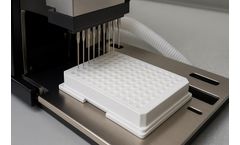
ELISA plate washing is a critical determinant of assay performance. Residual liquid and carryover after washing can drive background signals, compressing the dynamic range and elevating the limit of detection. ...
ByCytena

l Validation: Products validated for ELISA, flow cytometry, or ligand-binding kinetics provide higher confidence in reproducibility. ...
Antibody Development and Diagnostic Tools Recombinant ELANE serves as an immunogen for the generation of monoclonal antibodies. It is also used in ELISA platforms to quantify ELANE levels in clinical samples—useful for monitoring inflammation in pulmonary and systemic diseases. ...
These experiments are essential for dissecting the cross-talk between mineralization control and TGF-β superfamily pathways in tissue development and disease. 4. Antibody Development and ELISA Standards Purified recombinant MGP serves as an antigen for monoclonal or polyclonal antibody production. It is also employed as a standard in ELISA kits designed to ...

Methodologies in Cross-Reactivity Studies Various methodologies are employed in tissue cross-reactivity studies. These include: ELISA (Enzyme-Linked Immunosorbent Assay): This is widely used to assess antibody binding to specific antigens present in different tissues. ...

References Tighe PJ, Ryder RR, Todd I, Fairclough LC. ELISA in the multiplex era: Potentials and pitfalls. Proteomics Clinical Applications. 2015;9(3-4):406-422. DOI: 10.1002/prca.201400130 Baker HN, Murphy R, Lopez E, Garcia C. Conversion of a capture ELISA to a Luminex xMAP assay using a multiplex antibody screening method. ...

Characterization After selection, characterized clones are further analyzed for their binding affinity, specificity, and stability. Techniques such as ELISA, surface plasmon resonance, and Western blotting are commonly used to evaluate these parameters. 5. ...
This customization can include the selection of specific cytokines, the type of sample (serum, plasma, tissue homogenates, etc.), and the detection method (ELISA, multiplex assays, etc.). Key Features of Customized Rabbit Cytokine Assays Species-Specific Reagents: These assays use antibodies and other reagents specifically developed for rabbit cytokines, ensuring high ...
Enzyme-Linked Immunosorbent Assay (ELISA): ELISA is a sensitive technique used for quantifying specific vitamins, particularly when only small sample volumes are available. ...
Enzyme-Linked Immunosorbent Assay (ELISA): This immunoassay technique is used to detect specific hormones in plant extracts. ELISA offers high sensitivity and is particularly useful for quantifying hormones like auxins and cytokinins in various samples. ...
Given the complexity of the immune system, researchers often need to measure multiple cytokines simultaneously to capture a comprehensive picture of immune activity. Traditional methods, such as ELISA, are limited in throughput and require large sample volumes, making them less suitable for rare or precious samples. ...
These beads can simultaneously capture multiple target analytes from one sample — such as cytokines or growth factors — while a detection system measures the interaction through fluorescence readouts. Compared to traditional ELISA assays, this technology maximizes efficiency, saves resources, and provides a broader data set from minimal sample volumes. ...
Advantages of SPR in Protein Studies The popularity of SPR in protein analysis stems from several unique advantages: Label-Free Detection Unlike other methods (e.g., ELISA or radioactive labeling), SPR eliminates the need for modifications or labeling, preserving the protein's natural structure and function. ...

Therefore, it is very important to conduct detailed analysis of the interaction between recombinant protein drugs and FcyR.The analysis of the interaction between recombinant protein drugs and FcyR is mainly carried out through experimental methods such as enzyme-linked immunosorbent assay (ELISA) and surface plasmon resonance (SPR). In ELISA experiments, we can ...

Clean and safe drinking water is a fundamental human right, whereas millions worldwide still suffer from diseases caused by drinking infected water. Contaminated drinking water by microorganisms has severe health consequences, such as gastroenteritis or, even worse, cholera, dysentery, and typhoid fever. Although traditional methods have proven their efficiency for testing water, technological ...

Because of its abundant presence and stable nature, BSA is often used as a control standard in experiments, such as in protein concentration determination, enzyme-linked immunosorbent assays (ELISA), and other biochemical and molecular biological techniques.Circular Dichroism (CD) is a spectroscopic technique that can provide information about the three-dimensional structure of ...

Enzyme-Linked Immunosorbent Assay (ELISA)Using a specific antibody to recognize a specific type of collagen, the content of collagen can be quantitatively analyzed through enzyme-labelled immune reaction and color development.2. ...

These methods are usually simple and low-cost, but their sensitivity and specificity may not be as good as more advanced analytical methods.Enzyme-Linked Immunosorbent Assay (ELISA)ELISA is an immunological method that can be used to detect and quantify specific proteins, including collagen. ...

Enzyme-Linked Immunosorbent Assay (ELISA)This uses phosphorylation-specific antibodies to quantitatively analyze phosphorylation levels in protein samples.Applications1. ...

ValidationKey findings are validated by techniques such as Western blot, enzyme-linked immunosorbent assay (ELISA), etc.Overview of Label-Free Proteomics Experimental ...