
Refine by
Emissions Data Articles & Analysis
382 articles found

Worldwide/ESG Frameworks ESG reporting standards emphasize consistent, auditable emissions data, driving ongoing disclosure and accountability beyond regulatory compliance. ...
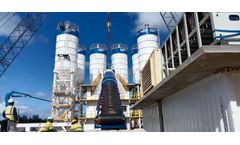
Particulate emissions from concrete batching plants represent one of the sector's most persistent environmental compliance challenges. ...

Worldwide/ESG Frameworks ESG reporting standards emphasize consistent, auditable emissions data, driving ongoing disclosure and accountability beyond regulatory compliance. ...
Worldwide/ESG Frameworks ESG reporting standards emphasize consistent, auditable emissions data, driving ongoing disclosure and accountability beyond regulatory compliance. ...

On May 4, 2026, the International Energy Agency (IEA) released the Global Methane Tracker 2026, outlining technology pathways and implementation considerations for methane emissions reduction across the global energy sector. Based on satellite monitoring and field data, the report indicates that the energy sector accounts for approximately 35% of global ...
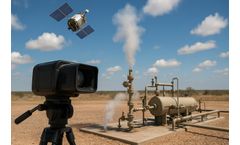
The burden of proof has shifted toward demonstrating non-emission or lower emission levels through empirical data. The Satellite Revolution and the EPA AI Enforcement Nexus Satellites employing SWIR spectroscopy identify plumes over extensive areas, enabling rapid, large-scale detection. ...
ByOPGAL
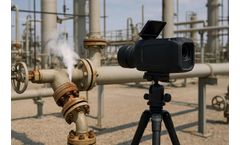
This analysis examines the evolution of Quantitative Optical Gas Imaging QOGI, the economic case for replacing default emission factors with empirical data, and how high performance methane detection cameras serve as a financial defense in the OOOOb era. ...
ByOPGAL
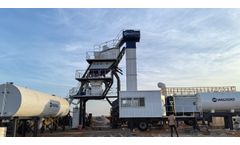
Low-NOx Burner Design and Combustion Emission Compliance NOx emission compliance for urban green-zone portable asphalt plant for sale operation requires burner combustion architecture designed for low-temperature flame profiles that minimize thermal NOx formation — the dominant NOx generation mechanism in high-temperature asphalt plant combustion ...
ByMacroad

The production process requires the recording of specific data—including temperature, residence time, and yield—to support carbon accounting. ...

The emergence of IoT sensor networks allows continuous data collection across multiple locations, but raw data alone is insufficient. ...
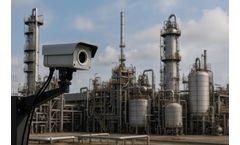
Fatigue and varying experience levels can introduce inconsistencies in plume detection, creating data gaps in the compliance record. Transitioning to The Autonomous Eye: Fixed OGI To address intermittency, the architectural shift is to permanently install fixed OGI systems in high-risk zones, delivering continuous data streams from assets such as tank batteries ...
ByOPGAL

A mobile stone crusher plant(planta de trituración móvil) operator who can provide environmental product declarations and verified emissions data becomes a valuable partner rather than a interchangeable commodity supplier.Environmental Improvements in Crushing Operations Transforming an aggregate operation into a sustainable supply chain node requires fundamental ...
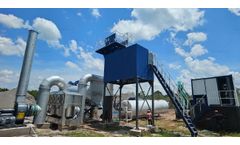
Buyers should evaluate suppliers’ emissions data, noise mitigation strategies, dust management solutions, and documentation for permitting. ...
ByMacroad

As manufacturing environments become more complex and sustainability expectations rise, identifying emission sources, understanding accumulation behavior, and implementing data-driven control strategies become essential for effective environmental and operational management.What Causes Black Carbon Emissions in Automotive ...

How Artificial Intelligence Is Reshaping Emissions Monitoring and Reporting Introduction: Why EPA AI Is Becoming a Regulatory Turning Point The integration of EPA AI into environmental regulation marks a significant shift in how methane emissions are monitored, analyzed, and reported across the energy and industrial sectors. As methane regulations grow more ...
ByOPGAL
OGI systems represent this evolution by combining optical gas imaging with intelligent data workflows that support continuous monitoring, verification, and reporting. At the core of these systems lies the OGI sensor, the component responsible for capturing gas signatures and transforming invisible emissions into actionable data. Together, OGI ...
ByOPGAL
The regulatory landscape for methane and industrial greenhouse gas emissions is shifting rapidly. The United States Environmental Protection Agency is strengthening requirements under the Subpart W proposed rule, part of the Greenhouse Gas Reporting Program. The new expectations focus on more accurate quantification, verified measurement methods, and continuous or near continuous detection of ...
ByOPGAL
Introduction: OOOOc - The Next Step in Methane Regulation As global attention on methane intensifies, the U.S. Environmental Protection Agency (EPA) continues to roll out new standards aimed at reducing emissions from the oil and gas sector. Following the introduction of OOOOb, the agency is now advancing OOOOc, a complementary rule targeting existing oil and gas sources rather than new ...
ByOPGAL
One of the most significant developments is the Subpart W Proposed Rule, which updates the framework for reporting methane and other greenhouse gas emissions from oil and gas operations. While EPA Subpart W has existed for years as the backbone of greenhouse gas reporting, the proposed updates represent a major shift toward higher accuracy, continuous monitoring, and ...
ByOPGAL

Alberta Environment is becoming a policy driven and outcomes focused ministry. A key factor in the success of this strategic shift is being able to effectively monitor and report on the state of the environment. The objective was to demonstrate that the department is achieving its desired environmental outcomes using a systems management ...