
Refine by
Emissions Dispersion Modeling Articles & Analysis
56 articles found
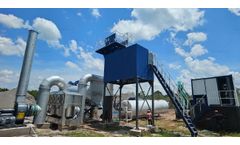
Buyers should evaluate suppliers’ emissions data, noise mitigation strategies, dust management solutions, and documentation for permitting. ...
ByMacroad

An environmental management authority in a Caribbean nation recently implemented the Ambient Quality Management Information System (AQMIS) to modernize and centralize its approach to air quality monitoring and management. Designed as a comprehensive platform, AQMIS integrates multiple data streams, analytics, and visualization tools to provide a holistic view of air quality. The system includes ...

Industrial sources, traffic, domestic heating and harbour emissions have been taken into account. Modelling system includes 3-dimensional meteorological models SWIFT-SURFPRO with the Lagrangian particle dispersion model SPRAY. The air emissions inventory was partially established using measured ...
We present a modelling system for the estimation of forest fire emissions ( prebolchem-fire ) and their inclusion in the atmospheric composition model BOLCHEM. ...
Additionally, the use of microsimulation traffic modelling in conjunction with an instantaneous emissions model (IEM) has been adopted to allow comparison between methodologies and enable congestion sensitive analysis of the impact of air quality management measures on the network. Findings from microscale modelling have revealed ...
A dedicated software is available for detailed estimation of possible radioactive emission (source term). This part of the procedure is used by trained NPP operators and then automatically coupled with dilution coefficients to obtain radionuclide air pollution concentrations. ...

If there are several potential sources of odour emissions at the plant, conduct an odour emission survey at the plant with atmospheric dispersion modelling to assess the effect of these sources, both individually and in aggregate, at off-site odour receptors and use the dispersion modelling to ...
ByORTECH
The SILAM model with built–in isoprene and monoterpene emission module from natural sources was run for May to August 2006 in Baltic Sea region. ...
We modelled the air quality in Europe during January and June 2006 using the MM5/CAMx model system and studied the sensitivity of ozone and aerosol formation to precursor emissions. Increased isoprene emissions by a factor of four in summer caused an increase in afternoon ozone by up to 10%. ...
The CALPUFF modelling system was used to predict dispersion of contaminants emitted from industrial, naval and vehicular sources in the Strait of Messina area (Italy). ...
This paper presents an evaluation of an innovative data assimilation method that has been recently developed in NCSR Demokritos for estimating an unknown emission rate of radionuclides in the atmosphere, with real–scale experimental data. The efficient algorithm is based on the assimilation of gamma dose rate measured data in the Lagrangian atmospheric dispersion ...
The performance of this Lagrangian dispersion model was checked through some basic qualitative and quantitative comparisons. As the model was able to detect highest PM concentrations both in space and time, test scenarios of emission reductions were also run in order to examine the impact of different traffic related ...
The TNO emission inventory is used as emission input. Special pre–processing procedures are created for introducing temporal profiles and speciation of the emissions. The study is based on a large number of numerical simulations carried out for two emission scenarios - with all the emissions and with biogenic ...
The emissions of toxic air pollutants from three power plants and one oil refinery were measured for a period of six months and dispersion of pollutants were calculated by using Air Dispersion Modelling Software (ADMS–4). The plume concentration of carbon monoxide, oxides of nitrogen, sulphur dioxide and particulate matter ...
This work presents the results of a photochemical modelling system composed of MM5–SMOKE–CMAQ on Brazilian Amazonia area, been a pioneered implementation task. These results focus on the biogenic and biomass burning emissions and the impact of these emissions on regional air quality. Global and local anthropogenic ...
This study explores for the first time, the applicability of the Danish Operational Street Pollution Model (OSPM) in the city of Buenos Aires where street canyons are very irregular. The model is applied in an irregular and asymmetric street canyon of a five–lane avenue near a street intersection. ...
Keywords: street intersections, street canyons, air quality monitoring, air pollution, traffic pollution, Buenos Aires, Argentina, NOx concentration, wind direction, dispersion modelling, vehicle emissions, wind speed, road ...
In this work, a Lagrangian particle model able to account for simple chemical reactions between NO and O3 has been improved to consider the photolysis of NO2. A system of chemical equations is numerically solved on a Eulerian grid, while the particle trajectories are moved in a Lagrangian frame. The NOx emissions of a power plant in real atmosphere, situated in a ...
A GIS based air quality modelling system has been developed in Apulia region in the Southern Italy, to support local authorities in air quality management. Meteorological and dispersion simulations were performed for the year 2005. Predictions have been compared with concentration data from the air quality monitoring network. Results evidence a good correlation ...
A CALMET–CAMx system was implemented to investigate PM10 source apportionment in the urban area of Venice. The modelling system was run for two winter months on a domain covering most of the Veneto region with a 4 km resolution mesh and a 1 km nested grid over Venice and its mainland area, in order to distinguish the local emission contributions from the regional ...