
Refine by
Emissions Sampling Articles & Analysis
81 articles found
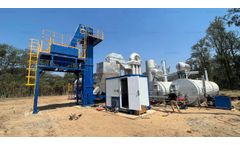
Targeted emission control systems and regulatory readiness First, manufacturers are integrating advanced particulate capture and VOC reduction modules to meet stricter limits. ...
ByMacroad
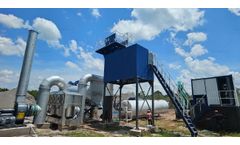
Buyers should evaluate suppliers’ emissions data, noise mitigation strategies, dust management solutions, and documentation for permitting. ...
ByMacroad
We at MJM Environmental can perform a large array of air emission sampling test parameters to industry and environmental authority standards. Our accreditation (ISO/IEC 17025, accreditation number 20692) covers a range of industrial air emission sampling test parameters. To view the scope of our accreditation, please click here ...

Introduction The recent eruption on the Reykjanes Peninsula in Iceland has not only captivated observers with its raw natural beauty but also raised urgent questions about its effects on the environment and air quality. With volcanic activity posing a constant threat in various parts of the world, the necessity for accurate and timely monitoring of volcanic emissions has never been more ...

The approach is instead to gather a sample of the emissions. The sampling runs continuously for two to four weeks. ...
ByOPSIS AB

With this said, it must be noted that “sampling” also can have other meanings in emissions monitoring contexts. ...
ByOPSIS AB
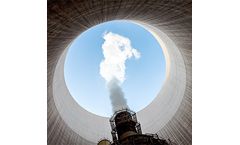
Each BREF contains detailed discussions on what can be done with respect to limitation of emissions. It also suggests emission limits to a large number of pollutants. ...
ByOPSIS AB
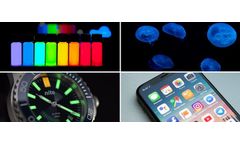
The terms; luminescence, photoluminescence, fluorescence and phosphorescence are routinely used in research papers to describe the emission of light from a sample. This multiple naming can be confusing with several of the terms being used interchangeably and researchers from different scientific backgrounds preferring to use one name over another. ...
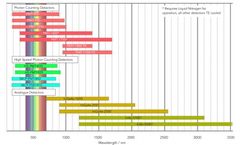
There are a few basic questions that need to be considered in order to choose a detector: What is the spectral emission range of the samples? The most basic requirement is that the detector must be sensitive over the whole emission range of the sample to acquire the full spectrum. ...
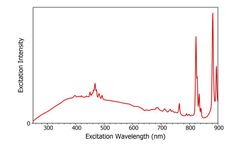
When fluorescence spectra are measured in Edinburgh Instruments fluorescence spectrometers, two types of correction can be applied to the spectra; excitation and emission. In our previous blog post, we focused on emission correction and its role in the detection system. ...
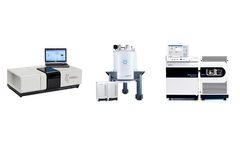
The goal of any optical spectrometer is to measure the interaction (absorption, reflection, scattering) of electromagnetic radiation with a sample or the emission (fluorescence, phosphorescence, electroluminescence) of electromagnetic radiation from a sample. ...
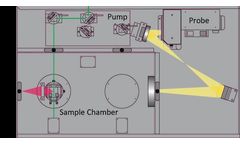
Laser Induced Fluorescence (LIF) is an optical spectroscopic technique where a sample is excited with a laser, and the fluorescence emitted by the sample is subsequently captured by a photodetector. ...
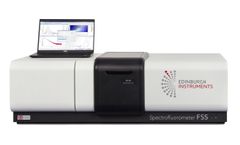
Relative Quantum Yield Method In the relative method, the quantum yield of the sample interest is calculated by comparing its photoluminescence emission to that of a reference standard of known quantum yield. ...

Therefore, manufacturers must pay attention to the emission or bear the great cost of the rule-breaking. Luckily, FPI provides the advanced emission monitoring equipment -- CEMS-2000 Standard Emission Monitoring System to offer integrated and sophisticated monitoring services for this industry. ...
The event is a global initiative to highlight the role light plays in all aspects of life, from science to art and education.1 The broad applications of light covers research areas such as medicine to renewable energy and is supported by UNESCO to help achieve their goals – education, equality and peace.2 16th May, Theodore Maiman, and the First Laser Theodore Maiman, an American physicist and ...
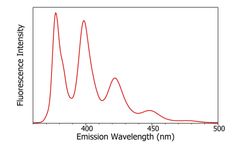
In this blog post, the differences between molecular absorption, excitation and emission spectra are explained.Absorption SpectraAbsorption spectra (also known as UV-Vis spectra, absorbance spectra and electronic spectra) show the change in absorbance of a sample as a function of the wavelength of incident light (Figure 1), and are measured using a ...

In the US, whole-air collection methods, such as glass ‘bombs’ canisters and sampling bags, are widely used for monitoring stack emissions, in accordance with (for example) US EPA Methods 0030, 325 and 5041A. ...

Many waste incineration plants are still using the old method of periodic sampling. With periodic sampling, dioxins are only measured for 6-8 hours at a time. You don’t need a math degree to see that short-term sampling might miss essential information about actual dioxin emissions. ...
Long-term monitoring systems for dioxins are normally used for sampling dioxin compounds in emissions from two to four weeks. The longer sampling time, the more reliable the results and the clearer the picture of what is emitted in the environment through the industrial plant’s stack, Dr Tirler explains. “Short-term ...

Since no two elements share the same pattern of emitted wavelengths, the emission spectrum is a fingerprint that can be used to identify the elements that are present in a sample as shown in figure 1. Also, the intensity of the emitted light can be correlated to the concentration of that element in a sample. An optical emission ...