
Refine by
Environmental Data Analysis Articles & Analysis
58 articles found

Sensor networks feed real-time dashboards and cloud-based analytics, enabling proactive management of air quality for industries, cities, and environmental professionals.Evolution from Sensors to Smart SoftwareTraditional monitoring relied on fixed stations and individual sensors reporting data periodically, often with delays between measurement and action. ...
The Well Redundancy Problem Every groundwater monitoring network includes wells that cost money but provide no commensurate value. This statement reflects reality at contaminated sites worldwide, not a criticism of the hydrogeologists who designed these networks. Contamination plumes evolve over time, and our understanding of subsurface conditions improves as data accumulates. A well that ...
ByLiORA

In controlled environments like cleanrooms, laboratories, and manufacturing facilities, maintaining air quality and environmental conditions isn’t just important… it’s essential. Whether you’re working in pharmaceuticals, biotechnology, semiconductors, aerospace, or medical device manufacturing, compliance with strict regulatory standards is non-negotiable. ...

Let’s explore key sectors where environmental compliance is essential. Key Takeaways: The Role of Environmental Compliance Across Industries 1. ...
The integration allows lab results from Watercare Laboratory Services to be directly uploaded into ESdat Environmental Data Management Software. This provides automated data validation, real-time updates, and seamless assignment of lab data to the appropriate projects, streamlining workflows for environmental ...
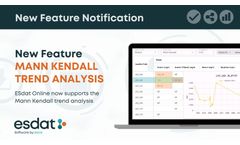
Streamline Environmental Data Management with ESdat’s Trend Analysis Feature Analyzing trends in complex datasets in environmental consulting is crucial for effective decision-making. ...
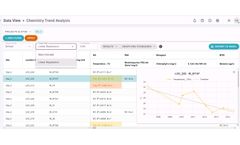
It is particularly suitable for environmental data that may be nonlinear or have missing values. What are the typical applications of Mann-Kendall trend analysis? ...
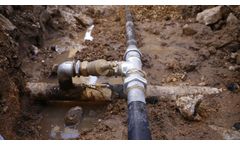
1. What is the EPA’s Lead and Copper Rule Improvement (LCRI)? The Lead and Copper Rule Improvement (LCRI) is an update issued by the EPA on October 8, 2024, that requires all U.S. drinking water systems to identify and replace lead service lines within the next decade. This rule aims to protect public health, particularly in communities with older infrastructure where lead pipes are still ...
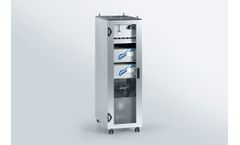
In response to environmental challenges, and relying on the best available techniques, regulations are evolving to meet ever-lower emission limit values (ELVs). ...
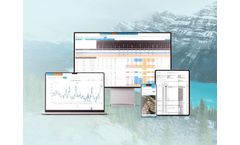
Environmental Data Management Software (EDMS) significantly improves the effectiveness of an Environmental Management Framework (EMF) by providing tools to manage, analyze, and report environmental data more efficiently and accurately. ...
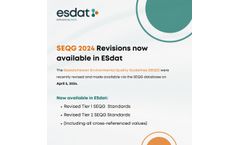
On April 5, 2024, the Ministry of Environment of Saskatchewan announced significant updates to the Saskatchewan Environmental Quality Guidelines (SEQG), marking a crucial development for environmental consultants and other stakeholders. These guidelines are vital for maintaining environmental standards and ensuring public health and safety. Overview of the Updates The SEQG updates involve ...

What slows down environmental projects—and how better project management keeps them moving For Environmental Consulting and Engineering, effective project management is essential for success. However, navigating through complex regulatory requirements, managing interdisciplinary teams, and ensuring timely delivery can be challenging. At EVX Software, we understand these challenges and have ...
ESdat data management solutions offer comprehensive support for managing environmental standards and guidelines. ...

In the selection, we should pay attention to the protection level and adaptability of the product, and choose products that can adapt to different environmental conditions. 5. Data processing and analysis functions: Modern gas leak detectors usually have data processing and analysis functions, which can provide ...
ByJXCT

Oizom’s solutions extend beyond urban areas, reaching into natural environments where they monitor for abnormalities that might signal environmental distress. Data for Research and Analysis Data is the driving force behind environmental progress. ...
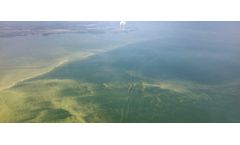
Harmful algal blooms, also known as HABs, are a growing environmental problem around the world. These blooms occur when certain types of algae grow out of control, often as a result of excess nutrients in the water. While some algae are essential for aquatic ecosystems, HABs can be harmful to humans and marine life. They can cause respiratory issues, skin irritation, and other health problems in ...

The New Jersey (USA) AC 7 26 D Remediation Standards developed by the New Jersey Department of Environmental Protection is responsible for the implementation of the Brownfield and Contaminated Site Remediation Act, NJSA 58:10B-12, among other statutes such as The Industrial Site Recovery Act (ISRA), NJSA 13:1K‐6 et seq., the Water Pollution Control Act, NJSA 58:10A‐1 et seq., and the New Jersey ...

Grant researchers with all instrumentation and data needed for effective science in the field of environmental science and air quality In the last years, Environmental science started to become a priority topic for many research groups around the globe. ...

Also, the policy presents exposure factors and toxicity values for TPH and LNAPL, which assist in analysis and various assessments. The use of the Kansas policy on TPH and LNAPL helps address environmental concerns that threaten human health. ...

The Risk-Based Standards for Kansas is a manual that details the processes of instating site-specific and chemical-specific clean-up goals for groundwater, soil and indoor air (Kansas Department of Health and Environment, 2010). The United States Environmental Protection Agency and other technical resources directives were used to determine the clean-up goals. An Environmental Workgroup ...