
Epa 1664 Articles & Analysis
18 articles found
The boundary between the solvent and the sample will have an emulsion layer that has a cloudy or milky appearance as shown in this photo. According to U.S. EPA Method 1664, “if the emulsion is greater than one-third the volume of the solvent layer, the laboratory must employ emulsion-breaking techniques to complete the phase ...
The board has about 50 different wells that are purified in three different plants and has three wastewater treatment plants. EPA Method 1664 takes 24 hours to provide result The municipal laboratory is responsible for testing FOG content of industrial customers such as automobile manufacturers, food processors, metal plating, and others on a monthly basis. ...
The boundary between the solvent and the sample will have an emulsion layer that lias a cloudy or milky appearance as shown in tlris photo. According to U.S. EPA Method 1664, "if the emulsion is greater than one-third the volume of the solvent layer. ...
It is complicated by the fact that oil conies in many forms and the measurement is defined by the particular regulatory method. When EPA 1664 is the regulatory method, the "oil" is anything that is extracted into hexane and remains after the hexane has been evaporated and appears as weight. ...
It is complicated by the fact that oil conies in many forms and the measurement is defined by the particular regulatory method. When EPA 1664 is the regulatory method, the "oil" is anything that is extracted into hexane and remains after the hcxanc has been evaporated and appears as weight. ...
Different methods measure different properties of oil Oil comes in many forms and the measurement is defined by the regulatory method. If EPA 1664 is the regulatory method, the “oil” is anything extracted from the water into hexane and left after the hexane has been evaporated to show up as weight. ...
The measurement is, therefore, defined by the particular regulatory method used to measure it. When EPA 1664 is the regulatory method, the "oil" is anything that is extracted into hexane and remains after the hexane has been evaporated and shows up as weight. ...
It is complicated by the fact that oil comes in many forms and the measurement is defined by the particular regulatory method. When EPA 1664 is the regulatory method, the "oil" is anything that is extracted into hexane and remains after the hexane has been evaporated and shows up as weight. ...
It is complicated by the fact that oil comes in many forms and the measurement is defined by the particular regulatory method. When EPA 1664 is the regulatory method, the “oil” is anything that is extracted into hexane and remains after the hexane has been evaporated and shows up as weight. ...
It is complicated by the fact that oil comes in many forms and the measurement is defined by the particular regulatory method. When EPA 1664 is the regulatory method, the “oil” is anything that is extracted into hexane and remains after the hexane has been evaporated and shows up as weight. ...
Measurement data correlates with EPA Method 1664 and ASTM Method D7066. Currently, there are upwards of 2,500 InfraCal Analyzers in worldwide operation – many on oil and gas drilling platforms. ...
Infrared results are comparable to the US EPA 1664 gravimetric method and the InfraCal TOG/TPH Analyzer complies with ASTM D7066. ...

Instead, it is the fraction of a complex mixture (which changes radically from site-to-site), that is detected by a regulatory test (e.g. EPA Method 1664, Ospar GC-FID Method). In this paper, I attempt to clarify the definitions of the most frequently specified figures-of-merit. ...
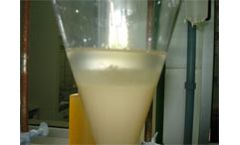
The boundary between the solvent and the sample will have an emulsion layer that has a cloudy or milky appearance as shown in this photo. According to U.S. EPA Method 1664, “if the emulsion is greater than one-third the volume of the solvent layer, the laboratory must employ emulsion-breaking techniques to complete the phase separation”. ...
A new simplified procedure for FOG analysis based on solvent extraction and infrared absorption can give a regulator or operator an on-site result in less than 10 minutes.Infrared Analysis of FOG Infrared analysis of oil and grease has been used in the petroleum industry on highly regulated off- shore oil platforms for over 30 years with analyzers such as the InfraCal TOG/TPH Analyzer pictured ...
Infrared Analysis Infrared analysis of oil and grease has been used in the petroleum industry on highly regulated off-shore oil platforms for over 30 years. EPA Methods 413.2 and 418.1 are infrared methods for oil and grease measurement using now-banned Freon to extract the hydrocarbons from the effluent. EPA Method 1664, using hexane as the ...
Infrared Analysis of FOG Infrared analysis of oil and grease has been used in the petroleum industry on highly regulated off- shore oil platforms for over 30 years with analyzers such as the InfraCal TOG/TPH Analyzer pictured to the left. EPA Methods 413.2 and 418.1 are infrared methods for oil and grease measurement using the now banned Freon to extract the hydrocarbons from the ...
Because Freon has been found to be a hazard to the ozone layer, its manufacture has been discontinued in the United States. This has resulted in the EPA developing a new official method (EPA 1664) that uses hexane as an extractant. ...