
Refine by
Esg Performance Articles & Analysis
27 articles found

Predictable, replicable recycling workflows are critical to minimizing ESG audit exposure and legal uncertainty. Integrating recycling into asset lifecycle planning delivers measurable value. ...

Introduction: The New Era of Smart Leak Detection In today’s industrial landscape, leak detection has evolved from a simple maintenance routine to a critical component of safety, compliance, and sustainability. With increasing pressure from regulators, investors, and the public, companies must now monitor and manage leaks in real time, with absolute precision. This is where the Ventus ...
ByOPGAL
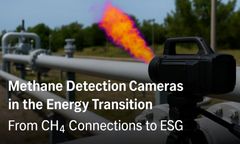
Through tools like methane detection cameras, integration with CH4 connections, and adherence to OGI certification, companies can simultaneously safeguard profitability and enhance their ESG ...
ByOPGAL

Introduction: Why Camera Leak Detection Matters Gas leaks pose significant safety, environmental, and financial risks. Methane and other volatile compounds are invisible to the naked eye, but even small leaks can lead to catastrophic accidents, regulatory fines, and lost revenue. For decades, industries relied on handheld sensors that could only measure one point at a time. Today, a camera leak ...
ByOPGAL

Introduction: What Is an OGI Camera? Optical Gas Imaging (OGI) has transformed how industries detect and manage gas leaks. A camera OGI makes the invisible visible by capturing emissions such as methane, VOCs, and refrigerants that cannot be detected by the naked eye. These leaks pose serious risks: worker safety, environmental damage, regulatory penalties, and millions in product losses. ...
ByOPGAL
Introduction: The Growing Need for Gas Imaging Leaks of methane, VOCs, and other hazardous gases are one of the biggest challenges for industries such as oil & gas, chemical processing, and power generation. Detecting these emissions early prevents costly downtime, protects workers, and ensures compliance with strict environmental regulations. In recent years, gas imaging has become the gold ...
ByOPGAL

Introduction: Why CH4 Connections Matter Methane, or CH4, is one of the most potent greenhouse gases known today. While its atmospheric lifetime is shorter than CO2, its warming potential is over 80 times higher over a 20-year horizon. This makes methane emissions a top priority for both regulators and industry leaders. When we speak of CH4 connections, we are talking about the direct links ...
ByOPGAL

These mobile systems offer a blend of flexibility and performance—delivering reliable concrete production in remote or urban job sites while significantly reducing energy consumption and emissions. ...

Companies seek ways to reduce their impact on the environment The food and beverage industry plays a huge role in feeding the world, and this comes with an environmental cost. The good news is that many food and beverage companies are starting to implement creative solutions to reduce their impact on the environment. we focus on two key areas where food and beverage companies can improve their ...

Making buildings energy efficient is the best place to start improving your company’s environmental, social, and corporate governance performance (ESG) score. Smart building technology can help you meet your net zero goals and reduce your carbon footprint.Improving your ESG score can save money and will please investors, employees, and customers. ...

Hello . Good evening. A 46 fantastic site 1 that I found on the Internet. Check out this website. There's a great article there. https://www.haiarten.com/artikel-wie-haie-millionen-jahre-ueberlebt-haben.shtml| There is sure to be a lot of useful and interesting information for you here. You'll find everything you need and more. Feel free to follow the link ...
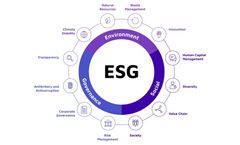
When companies and their consultants oversee an ESG reporting framework, the main focus is clearly to positively influence environmental, social, and governance factors. Each category within these ESG programs have multiple metrics that organizations must track. Common ESG metrics for the environmental category are greenhouse gas emissions and waste management. For the social category, ...
Approximately 70% of available freshwater is used by agriculture, so recycling is crucial, especially in water-stressed regions. 3. Strengthen ESG performance. Stakeholders now prioritise corporate ESG impact. ...
” With abundant tools and frameworks for measuring a company’s ESG performance, it’s hard to know which indicators point best to a brands effectiveness. ...

This article will explore how smart technologies, IoT, and efficiency evolution are shaping the future of building management and how facilities managers can leverage these tools to optimise their operations and enhance their ESG performance. Facilities Management: Making Buildings Smart In the modern era, smart technologies such as the Internet of Things (IoT) ...

Top line reporting in the ESG world is being driven by the banking sector The banking industry has a crucial role to play in addressing climate change. Banks are the driving force behind improving transparency through robust ESG reporting. As ESG investing is becoming increasingly important to investors, banks want to get a handle on the risks associated with ESG reporting, and the benefits to ...

The global shift to cleaner energy to combat climate change has been driving industries to radically green their operations to economically thrive and remain relevant for years. The mining industry, however, is one of the most important industries that will help the world in achieving net-zero goals. A greener future is impossible without mining by-products as well as the sector’s adoption ...

Economic development is replaced with the word governance and hence, the “G” in ESG. The G word refers to governance factors of corporate decision-making from policy-making through to the adequacy of ESG reporting itself. Some of the metrics used for ESG performance are: ESG development started ...
The acronym ESG is short for environmental, social and governance. ESG is a process of quantifying an organisation’s commitment to social and environmental factors. ...

Compliance is simply mandatory if you want to avoid losses and manage your company’s risk properly, but it takes resources, time, money and a lot of effort. According to a recent Thomson Reuters report, 34% of compliance teams spend one to three hours a week tracking and analyzing regulatory developments, 26% spend four to seven hours, 22% spend eight to 10 hours, and 9% spend 10 hours or ...