
Refine by
Esg Reporting Articles & Analysis
40 articles found

States have increased enforcement through fenceline monitoring in major industrial clusters, with ambient standards for SO2 and NO2 set at 80 µg/m³ (24-hour basis) and broader continuous monitoring expectations across sectors. Worldwide/ESG Frameworks ESG reporting standards emphasize consistent, auditable emissions data, driving ongoing ...

States have increased enforcement through fenceline monitoring in major industrial clusters, with ambient standards for SO2 and NO2 set at 80 µg/m³ (24-hour basis) and broader continuous monitoring expectations across sectors. Worldwide/ESG Frameworks ESG reporting standards emphasize consistent, auditable emissions data, driving ongoing ...
States have increased enforcement through fenceline monitoring in major industrial clusters, with ambient standards for SO2 and NO2 set at 80 µg/m³ (24-hour basis) and broader continuous monitoring expectations across sectors. Worldwide/ESG Frameworks ESG reporting standards emphasize consistent, auditable emissions data, driving ongoing ...

Quantification (QOGI) supports downstream reporting for ESG metrics by providing mass-flow data on VOC leaks.The Future: Multi-Spectral Filtering and AIFuture developments include multi-spectral filtering and mode switching to adapt the camera to different monitoring needs, such as methane, CO2, or refrigerants, enabling monitoring of process lines, cooling ...
ByOPGAL

Early trend detection supports maintenance planning, filter replacement timing, and calibration improvements, reducing peak emissions and long-term costs.Practical applications include:Optimizing ventilation and air distribution based on particulate trendsEnhancing filtration in high-emission zonesImproving combustion efficiency in boilers and furnacesAdjusting workflows to minimize peak ...

They fail because field data, lab results, and reporting workflows don't align quickly enough to support decisions.For enterprise teams managing groundwater, soil, surface water, air, or multi-site monitoring, the most leverageable software decision is usually not which vendor offers the most features. its:Which platform reduces risk and rework across field capture, lab imports, ...

In many projects, initial recycling fees appear reasonable, but real costs emerge during: Project audits ESG reporting Asset transfers or refinancing Cross-border portfolio consolidation At these points, the traceability of recovered materials and compliance with PV Panel Waste Treatment Machinery standards are scrutinized. ...

This convergence is driving demand for modern environmental data management systems that can unify field observations, laboratory results, compliance reporting, and long-term monitoring in one structured digital environment. Why this distinction matters for modern projects Large projects no longer succeed on structural safety alone. Regulatory approvals, ESG ...

Introduction: Why OGI Systems Are Becoming an Industry Standard Industrial gas detection is undergoing a fundamental shift. As safety, environmental accountability, and regulatory oversight continue to intensify, operators are moving away from isolated measurement tools toward integrated detection platforms. OGI systems represent this evolution by combining optical gas imaging with intelligent ...
ByOPGAL
How Artificial Intelligence Is Reshaping Emissions Monitoring and Reporting Introduction: Why EPA AI Is Becoming a Regulatory Turning Point The integration of EPA AI into environmental regulation marks a significant shift in how methane emissions are monitored, analyzed, and reported across the energy and industrial sectors. As methane regulations grow more complex and enforcement becomes more ...
ByOPGAL

Transparent measurement not only informs internal efficiency strategies but also strengthens corporate ESG disclosure, investor confidence, and community trust. Regulation is tightening, and expectations are broadening. ...
Introduction: OOOOc - The Next Step in Methane Regulation As global attention on methane intensifies, the U.S. Environmental Protection Agency (EPA) continues to roll out new standards aimed at reducing emissions from the oil and gas sector. Following the introduction of OOOOb, the agency is now advancing OOOOc, a complementary rule targeting existing oil and gas sources rather than new ...
ByOPGAL
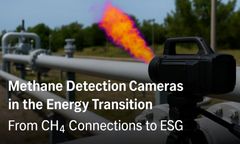
Introduction: Why Methane Detection Matters in Energy Transition As industries around the world navigate the shift from fossil fuels to renewable energy, methane remains at the center of climate discussions. Methane is a powerful greenhouse gas, with a global warming potential over 80 times that of carbon dioxide in the first 20 years after release. Reducing methane emissions has become a global ...
ByOPGAL

Introduction: Why Camera Leak Detection Matters Gas leaks pose significant safety, environmental, and financial risks. Methane and other volatile compounds are invisible to the naked eye, but even small leaks can lead to catastrophic accidents, regulatory fines, and lost revenue. For decades, industries relied on handheld sensors that could only measure one point at a time. Today, a camera leak ...
ByOPGAL
Introduction: The Growing Need for Gas Imaging Leaks of methane, VOCs, and other hazardous gases are one of the biggest challenges for industries such as oil & gas, chemical processing, and power generation. Detecting these emissions early prevents costly downtime, protects workers, and ensures compliance with strict environmental regulations. In recent years, gas imaging has become the gold ...
ByOPGAL
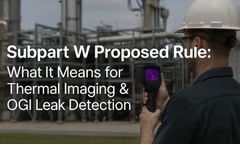
Introduction: Regulation Meets Innovation Methane emissions are one of the most pressing challenges in today’s energy and industrial landscape. Invisible to the naked eye, these leaks not only waste valuable product but also drive significant greenhouse gas emissions with major climate impacts. For years, reporting programs relied heavily on emission factors and engineering calculations, ...
ByOPGAL

These design optimizations not only enhance carbon intensity scores but also align with sustainability reporting standards like ESG frameworks and Scope 3 emission disclosures. ...
As EPA regulations like OOOOa, OOOOb, and Subpart W tighten, industries face growing pressure to enhance emission monitoring. Optical Gas Imaging (OGI) technology—especially when combined with artificial intelligence (AI)—offers a powerful way to stay ahead. This article explores how companies like Opgal are turning compliance into innovation with smart OGI tools that simplify ...
ByOPGAL

(hereinafter referred to as “Cubic,” stock code: 688665.SH) officially released its 2024 Environmental, Social, and Governance (ESG) Report (hereinafter referred to as “the Report”). The Report systematically presents Cubic’s innovative practices and outstanding achievements in the areas of ...

You’re not alone if that thought crosses your mind on a regular basis. Mandatory sustainability and ESG reporting on the horizon According to KPMG, reporting regulations are evolving fast, and companies should expect to have mandatory reporting requirements imposed on them. Nearly all of the world’s 250 largest ...
ByacQuire