
Refine by
Ethyl Acetate Articles & Analysis
40 articles found
Complex Pollutant Composition Pharmaceutical production involves a wide variety of solvents, intermediates, and auxiliary chemicals.Typical VOCs include:Ethanol Isopropanol (IPA) Acetone Ethyl acetate Butyl acetate DMF Benzene, toluene, and xylene (BTX) Chlorinated hydrocarbons In addition to VOCs, exhaust streams may contain:Pharmaceutical dust ...
Main VOC Pollutants The exhaust gas mainly contains: Ethyl acetate Isopropanol N-propanol Butyl acetate Acetone Other Non-Methane Hydrocarbons (NMHC) Key Treatment Challenges VOC emissions from China’s printing industry are typically featured with: Large air volume Low pollutant concentration Complex solvent composition Strong irritating odor ...
Industries Served by CADAIR DFTO Systems As an experienced DFTO Manufacturer, CADAIR provides customized solutions for a wide range of industries.Chemical Manufacturing Treatment of exhaust streams containing:Toluene Xylene Ethyl Acetate Methanol Acetone Methyl Ethyl Ketone (MEK) Pharmaceutical Production VOC control for:API manufacturing Solvent ...
Common VOC compounds found in furniture manufacturing include: VOC Compound Typical Source Toluene Solvent-based coatings Xylene Paints and thinners Ethyl Acetate Spray coating processes Butyl Acetate Wood finishing coatings MEK (Methyl Ethyl Ketone) Cleaning operations Ethanol Certain coating formulations Besides VOCs, furniture ...
Main Pollutants Toluene Xylene Methanol Isopropanol Ethyl acetate Key Challenges Extremely large airflow volume Significant operating condition fluctuations Paint mist blockage risks High explosion-proof safety requirements CADAIR Shipbuilding Industry Case A large shipyard pretreatment line in Qingdao, Shandong Province generated significant amounts of ...
The detailed classification is as follows: ✅ Highly Recoverable (High Efficiency) Esters: Ethyl Acetate, Butyl Acetate, Propyl Acetate Aromatics: Benzene, Toluene, Xylenes Ketones: Acetone, Methyl Ethyl Ketone (MEK), Methyl Isobutyl Ketone (MIBK) Alcohols: Ethanol, Isopropyl Alcohol (IPA), Butanol Chlorinated ...
Applicable VOC Types Suitable for organic solvents with boiling points between 40°C–200°C, including: Aromatic Hydrocarbons Benzene Toluene Xylene Ethylbenzene Styrene (requires special design considerations) Esters Ethyl acetate Butyl acetate N-propyl acetate Ketones Acetone MEK (Methyl ...
However, for high-value organic solvents such as dichloromethane (DCM), toluene, IPA, ethyl acetate, and MEK, thermal destruction often creates major operational disadvantages: Valuable solvents are destroyed instead of reused Energy consumption remains high CO₂ emissions increase significantly Long-term operating costs continue to rise Because of this, ...
During the coating process, large quantities of organic solvents—such as ethyl acetate, toluene, MEK (methyl ethyl ketone), and methanol—evaporate under high temperatures during the drying stage, generating VOC exhaust gases with highly complex compositions. ...
Display Panel Industry Project Jing*** Display Panel Plant Upgrade Project VOCs: PGMEA, butyl acetate, cyclohexanone Airflow: 345,000 m³/h Solution: Zeolite Rotor + TO One of the benchmark VOC treatment projects in the global display panel industry. ...

Work-up is a three-stage liquid–liquid extraction performed in the same jacketed vessel: first, ethyl acetate is used to remove neutral organics; second, brine is used to strip residual palladium; third, citric acid is used to protonate the imide nitrogen, mitigating emulsions. ...
As a drug carrier, PLGA is soluble in common solvents such as acetone and ethyl acetate. The size, shape and surface area of PLGA nanoparticles can be adjusted by adjusting the molecular weight and ratio of lactic acid and glycolic acid in the polymer to obtain the required nanocarriers are simultaneously processed and prepared into various shapes and sizes. ...
The resulting peptides are acidified, and a biphasic system is formed by mixing with ethyl acetate. The aqueous phase, containing the peptides, is collected, dried, and resuspended for further analysis. ...
Specific classifications of electronic wet chemicals Category Subcategory Product Name General Electronic Wet Chemicals Acids Hydrofluoric acid, nitric acid, hydrochloric acid, sulfuric acid, acetic acid, etc. Alkalis Ammonia, sodium hydroxide, potassium hydroxide, etc. ...
Typical ATRP initiators are 2-bromopropanitrile, ethyl 2-bromo-propionate, tosyl chloride among many other halides. Catalyst & Ligand The catalyst complex perhaps is most important among the components of ATRP. ...
Residue conversion of Edman degradation The ATZ residue was separated from the peptide by extraction with organic solvents (ethyl acetate or chlorobutane), which was then converted to the more stable phenylthiohydantoin (PTH) form. ...

(B) Best = 1-4%, (G) Good = 5-10%, (F) Fair = 11- 15%, (P) Poor = 16%+ Aqueous Solutions Water B Sodium Chloride (Saturated) B Aluminum Sulfate B Acids & Bases Sulphuric Acid (66° Be) B Acetic Acid, Glacial B Hydrochloric Acid (30° Be) B Nitric Acid (40° Be) B Sodium Hydroxide (50% sol.) B Ammonia Hydroxide B Aliphatic ...
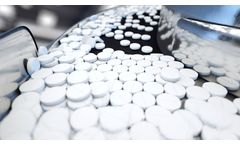
Polymers are used in a wide variety of applications that can include everything from film coatings on medicines, to controlling the release rate of drug formulations.They are also used as a taste masking agent, stabilizer, thickener,and as a protective agent in oral drug delivery. Solvents such as acetate, methanol, isopropanol, and ethyl acetate ...
As drying air is introduced to the pan in order to evaporate the alcohol, significant emissions of VOCs such as Ethyl Alcohol, Ethyl Acetate, and Acetone, are exhausted into the air handling system and released into the environment. ...

Samples were evaporated to dryness under a stream of nitrogen and reconstituted with 50 µL of ethyl acetate for final analysis by GC-MS. The limits of quantification ranged between 2.5ng/ mL to 10ng/mL. ...