
Refine by
Eu Emissions Regulations Articles & Analysis
32 articles found

With the global transition to a circular economy, the full implementation of the EU Batteries and Waste Batteries Regulation (EU Battery Regulation) has established clear rules for the waste battery processing industry. ...
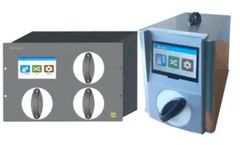
Discover the new EU regulation on ammonia emissions and learn how the PermaCal calibrator helps you achieve precise and compliant measurements. ...
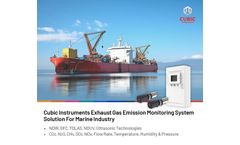
Building on the Initial IMO Strategy, recent regulations including the EU Emissions Trading System (EUETS) Directive (EU2023/959) and EU MRV Regulation (EU2023/957) will extend GHG emissions monitoring requirements. ...
Emissions monitoring is often carried out by continuously operating instruments providing measurement results in close-to real time. The data can then be averaged and compared to emission limits. Using this kind of instruments is not only a possibility but often a legislative requirement. ...
ByOPSIS AB

To an increasing degree, governments and regulators are implementing strict rules and regulations on greenhouse gas emissions and sustainability. ...
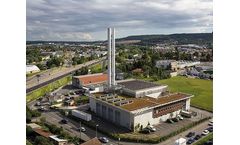
The Medium Combustion Plant Directive (MCPD) applies to over 140,000 plants in the EU, and regulates emissions from the combustion of fuels in plants with a rated thermal input between 1 and 50 MW. ...
ByENVEA

The standards include both equipment specifications as well as operation and measurement requirements and are published within the EPA 40 CFR part 60. Directive 2010/75/EU of the European Parliament and the Council on industrial emissions (the Industrial Emissions Directive or IED) is the main EU instrument ...

These systems use water washing, activated carbon adsorption cleaning, and ceramic ring adsorption technologies to make certain no toxic emissions are output. As a result of extra-strict EU emissions regulations, customers from Europe should choose rubber pyrolysis plants featuring activated carbon absorption towers to make sure ...

I remember sitting as a student in a lecture hall when our teacher began the lesson by stating that the magic limit of 400 parts per million (ppm) atmospheric carbon dioxide (CO2) had been reached. This happened for the first time in 2013, and by 2016 even the lowest value of the year was over 400 ppm. And by now, the annual mean CO2 concentration is already over 410 ppm. ...

Where required it is also designed to comply with the most rigorous global environmental standards, including EU Industrial Emissions Directive (IED) 2010/75/EU, EU Waste Incineration Directive (WID) 2000/76/EC and the US Environmental Protection Act (EPA). All the technology is also designed to fully comply with the stringent ...
In this article we will discuss the FTIR technology, and the benefits of having an FTIR emissions monitoring system. We will also look at the process of what needs to be taken into account before purchasing an emissions monitoring system. ...

The incinerators supplied to RDF facilities are state of the art, utilizing continuous loading systems which allow for a completely enclosed operation along with cutting-edge pollution control devices in the form of ceramic filtration, to reduce emissions in-line with EU / UK regulations. The i8-1000 is the largest incinerator in our range, with ...
Due to the deviant nature of Mercury, it wasn’t added to the EU standards of emissions until fairly recently. All in all, the benefits of emission monitoring is two-fold: It creates a common framework for standards and keeps the emissions at a set level. ...

On September 2014 the European Commission proposed a new regulation to harmonise across the EU the emissions limit values (ELV’s) from engines installed in Non-Road Mobile Machinery (NRMM). ...
Executive summary This European Environment Agency (EEA) report, Application of the European Union Emissions Trading Directive in 2015, provides an updated overview of the information reported by European Union Member States on the implementation of the EU Emissions Trading System Directive (EU ETS Directive, EU, 2003). The report is based on the questionnaires reported by Member States in 2016 ...
Synthesising Member State reporting on the application of the EU ETS Directive The European Union Emissions Trading System (EU ETS) is one of the key climate policy instruments that has been implemented in the European Union (EU) to achieve its objectives of reducing greenhouse gas (GHG) emissions in a cost-effective manner. The EU ETS covers certain activities that emit carbon dioxide (CO2), ...
While the transport sector contributes significantly to society and the economy it also can cause substantial adverse impacts on the environment, global climate and human health. A new report by the European Environment Agency (EEA) analyses key environmental trends with a view to identifying what has improved and what has hampered the past performance of the transport sector. The transport ...
The legal basis for the compilation of the EU GHG inventory is Regulation (EU) 525/2013 of the European Parliament and of the Council on a mechanism for monitoring and reporting greenhouse gas emissions (EU MMR). ...
For EU plus Iceland, total GHG emissions in 2014 are estimated to be – 24.4% below 1990 emissions. ...
The European Union (EU) Emission Trading System (ETS) covers about 45% of the EU's total greenhouse gas (GHG) emissions. ...