
Refine by
Evaporative Cooling Articles & Analysis
133 articles found
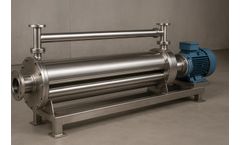
The R and RHD Series are designed for both hygienic and industrial applications, including heating, cooling, pasteurisation, and evaporation of a wide range of products such as concentrated dairy, nut butters, sauces, minced meat, viscera, pet food, and thick cosmetics like creams and gels. ...
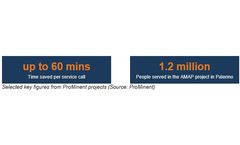
Practical example of remote monitoring: up to 60 minutes’ time saved per operation A concrete example illustrates what digital remote monitoring means in practice: SUEZ Water Technologies & Solutions France uses a cloud-based solution with app control for the operation of evaporative cooling systems. Due to Legionella protection requirements, these ...
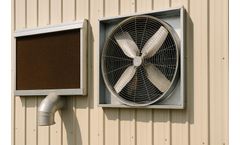
The most common errors include: installation near heat sources or air currents placement in areas that are not representative of the environment As a result, the system may respond inconsistently, leading to inaccurate adjustments and inefficient operating cycles. 4. Lack of integration with evaporative systems In combined systems, ventilation and evaporative ...

Leak detection has become a critical priority across industrial sectors, from energy and power generation to chemical processing and manufacturing. Even small, undetected leaks can lead to safety hazards, energy loss, environmental damage, and regulatory exposure. Traditional inspection methods often rely on point sensors, manual checks, or pressure testing, which may miss hidden or intermittent ...
ByOPGAL

Data centers consume significant water resources through evaporative cooling systems, with cooling tower blowdown representing one of the largest sources of water waste in these facilities. ...

Introduction: Seeing Leaks Before They Become Failures Industrial facilities rely heavily on pressurized systems – steam lines, cooling networks, hydraulic circuits, chemical transfer units, boilers, turbines, heat exchangers, and pipelines. In these environments, even a small leak can become a massive operational, safety, or environmental issue. Traditional monitoring methods often ...
ByOPGAL

Cooling systems are critical for large plants, power stations, and refineries for improving operational efficiency. ...

For example, data centers consume approximately 1 percent of global water withdrawals, with a single hyperscale facility using up to 1.5 million liters of water per day for cooling and humidification. AI also uses significant energy and market intelligence firm International Data Corporation estimates data center consumption to double between 2023 and 2028, reaching 857 terawatt ...
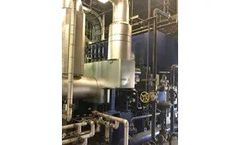
The Facility commenced initial operations in 1992 and included four 100-ton-per-day Consumat (A Gordon Hoskinson company) and technology two/stage gasification units with heat recovery boilers and a dual/train air quality control system consisting of evaporative cooling towers, PAC and hydrated lime reactors, and fabric filter bag ...

As the temperatures rise and the sun blazes, staying hydrated becomes increasingly crucial. Whether you’re lounging by the pool, hiking a scenic trail, or simply running errands, the heat can quickly take a toll on your body. Proper hydration is essential for maintaining health, energy, and overall well-being during hot weather. In this post, we’ll explore why staying ...

Summer temperatures are coming with many businesses, farms, and ranches facing a common challenge: how to manage the intense heat in working environments to ensure employee welfare, animal health, and crop productivity. We will explore together the importance of coping best with the heat and what effective solutions we can apply to improve environmental conditions. ...
Heat exchangers are an effective means of absorbing heat and then transferring it from a location where it isn’t wanted. They can use several mediums to facilitate thermal transfer, most commonly air and water, but also water glycol mixtures, or steam. The material, number, and shape of the heat exchanger’s tubes can also affect heat transfer. From air conditioners and heaters to ...
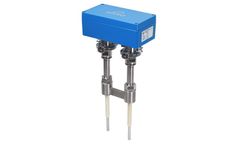
Customer: Cement plant in Germany Installation: In the inlet of the evaporation cooler Product: Different dusts Function: Monitoring of the air volume for more process safety and energy savings ...
ByENVEA

Typical Challenges in Orchards Managing an orchard comes with several challenges. Pest and disease control is a constant battle to protect trees and ensure high-quality fruit. Weather fluctuations, including extreme temperatures and storms, can harm tree health and productivity. Adequate water management, by balancing irrigation and drainage, is crucial for optimal growth. Nutrient management ...

They are also using more environmentally-friendly cooling systems and natural refrigerants. Alternative cooling technologies such as evaporative cooling and chilled beams offer a more sustainable and energy-efficient approach to cooling buildings compared to traditional air conditioning systems. ...
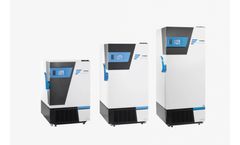
The two cascade solution, is two refrigeration circuits connected so that the evaporator of one cools the condenser of the other, facilitating the condensation of the compressed gas in the first circuit.Air-cooled condensers are generally used in laboratory ULT freezer systems. They consist of tubular batteries (copper or copper-aluminium) ...
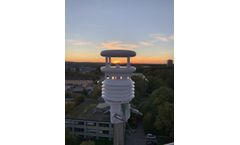
OTT HydroMet experts Katja Weber, Application Development Manager and Torsten Dose, Technical Support Manager recently attended a groundbreaking ceremony for a unique monitoring application. This cutting-edge, innovative engineering project is known as ...

Their capacity to maintain warmer air at floor level, where it is required, throughout the winter can result in energy bill savings of up to 30%. Aeration through evaporation. The evaporative cooling effect is one of the best characteristics of fans. The major benefit of HVLS fans includes energy saving. Large buildings’ ...
Among them, solar energy sludge drying and electric energy sludge drying are the main applications, and electric energy sludge drying is currently the most widely used and plays an irreplaceable role. Evaporation, dehydration and drying of sludge are divided into high temperature drying and low temperature drying. ...
There is no doubt that disruptive technologies have the power to transform sustainability in the water sector, but it is important to realise that a technology does not need to be new in order to be disruptive. The widespread use of previously niche systems, or the novel use of well-established technologies like heat exchangers, can be equally transformative. ...