
Refine by
Exhaust Hood Articles & Analysis
40 articles found
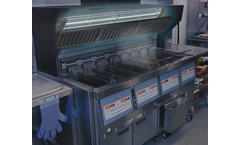
This normally requires frequent cleaning to reduce fire risk and ensure stable operation. By treating the exhaust air directly in the hood, grease and oil can be broken down in an environmentally friendly way before reaching the ventilation ducts. ...
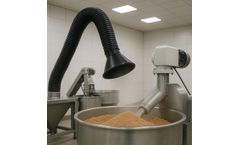
Use Proper Ventilation for Cooking Areas: Local exhaust hoods and fume extraction systems can remove steam, smoke, and oil vapors before they spread into the workspace. ...

A number of McDonald's restaurants have invested in an environmentally friendly technology that efficiently cleans exhaust air from both grease and odour ...

Fume hoods are essential in laboratories where hazardous chemicals and volatile compounds are handled. ...
Proper Fume Hood Selection Selecting the right fume hood is crucial in minimizing noise levels. ...

This abrupt airflow may affect the ability of the hood to capture and exhaust vapors, fumes, and other contaminants. In addition, you should also avoid placing fume hoods near windows or air diffusers. ...

If your lab is at risk of particulate contamination of materials, a laminar flow hood, also known as a clean bench or LFH, may be necessary. While laminar flow hoods are similar to fume hoods and biological safety cabinets, it is extremely important to note that they have separate functions. ...

As people walk by a fume hood the air currents caused by foot traffic can affect the ability of the hood to capture and exhaust contaminants. • Locate fume hoods away from windows or air diffusers. Any area that produces air currents can affect the ability of the hood to capture and exhaust ...
Typically, general-use fume hoods are set at 115 fpm. Ensure the exhaust is operating properly. A fume hood’s main job is to exhaust hazardous vapors and fumes out of the area. ...

What Is A Fume Hood Sash? A fume hood is made up of a hood body; baffles, which are partitions used to create slotted openings along the back of the hood body; airfoils, which stream-line airflow into the hood; the work surface; an exhaust plenum, which helps to distribute airflow evenly across ...

How Often Should Fume Hoods Be Tested? According to the standards set forward by OSHA, chemical fume hoods should be tested annually. ...

Along with the hood, you will need a supporting base cabinet, a work surface, and an exhaust blower. ...

But let’s dig a little deeper into how these devices function. What is the purpose of a fume hood? As stated, the primary purpose of the fume hood is to contain gases, vapors, and fumes and exhaust them out of the area. ...
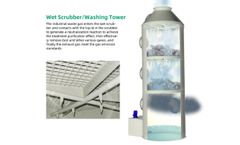
The waste gas is introduced into the waste gas scrubber through the exhaust fan, and the micro-vortex is formed by the disturbance of the spoiler ball, and the atomized spray is scattered downward. The liquid is fully blended, and the pollutants in the exhaust gas are transferred from the gas phase to the liquid phase, so as to achieve the purpose of purifying ...
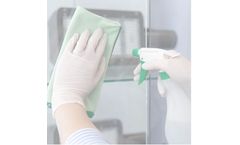
Working in a laboratory usually involves hazardous chemicals and materials. Like any equipment, fume hoods need regular cleaning to keep them in good condition. It’s important to maintain your fume hood because it exhausts harmful toxins out of the lab. ...
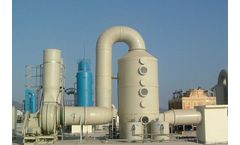
The locations where laboratory exhaust gas is generated are as follows: laboratory fume hood central laboratory Precursor Room medicine storage room Hazardous waste storage room Types of Laboratory Exhaust Different types of laboratories produce different types of waste gas. ...

A fume hood is a ventilated enclosure used to contain gases, vapors, and fumes. ...

What is so significant about the face velocity measurement of a fume hood? What is a Fume Hood Face? If we are going to talk about face velocity on a fume hood, we better know the important components of a fume hood, especially the fume hood’s face. ...

Waste gas collection The first is to collect exhaust gas. In the workshop where the exhaust gas is generated, a hood is installed directly above it. It is usually made of galvanized sheet or stainless steel. Because it is used to collect exhaust gas, it is called an air collecting hood. However, some workshop ...
The most important function of the fume hood is the exhaust function. In the chemical laboratory, various harmful gases, odors, moisture and flammable, explosive, and corrosive substances are generated during the experimental operation, in order to protect the safety of users To prevent the pollutants in the experiment from spreading to the laboratory, use a fume ...