
Extracellular Polymeric Substance Articles & Analysis
91 articles found

They consist of microbial communities embedded within extracellular polymeric substances that bind cells together and anchor them to surfaces. ...

A Chemistry-Based Approach to Fly and Odor Control Abstract Persistent fly infestations and odor generation in agricultural, industrial, and municipal systems are commonly treated as surface-level sanitation issues. However, growing evidence suggests these challenges are rooted in the structural and microbial dynamics of biofilm. This article examines the role of biofilm as a foundational ...

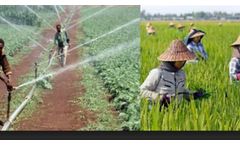
Abstract Agricultural irrigation systems represent complex physicochemical environments capable of supporting persistent microbial populations. These microbial communities establish on wetted infrastructure surfaces and contribute to long-term system instability, including emitter flow restriction, biofilm formation, and infrastructure degradation. Oxidation-reduction potential (ORP) serves as a ...

While ATP monitoring effectively measures residual organic contamination, it does not assess biofilm architecture, extracellular polymeric substance (EPS) matrices, or the survival of pathogens protected within structured microbial communities. ...
Abstract In agricultural production and post-harvest handling, inconsistent pathogen control is commonly attributed to environmental variability, application technique, or insufficient chemical strength. However, increasing evidence suggests that biofilm-mediated microbial protection plays a critical and often underappreciated role in treatment ...
How biofilm control strengthens food safety programs and supports Salmonella and E. coli risk reduction Introduction: Egg washing as a critical food safety control point Egg washing is a foundational food safety step in commercial shell egg production, designed to remove visible debris and reduce microbial contamination on eggshell surfaces prior to packaging or breaking. However, while ...
These surface-associated microbial communities form a complex extracellular polymeric substance (EPS) matrix that can retain up to 95% water, protect embedded microorganisms from oxidizing biocides, and serve as a breeding substrate for invertebrate pests such as filter flies (Psychodidae). ...
Introduction As facilities across agricultural, industrial, and municipal sectors prepare for seasonal shutdowns, winterization is often viewed as a simple operational pause: reduce flow, protect equipment, and wait for spring. But the science tells a different story. Cold temperatures, stagnation, and variable organic loads create ideal conditions for biofilm accumulation, setting the stage ...

These surface-associated microbial communities form a complex extracellular polymeric substance (EPS) matrix that can retain up to 95% water, protect embedded microorganisms from oxidizing biocides, and serve as a breeding substrate for invertebrate pests such as filter flies (Psychodidae). ...
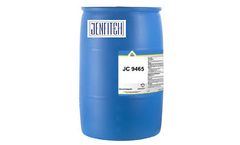
JC-9465 is a new proprietary advanced chemistry that generates ROS (Reactive Oxygen Species). It is an aqueous chelation of minerals/metals and oxychloride compounds in a liquid form. Our mineral oxychloride technology is a source of oxygen energy that is effective against 99.9999% of bacteria and viruses. By generating a high concentration of hydroxyl radical ions and other oxygen species, ...

This is the second blog in our three-part series on essential nutrients for activated sludge. Specifically, these blogs aim to deepen knowledge on why carbon, nitrogen, and phosphorus are essential nutrients, and why the 100:5:1 C:N:P ratio exists. In the last blog we discussed nitrogen, how bacteria use it, how it’s removed from the system, and why it is vital for biological treatment. ...

Biofilms are defined as communities of micro-organisms attached to a surface, or one another, and encased within a matrix of extracellular polymeric substance (EPS). The EPS makes up the largest component of the biofilm, and in the biological environment is generally composed of polysaccharides, proteins, glycolipids, blood products, cellular ...

These formations of microbial cells attach to each other, a surface, or both within a matrix of extracellular polymeric substances (EPS), creating a microenvironment that resembles a complex microbe city. ...
Summary Nitrifying bacteria make up 4-6% of the population in an activated sludge process and have limited diversity compared to heterotrophic bacteria in wastewater. This makes them more susceptible to toxicity. Nitrifiers have slow growth rates which means their population takes a long time to adapt to changes in environmental conditions. This paper incorporates our lab and field data on ...

The three-dimensional fluorescence spectrum revealed that the content of soluble microbial byproducts from extracellular polymeric substances extraction in suspended sludge was much higher than that on biofilm, and the types of pollutants were various in different regions of the reactor. ...
In order to find a model solution to simulate actual extracellular polymeric substances (EPS) solution in terms of filterability behavior, a series of experiments were conducted in a dead-end unstirred cell with 0.1 μm polyvinylidene fluoride membranes using binary/ternary mixtures consisting of sodium alginate (SA), bovine serum albumin ...
The present work describes the isolation and partial characterisation of soluble extracellular polymeric substances (EPSs) associated with microalgal bacterial flocs (MaB-flocs) generated in high rate algal oxidation ponds (HRAOPs) of an IAPS treating domestic sewage. ...

Chlorine dioxide breaks down biofilm Biofilm is a collection of microorganisms such as bacteria, that attach to a surface and begin to produce an extracellular polymeric substance that helps more of the bacteria to stick together and thrive. ...
Submerged membrane bioreactor (sMBR) systems can create new opportunities to eliminate dissolved substances present in paper mill wastewater including. In this study, a sMBR was operated for the treatment of paper mill industry wastewater at 35 h of hydraulic retention time (HRT) and 40 d of sludge retention time (SRT). ...
The membrane fouling mechanism was examined, and MLSS and the polysaccharide contents of the extracellular polymeric substances were found to be the direct causes of membrane fouling. ...