
Refine by
Fall Protection Regulations Articles & Analysis
39 articles found
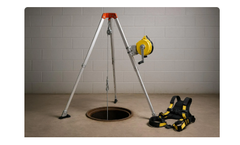
The complete confined space entry system is the integrated arrangement that supports entry, fall arrest, retrieval, and rescue for a specific space. It is not simply the structure over the opening. In distribution, the first product request is often incomplete. A customer may ask for a confined space tripod, but the actual application may require a tripod plus a retrieval device, a full body ...
For Fiscal Year 2021 (Oct. 1, 2020, to Sept. 30, 2021) The following is a list of the top 10 most frequently cited standards following inspections of worksites by federal OSHA for all industries. OSHA publishes the list to alert employers about these commonly cited standards so they can take steps to find and fix recognized hazards addressed in these and other standards before OSHA shows up. Far ...
The Occupational Safety and Health Administration (OSHA) section 1910.146 contains requirements for practices and procedures to protect employees in general industry from the hazards of entry into permit-required confined spaces. When it comes to the Construction Confined Space Regulations (26 CFR 1926 Subpart AA), there are several vital variances that employers and safety experts should be ...

OSHA regulations require that fall protection be provided anywhere employees are working at or above elevations of four feet in most general industry workplaces, and responsible employers make it a top priority to minimize falling risks throughout their facilities. Some equipment like harnesses and nets reduce the chance of ...
ByTractel
As a business owner or safety manager, you are aware of your obligation to minimize fall hazards for your employees. You faithfully follow OSHA requirements for fall protection, and safety is of paramount importance in your facility. That means you’ve installed guardrails around dangerous machinery, equipment, and materials. You’ve protected the leading edge of elevated surfaces like ...
ByTractel
Let’s review the most common indoor fall hazards in industrial facilities and the appropriate OSHA-compliant fall protection equipment to address and minimize them. ...
ByTractel
The equipment you put in place, the training you implement, and the processes and OSHA regulations you follow to provide fall protection are vital to the well-being of your people and your business. ...
ByTractel
OSHA regulations are designed to ensure occupational safety and health. In the regulations relating to fall protection and other safety guidelines, OSHA requires industries to hire the services of a “Competent ...
ByTractel
Mezzanines are useful highly useful areas of any industrial facility or warehouse, but they present an added fall hazard. Workers on mezzanines are always at risk of falling, and personnel nearby are exposed to risk from falling tools, debris, and equipment. ...
ByTractel
In this fast-paced environment, it’s essential that safety protocols are in place and enforced and that the proper fall protection devices are installed. But where should you focus your attention to ensure that your last mile facility is compliant with OSHA regulations and safe for your ...
ByTractel
With so many ups and downs, the disruptions of 2020 have left many operations and their employees unfocused and out of the familiar flow of a structured routine. Too often, this leads to a lack of attentiveness and attention as companies work towards a “new normal.” This uncertainty can’t be allowed to decrease awareness and compliance with regards to minimizing any workplace ...
ByTractel
There’s no denying it; abiding by the OSHA regulations and keeping your company compliant is the first step towards upholding your employees’ safety. But that’s just the beginning. When dealing with fall protection, the most dangerous workplace-related risk, there’s a need to provide more solidified safety measures for ...
ByTractel
Whether you’re a commercial facility owner or a safety manager, you know that it’s your duty to provide fall protection for your employees. Even though you may have a basic understanding of what your obligations are, you could still be putting your workers and your company at risk. That’s why it’s smart to periodically review OSHA 1910, which lays out specific requirements ...
ByTractel
If your facility is one of the thousands across the country shut down by the COVID-19 pandemic, you’re probably ticking the minutes away, counting dollars lost, and considering ways to remain productive. There’s no denying that the pandemic is impacting every level of business operations. If there’s any silver lining, it’s that you’ve got a moment to reassess things ...
ByTractel
People and equipment are your biggest assets. These two areas, along with a solid business plan, can be what separates you from the competition. A highly-skilled workforce and state-of-the-art machinery can boost productivity, help maintain morale, reduce turnover, and ultimately increase revenue. In other words, these two factors will not only help you get the job done right, it will help ...
ByTractel
The oil and gas industry is critical to the economy, and like many industries, it has been hit hard by the coronavirus pandemic. But despite the slump, the safety of employees working on oil rigs and refineries is still a leading OSHA priority. Downtime or not, the oil industry remains a dangerous place for workers exposed to chemical, physical, and biological hazards. In fact, downtime might be ...
ByTractel
From heavy equipment to dust, gas, liquid metal, noise, heat, chemicals, and working at heights, steel manufacturing employees face a variety of health and safety risks every day. While a wide range of safety precautions are essential, including the use of a fall safety harness and safety lanyards, industrial swing gates, and more, it’s even more important to cultivate a culture of safety ...
ByTractel
Industrial facilities of all types require substantial fall protection equipment to keep workers safe while working at height, near holes, and around dangerous machinery and chemicals. ...
ByTractel
Providing proper fall protection is the responsibility of any industrial, manufacturing, or construction company’s owner or safety manager. Having fall protection equipment, like a safety harness, available on-site keeps workers safe and avoids hefty OSHA fines for the company—but in order for them to work, your staff is going to need to know how to use them. Harnesses and lanyards ...
ByTractel
Fall safety is typically thought of as an outdoor issue in conjunction with rooftop safety, but falls can take place inside, as well. Ladders, mezzanines, loading docks, and more can present fall safety hazards in warehouses, fulfillment centers, and other facilities. OSHA 1910 carefully outlines the rules and requirements regarding fall safety measures, such as guardrail systems and metal swing ...
ByTractel