
Refine by
Fate Modeling Articles & Analysis
45 articles found
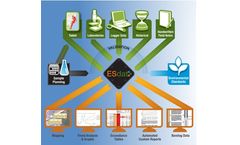
This assessment focuses on the importance of planning for the risk assessment in addition to the Remedial Investigation Sampling and Analysis Plan (SAP). Also, the Conceptual Site Model (CSM) must include the textual scope of the risk assessment, which should cover exposure units, exposure pathways, receptors, exposure factors, data requirements, and any software used to ...
Inform the development of a catchment model or conceptual site model identifying transport, fate and exposure pathways v. ...

” Our latest update: For projects where the site investigation is further along and there are already multiple monitoring wells and groundwater samples EnviMetric can use this information to make more precise predictions of contaminant extent and it does this differently than traditional fate and transport modeling. Traditional fate and ...
ByAzimuth1

In order to address increased interest from scientists and regulators in quantifying environmental risks associated with release of common down-the-drain consumer products, a single-medium contaminant fate model for the lower St. Lawrence drainage basin in Southern Ontario was developed. The model was built within the pre-existing framework ...

The movement of COPCs in the environment can be a complex process so modelers can use the AERMOD model to conduct the air dispersion modeling. Then, the AERMOD input and output files from the air dispersion modeling analysis, along with chemical-specific fate and transport variables, can be used as the necessary ...

As part of the environmental assessment of the use of Synovex® ONE, data were generated to characterize the fate of 17α‐estradiol in the environment. Studies were conducted to determine the degradation and transformation of 17α‐[14C]‐estradiol in two representative water‐sediment systems each under aerobic and anaerobic conditions. ...
Here, we introduce and demonstrate the potential of two population models for ubiquitous soil invertebrates (collembolans and earthworms) as refinement options in current risk assessment. Both are spatially explicit agent‐based models (ABMs), incorporating individual and landscape variability. The models were used to provide refined risk ...
The dominant contributor to the fate and transport of TBBPA in wastewater is biosorption by the sludge matrix. Accordingly, the goal of this research was to determine the fate kinetics, biosorption correlation models and mechanisms of TBBPA from both conventional activated sludge (CAS) and membrane bioreactor (MBR) systems. ...
The proposed Energy East pipeline project has raised concerns about potential oil spills in Saint John, New Brunswick. While environmental conditions could pose challenges for using mechanical recovery methods if a spill occurs, chemical dispersant could be an alternative. However, the application of chemical dispersant in shallow water and costal zones remains an issue of debate. ...
Process‐based multimedia models are frequently utilized to simulate the long‐term impacts of pollutants and to evaluate potential remediation actions that can be put in place to improve or manage polluted marine environments. ...
Dissolved organic carbon (DOC) plays a key role in determining the environmental fate of semi‐volatile organic environmental contaminants. The goal of the present work was to develop a method using commercially available hardware to rapidly characterize the sorption properties of DOC in water samples. ...
Population models, in particular individual‐based models (IBM), are becoming increasingly important in chemical risk assessment. ...
First, because the area of interest is large, a pesticide transport model with low computational running time is mandatory. Second, some relevant input data for simulations are not known and most are known only at coarse scale. ...
Analytical techniques were combined with geochemical modelling to study the release mechanisms of pollutants from an abandoned gold mining tailings storage facility near Johannesburg. Inverse modelling of sampled tailings pond water and experimental single extractions using various solutions indicated which combination of naturally occurring leaching solutions ...
We addressed the first question by estimating pre‐Anthropocene concentrations of MeHg in the tissues of prey and predatory fish with an integrated mercury speciation, transport and fate, and food web model (SERAFM), using estimated mercury concentrations in soil, sediment, and atmospheric deposition prior to the onset of significant human activity (i.e., ≤ 2000 ...
Models for predicting the fate of micropollutants (MPs) in wastewater treatment plants (WWTPs) have been developed to provide engineers and decision-makers with tools that they can use to improve their understanding of, and evaluate how to optimize, the removal of MPs and determine their impact on the receiving waters. This paper provides an overview of such ...
There has been a resurgence of interest, technological advancement, and implementation of biologically active slow sand filtration technologies for small-scale potable water treatment in North America. Modelling the fate and transport of pathogenic microorganisms is vital to assess technological safety and for licensing, permitting and regulatory validation. ...
Such predictions are often given as point estimates; however, little is known about to what extent uncertainties associated with QSPR predictions contribute to uncertainty in fate assessments. In the present study, QSPR‐induced uncertainty in overall persistence (Pov) and long‐range transport potential (LRTP) was studied by integrating QSPRs into probabilistic assessments of five ...
The method is based on toxicokinetic‐toxicodynamic modeling using the general unified threshold model of survival (GUTS) and calibrated using raw data from standard fish acute toxicity tests. The model was validated by predicting fry survival in a fish early life stage test. Application of the model was demonstrated by using ...
Multimedia environmental fate models are valuable tools for investigating potential changes associated with global climate change, particularly because thermodynamic forcing on partitioning behavior as well as diffusive and nondiffusive exchange processes are implicitly considered. Similarly, food‐web bioaccumulation models are capable of ...