
Refine by
Filamentous Bacteria Articles & Analysis
43 articles found
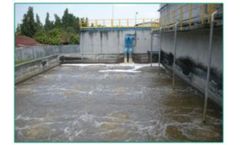
Location: SBR Plant in Southern Pennsylvania A 0.5 mgd SBR plant in southern Pennsylvania uses MICROBE-LIFT/IND and MICROBE-LIFT/OC and achieves the following ...
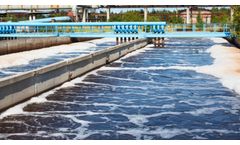
Foam is one of the most frustrating challenges in wastewater treatment operations. While it may seem like just a cosmetic issue, uncontrolled foam can have serious consequences: it carries solids into the effluent, disrupts secondary clarification, creates odor problems, and even poses safety hazards for operators working around basins and tanks. Traditional methods such as water sprays, ...

This webinar will guide you through the fundamentals of identifying problematic filamentous bacteria in activated sludge. Learn about the morphology, staining techniques, and causes of various filament types, and discover how to use microscopy as a powerful diagnostic and preventative tool. ...
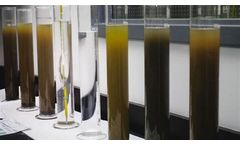
Sludge bulking remains one of the most persistent challenges in small and mid-sized wastewater treatment facilities, particularly during seasonal shifts that affect the food-to-microorganism (F/M) ratio, nitrogen-to-phosphorus (N/P) ratio, and temperature. These operational changes often trigger the overgrowth of filamentous organisms or biofilms, leading to poor sludge settling, high sludge ...
Due to their pronged tail and general shape, gastrotrichs can be commonly mistaken for a type of rotifer. While this case of mistaken identity is completely understandable I’m here to help you from making that mistake. But first, let’s get to know these lovely creatures a bit better. Rotifers come in many shapes and sizes. In fact, there are at least 1,500 different species ...
Foaming is a common problem in wastewater treatment and can occur in multiple processes (i.e., clarifier, aeration basin, aerobic digester) within a plant. Not only can foaming create hazardous working conditions for operators, but it also hinders the performance of treatment plants. Though foaming can be caused by an assortment of issues, we will cover the two most common foaming ...
Foaming is a common problem that many wastewater treatment plants encounter, and it can cause significant issues if not addressed promptly or properly. There are three primary types of foaming: surfactant foaming, filament foaming, and solids foaming. In this blog, we will explore these types of foaming and discuss how operators can address ...
As cold temperatures close in, we get more and more samples coming in requesting treatment for M. parvicella foaming. But why does this filament seem to thrive in the winter?Microthrix parvicellais a relatively easy to identify filament, normally associated with foaming. It is distinctive due to its “spaghetti-like” structure, strong Gram-positive stain, and Neisser-positive granules. ...

1. What is MBR (Membrane Bioreactor)? The MBR (Membrane Bioreactor) which was first used in the late 1960s made a revolution in the wastewater industry in the early 1990s by combining membrane filtration with a biological treatment solution to treat wastewater. It's been commonly used since then and can be seen widely practiced in the design of both new and old wastewater treatment facilities. ...

Using blast aeration, mechanical aeration, etc., a large number of filamentous bacteria and fungi in the sewage can be multiplied. These microorganisms have the ability to adsorb and oxidize harmful substances in the sewage, thereby reducing the COD and BOD of the sewage, so that the sewage can be purified. ...

After my sludge swelled (for about two or three weeks), the quality of the effluent was still good, but the removal rate of ammonia nitrogen was not high, and there were not many filamentous bacteria under the microscope, so the preliminary judgment was that the pH of the influent was too low. ...

The wastewater component is single, the growth of normal bacterial micelles is easily inhibited, and some wastewater components are beneficial to the proliferation of filamentous bacteria. 5. Insufficient dissolved oxygen, aeration has a dead zone, which is also conducive to the proliferation of filamentous bacteria, which is ...

Answer: 1. Municipal sewage swells in filament form, which is not very common, because the composition of municipal sewage is reasonable, unlike industrial wastewater with a single composition, which is more prone to swelling. 2. Adding an anaerobic tank at the front stage is indeed a better method to control filamentous bacteria. 3. From the ...
Due to the unstable water temperature and sludge load under the operating conditions of wastewater, the lack of nutrient source of microbial species in the water quality will cause the bacteria to be converted into microfilament bacteria, generally called filamentous bacteria multiply and cause activated sludge floating. ...
Summary The presence of fats, oils, and greases (FOG) is a major concern for the municipal wastewater treatment plants. Presence of FOG in waste water treatment systems can lead to buildups which can cause blockages and ineffective wastewater treatment. The point of entry of these FOG can be from numerous sources such as; industry, restaurants and homeowners. Regardless of the source, once it ...

By breaking down grease, BioCOPE decreased the food in the WWTP available for filamentous bacteria. This minimized problems caused by filamentous bacteria, such as cross-bridging and bulking in the clarifier, resulting in better settling and a clearer supernatant discharge. ...

Wastewater treatment plant operators are now used to problems related to the presence of filamentous bacteria in their wastewater. I remember a time where we would struggle with clarification problems, foaming problems, excess TSS in effluent, flocculation problems etc. and not being aware of the presence of filamentous bacteria ...

The error that could be made, when considering the distribution of filamentous bacteria in fresh microscope preparations in two dimensions rather than three is negligible. The effect of the different types of filamentous microorganisms on the settleability was also studied. The effect of the total extended filament length on the ...
Microbiological results suggested that both protozoa density and abundance of filamentous bacteria decrease under anoxic time exposures compared to oxic control conditions. ...

Just in the case of a high slowly biodegradable COD coming from FOG wastes, the process become into a specific bulking and foaming phenomena accompanied by specific filamentous bacteria, a deteriorated sludge under the state of dispersed flocculation and certain degree of bioactivity reduction. ...