
Refine by
Filter Bed Articles & Analysis
153 articles found
Project Case: 100,000 m³/h Electroplating Sludge Incineration Exhaust Treatment in Zhejiang One of CADAIR’s benchmark projects involved treating high-CO exhaust generated during electroplating sludge incineration.Project Overview Location: Ningbo, ZhejiangTreatment Capacity:100,000 m³/hMain Pollutants:CO (3,000–10,000 mg/m³) SO₂ Halogen-containing gases Organic compounds System ...

Issue - Project Brief Exeon were asked to provide a solution for a waste transfer station in Wolverhampton. As a result of the odorous process inside, the EA required odour control on the ventilation system to the building. Exeon also had strict thresholds on noise to comply with regulations. The odour control limit on the odour abatement system was 1000 odour units per ...
Issue - Project Brief A black bag waste handling site in Leeds had a number of odour complaints and the EA set a stringent 1000ouE/m3 odour level on dispersal and advised an odour abatement system be ...
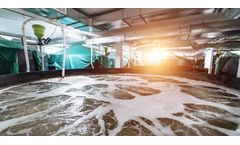
In a typical treatment plant, sewage flows through a series of tanks and filters. First, grit and large solids are removed. Then, biological processes use tiny living organisms (bacteria and other microbes) to eat the waste in the water. ...
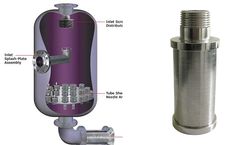
What Is a Mixed Bed Ion Exchange System? A mixed bed system combines anion and cation resins in a single vessel to achieve extremely pure water. ...

Secondary (Biological) Treatment Activated Sludge Process: Aerobic bacteria are introduced to break down organic pollutants Trickling Filters: Wastewater is passed over a bed of rocks or plastic media where microorganisms grow and digest contaminants Anaerobic Digesters: Used for high-strength wastewater, particularly in food and pharmaceutical industries 4. ...
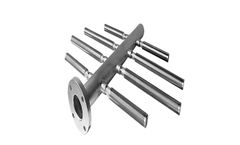
Whether designing a demineralization tank, reverse osmosis pre-filter, or a chemical processing vessel, choosing the right hub and header lateral is essential for system reliability and efficiency. ...
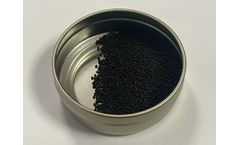
Let’s decode their superpowers: Granular (GAC):Bestfor: Fixed-bed water filters & gas purificationWhy it wins: High durability, easy regeneration Powdered (PAC):Best for: Rapid contaminant removal in liquid-phase systemsWhy it wins: Ultra-fast adsorption rate Extruded (EAC):Best for: High-flow air treatment & solvent recoveryWhy it wins: Low pressure ...
Acchieving Process Optimisation and Cost Reduction The cooling water system at a steel rolling mill is heavily contaminated with tramp oil due to various oil leaks. Small amounts of oil and very viscous grease come from the lubrication of the roll bearings. ...

When sufficient volume has been collected, the water will be pumped out of the holding tanks through distribution liners which connect to an irrigation system. Six filter beds, each of which contains a specific amended soil are then irrigated using untreated runoff. ...
Stormwater runoff enters through a kerb inlet that removes litter, into a filtration pit that removes sediments, then filters through the planting bed to a collection pipe and to an underground store for irrigating planting beds during dry ...
Selecting the most suitable filter element for a specific application can be challenging due to the wide range of options available in the market. ...
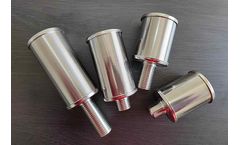
It acts as a physical barrier, keeping the media particles larger than the openings in place. This design ensures that the filter bed remains intact, promoting longer filter life and higher efficiency. ...

These microscopic organisms feed on the dead skin cells of humans and animals. They are widespread in bedding, pillows, mattresses, and upholstered furniture. When you inhale or consume dust mite particles, your immune system attacks. ...

Additionally, biochar can be used in livestock bedding or as a filter material to capture and treat runoff from farms.Afforestation and Reforestation:Biochar can also play a role in afforestation and reforestation efforts. ...
In water remediation, biochar can be employed in various forms, such as fixed beds, filters, or suspended in the water column to remove contaminants.3.3. ...
Tertiary treatment - Fish Come Back to the River Wupper Providing treatment capacity for approx. 700,000 population equivalents, the Buchenhofen Clarification Plant is the largest wastewater plant of the “Wupperverband” (Wupper River Association).The plant handles up to 370,000 m³ of wastewater per day. Looking to decrease effluent phosphate content, the plant’s ...
Successful conversion to EVERZIT® N Multilayer Filtration The Ivedik water treatment plant supplies the drinking water used by the City of Ankara. The plant now operates using over 4000 m³ of German-made EVERZIT® N anthracite filter media. In an upgrade project carried out in the years 2013/2014, the existing 56 sand filter units of the facility were converted to ...
Pre-filtration with EVERZIT® N - without silicic acid elution This desalination plant, built in 2007 in Hamma Algeria, is one of the largest of its kind in Africa. It supplies fresh drinking water for one third of the 6 million inhabitants of the country’s capital city ...
Making Lake Constance Visibly Cleaner Eriskirch is located directly on Lake Constance, Europe’s largest drinking water reservoir. In the 1970’s this unique natural resource was threatened by eutrophication due to acute phosphate contamination. The problem was immediately addressed by a number of remedial measures, the key one of which was the Eriskirch clarification plant. As Harald ...