
Flame Sensor Articles & Analysis
6 articles found

Even though combustion ion chromatography (CIC) is regarded as an up-and-coming sample preparation and analysis technique, the basic process behind CIC has already existed for many years. This blog post introduces the history of this technique, the working principle, and some applications for CIC.\r\n"}}">Even though combustion ion chromatography (CIC) is regarded as an up-and-coming sample ...
The flame sensor technology thus accelerates analyses, ensures more precise results, and reduces the amount of maintenance necessary. ...

It’s a hot, windy February day - perfect conditions for fire (in the Southern Hemisphere). Twenty-seven scientists and several million dollars of specialised equipment are gathered in a paddock of harvested wheat stubble near Darfield, New Zealand. This is the first phase of a four-year burning programme that will test a new theory on fire spread. The new theory was developed in the US ...

Thermal Conductivity (TCD) and Flame Ionisation Detector (FID) sensors have been available for decades and are the most commonly used measurement technologies. ...

Meeting site requirements The US Environmental Protection Agency (EPA) requires continuous monitoring of a Hare slack to ensure thai a pilot flame or flare flame is present. If the flame is extinguished, this can result in hazardous gases being released into the environment Flare stack operations require pilot monitoring to ensure there is a ...
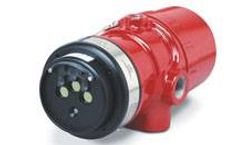
These technologies primarily use the following emissions spectra for optical flame detection: infrared (IR) ultraviolet (UV) visible spectrum (CCTV - based devices) In choosing flame detectors, it is important to recognize that they consist of window(s), optical sensor(s) – such as Geiger Muller and/or thermopiles, and electronics ...