
Refine by
Flash Testing Articles & Analysis
13 articles found
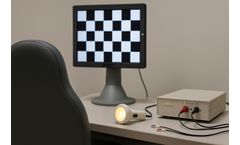
Tests based on flash stimulation do not require fixation. These tests provide objective assessments of the retinal photoreceptors and the entire visual pathway up to the visual cortex. More specifically, a combined recording of electroretinography (ERG) and visual-evoked potentials (VEP) can functionally dissect the visual pathway and identify ...

The test will have been conducted in a test tank not much larger than the product under test. ...

” The data table lists the test material, the species tested, and the plant species on which residues were aged. ...

To ensure product quality several options exist including laboratory analysis, field test kits and portable lab instruments. Laboratory testing would be the ideal solution if everyone had the budget and the time to wait for the results. ...
This short article will point out the challenges of performing oil analysis testing next to the engine test cell and make recommendations for the proper instruments to perform these tests and report the critical data that is required in any reliability program. ...
Viscosity is a great screening method that is traditionally performed as part of the testing suite for used lubricants. Direct methods include GC, flash point testing, and SAW sensing. ...

The Lubricant Technology Centre at Pangbourne, Berks, UK features laboratories capable of investigating all aspects of the technical life cycle, from research and development in fuels and lubricants, to support and quality assurance, fluid analysis and performance testing. Challenges The analytical laboratory at Pangbourne provides a comprehensive test facility ...

Flash point tests are used to show the lowest temperature that a volatile substance is vapourised into a flammable gas. ...

A researcher investigates a new asphalt additive and tests with a standard from Committee C09 on Concrete and Concrete Aggregates. ...
Traditional approaches range from direct methods such as gas chromatography and SAW sensors to indirect methods such as flash point and viscosity measurement. Most oil testing labs use gas chromatography (GC) to determine fuel content in oil and modified versions of ASTM standards. ...

This gives you a gauge of how much your engine is wearing. Insolubles test: The insolubles test measures the amount of abrasive solids that are present in the oil. ...

The test facility CIRCUS (CIRculation Under Start-up) was built to study the start-up phase of a natural-circulation BWR. During the start-up,so-called flashing-induced instabilities can arise. These instabilities are induced by flashing (i.e., steam production in adiabatic conditions) of the coolant in the long riser section, which is placed ...

The soil aqueous extracts were analyzed with a test battery of organisms of different trophic levels (photobacteria, crustacea, algae and protozoa). ...