
Flow Cytometry Technology Articles & Analysis
7 articles found

Cell Culture Assays: These assays are designed to evaluate cell viability, proliferation rates, and functionality. Flow Cytometry: This technology is employed to analyze cell populations, allowing the identification of surface markers and the assessment of cell purity. ...

Traditional flow cytometry is generally based on the detection of fluorescence emission spectra. ...

If you ask anyone who attended CYTO2024, what impressed them the most about CYTO 2024, most visitors are likely to mention the rise of imaging technology. We will analyze imaging flow cytometry from three aspects: hardware, software, and standardization. ...

Nano-flow cytometry is a revolutionary technology that has the potential to transform early disease detection and diagnosis. ...
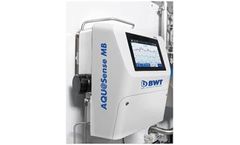
Initially used to measure mammalian cells, it has broad applications for medicine, particularly in the context of immunological analysis (Adan 2016). As technology has advanced and novel stains of specific bacterial properties have become available (Hammes 2010), flow cytometry has been applied to numerous industrial microbiological processes ...

Prilic, Mair, and Erikson employed novel methods, which included high parameter flow cytometry and Ozette’s foundational technology–full annotation using shape-constrained trees (FAUST). FAUST is a machine learning algorithm that discovers and annotates statistically relevant cellular phenotypes in an unsupervised manner. Pairing high ...

Principle of Luminex Multiplex Assay Luminex xMAP technology uses polystyrene microspheres of 5.6 microns in diameter dyed with different ratios of two red-sorting fluorescent dyes to obtain up to 100 fluorescent coded microspheres. ...