
Refine by
Fluorescence Detector Articles & Analysis
25 articles found

Modern XRF analyzers are designed for simplicity: point, press, and within seconds you get a precise breakdown of a material’s composition. But behind this straightforward user experience lies a sophisticated system of advanced components. In this article, we’ll explore what makes up an XRF analyzer, how it works, and why choosing the right configuration is essential for your ...

X-ray fluorescence (XRF) is a nondestructive analytical technique used to identify and quantify elements in various sample types. The sample is exposed to X-rays, causing its atoms to emit fluorescence back to a detector. This fluorescence is measured to identify the elements present and determine their concentrations. ...
ByB&W Tek

Under the transport of the mobile phase, different amino acids will pass through the column at different rates, achieving separation.(3) DetectionTypically, a UV-visible light detector or a fluorescence detector is used. In some cases, amino acids need to be derivatized either before they pass through the chromatographic column or after to ...

Different pigments are separated based on their chemical properties and detected using UV-visible or fluorescence detectors. HPLC is particularly effective for complex pigment profiles but requires sophisticated equipment and expertise. 3. Fluorescence Spectroscopy Fluorescence spectroscopy exploits the unique ...

Separation and DetectionDerivatives are separated using chromatography (such as High Performance Liquid Chromatography, HPLC) and quantified using a UV-Visible detector or a fluorescence detector.Mass Spectrometry1. MALDI-TOF MSMatrix-Assisted Laser Desorption/Ionization Time-of-Flight Mass Spectrometry can be used to analyze and identify amino acids and small ...

Chromatographic AnalysisSelect appropriate chromatographic columns (such as reverse phase columns) and mobile phases (such as water/acetonitrile or water/methanol gradient) to achieve effective separation of collagen or its hydrolysis products. Common detectors include Ultraviolet (UV) detectors, Fluorescence detectors, and Mass ...
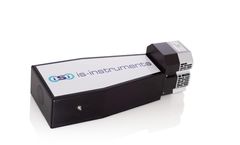
The question we hear often is, how do you know which instrument and which wavelength to choose to deliver the best results.Determining which wavelength will produce the optimum measurement results depends on the sample in question as wavelengths can affect the fluorescence, integration time and resolution. Fluorescence is an absorption effect and can sometimes ...

Fluorescence detector Fluorescence detector (FD) is a highly sensitive and selective detector that can detect compounds that produce fluorescence. ...
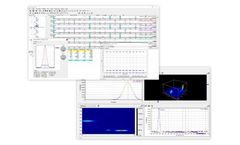
Resolution, sensitivity, tailing factor, and retention time or area precision are common parameters to determine the suitability of the system for the chromatographic assay.CDS Step 4: Data Acquisition and MonitoringThe system must be prepared for analysis by purging and equilibrating the system and column to ensure that the pressure and detector baseline are stable. This can be ...
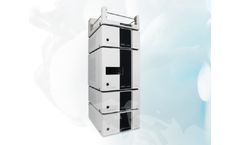
Additionally, when using an Ultra-Violet detector, Diode Array Detector or Fluorescence Detector, the specific absorbance of the solvent must also be considered. ...
Other detectors used include differential detectors, fluorescence, chemiluminescence and electrochemical detectors, and charged aerosol detectors (CAD). ELSD, CAD and differential detectors are all universal detectors, generally used for the detection of substances containing no ...
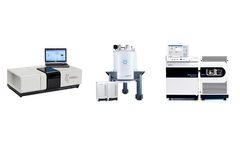
The fluorescence emission is collected by the emission monochromator which is orientated at 90 degrees to the excitation monochromator and the selected wavelength reaches the detector; typically a photomultiplier tube. ...
The products offered can support fluorescence and Raman spectroscopy, transient absorption, and UV-Vis.Industries served include Life Sciences, Geology, Material Research, Environmental Sciences and many more.Fluorescence Spectrometers: Our Fluorescence Spectrometers set the standards in both steady state and time-resolved spectroscopy. ...
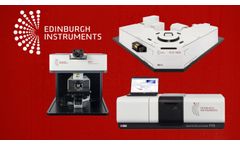
Suited for analytical and research laboratories, the FS5 can handle the speed of routine analysis and the sensitivity of demanding research requirements.Multiple detector ports allowing measurements up to 1650 nm, and lifetimes down to 25 ps in one instrument High sensitivity allows for detection of very weak fluorescence signals Absorption/Transmission ...
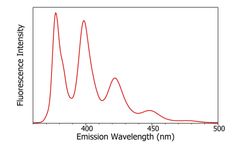
The wavelength of emission monochromator is set to a wavelength of known fluorescence emission by the sample, and the wavelength of the excitation monochromator is scanned across the desired excitation range and the intensity of fluorescence recorded on the detector as a function of excitation wavelength. ...

What does CVAF mean? What makes it a superior and unparalleled technology for mercury monitoring systems? This article answers these and many other questions about CVAF, our mercury monitoring technology. Read on to learn more. 1. What does the abbreviation CVAF mean? CVAF stands for Cold Vapor Atomic Fluorescence. It is an extremely sensitive and selective measurement principle for the ...
CVAF is an extremely sensitive technology for mercury measurement with zero SO2 interference. But what does CVFAF mean and what makes it a superior and unparalleled technology for mercury monitoring systems? This article answers these and many other questions about CVAF, our mercury monitoring technology. Read on to learn ...

The addition of a true online organic carbon detector (OCD) to the combination of UV, fluorescence and multi-angle light scattering detectors provides a unique tool for a better understanding of the composition of dissolved and particulate organic matter (OM) present in environmental samples. ...
The fate of fluorescing substances during the recycling of membrane backwash water (MBWW) ahead of coagulation, flocculation and sedimentation (CFS) with ultrafiltration (UF) membranes has been investigated. ...

Results From Cleanup using Supel Tox AflaZea SPE Cartridges HPLC Conditions column: Ascentis Express C18, 10 cm x 2.1 mm I.D., 2.7 µm (Product No. 53823-U); mobile phase: (A) water, (B) acetonitrile, (C) methanol (700:120:120,A:B:C) with 0.780 g potassium bromide and 230 µL nitric acid; flow rate: 0.400 mL/min; column temp.: 35 °C; detector: ...