
Food Screening Articles & Analysis
17 articles found
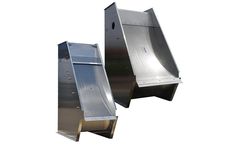
A Hydro Sieve, a static sieve screen or static wedge wire screen, is a gravity-fed screening device designed to separate solids from liquids without needing external power or moving parts. ...
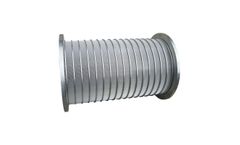
It is widely used in industries such as mineral processing, solid waste management, food processing, and more. Trommel screens are available in various configurations, including concentric screens, parallel arrangements, and series designs, to meet the specific needs of diverse applications. ...
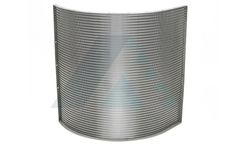
A stainless steel sidehill screen is a sieve bend that enables high-efficiency filtration and separation. Our sidehill screens are made from stainless steel wedge wire screens, featuring evenly spaced, durable wires that create slots perfect for separating solids from liquids. ...
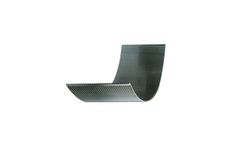
Wedge wire screens, also known as profile bar screens,V wire screens, are essential components in various industrial applications where filtration, separation, and particle retention are critical. ...

This subject holds the utmost importance for public health, food safety, pharmaceuticals, environmental screening, and beyond. This article aims to elucidate on the significant realm of microbial detection, its technologies, and its undeniable impact on the broader scientific community. ...

Johnson wedge wire screens, also known as V wire screen filters or profile wire screens, are indispensable filtration devices widely employed across diverse industrial sectors. ...

ST-50E shredding packages of cereal, pet food etc. The vibrating screen seperates the food for reuse as animal feed and the packaging for ...
ST-25E shredding canned goods for separation of liquids and solids using a vibrating screen. The food products where then separated for further processing. ...

Fourier Transform Infrared (FTIR) - spectroscopy is used typically in testing laboratories for understanding materials and products, identifying chemical compounds in solids, liquids and gases, consumer products, paints, polymers, coatings, plastics pharmaceuticals, foods and beverage – screening for impurities, deformulation, metals, contamination and ...
You can find Campylobacter and E. Coli in contaminated food and water. These are the most commonly ingested bacteria. They are the common culprits for gastroenteritis. ...

However, since the International Agency for Research on Cancer (IARC) – the specialized cancer-research agency of the WHO – found that glyphosate was «probably carcinogenic to humans» (Group 2A) in a report published in March 2015, the chemical repeatedly made headlines.1 Experts were then divided over whether glyphosate should be re-approved after the expiry of its EU ...

And it’s finding applications as diverse as pesticide screening, food safety, natural product analysis drug development, petroleomics, and metabolomics . ...

During a 12–month period, 138 tissue samples (muscle, liver, kidney) were screened for antibiotic residues (ARs), using the five–plate STAR test. ...

The osprey (Pandion haliaetus) is a well‐known sentinel of environmental contamination, yet no studies have traced pharmaceuticals through the water‐fish‐osprey food web. A screening‐level exposure assessment was used to evaluate the bioaccumulation potential of 113 pharmaceuticals and metabolites, and an artificial sweetener in this food web. ...
The intake fraction (iF) is the fraction of an emitted mass of chemical that is ultimately taken in by an entire population and it is used as an indicator of human health potential impacts related to environmental chemical persistence and bioaccumulation in the food chain. In chemical screening applications, the iF can be predicted using multimedia and ...
Food defence requires the means to efficiently screen large volumes of food for microbial pathogens. ...
Food handlers play a major role in the transmission of foodborne diseases. ...