
Refine by
Forest Ecosystem Articles & Analysis
109 articles found

These standards ensure that activities such as waste disposal, emissions control, water usage, and resource management are conducted to protect human health, ecosystems, and natural resources.Key Takeaways on Environmental Compliance Standards 1. ...
Charcoal derived from forest waste reduces reliance on deforestation for wood-based charcoal. This shift alleviates pressure on forest ecosystems, preserving biodiversity and promoting reforestation initiatives. ...

This practice not only decreases pressure on forest ecosystems but also promotes the efficient use of available resources. 2. ...
Wood charcoal is a renewable energy source when derived from sustainably managed forests. The wood charcoal making machine supports this concept by providing a way to convert wood into a high-energy fuel. ...
Unlike conventional charcoal production methods, which involve clear-cutting of forests and release substantial carbon emissions, sawdust charcoal utilizes waste material, effectively sequestering carbon that would otherwise contribute to greenhouse gas accumulation. 2. ...

As technology develops, sound has become an increasingly important way of measuring the health and biodiversity of ecosystems: our forests, soils and oceans all produce their own acoustic signatures. ...
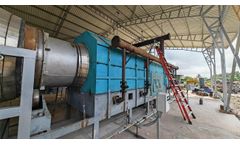
Environmental Conservation: A Core Pillar Biodiversity Preservation Bamboo cultivation, integral to the bamboo charcoal making machine, aids in biodiversity preservation. Bamboo forests act as ecosystems, supporting diverse flora and fauna. By utilizing bamboo sustainably, the machine contributes to the conservation of these habitats. ...

Ever stopped to think about what happens when industrial wastewater is not treated? Picture this: A once thriving river, full of life and energy, now chokes on the harmful byproducts from factories upstream. This is the reality of the environmental impacts of untreated industrial wastewater discharge. We often take for granted that clean water will always flow from our taps. But where does it ...

These changes can alter food web dynamics, nutrient cycling, and other ecological processes, leading to broader ecosystem changes. Terrestrial Ecosystems Due to air pollution, terrestrial ecosystems such as forests, grasslands, and deserts face numerous challenges. ...

Farmers use wireless devices like their mobile phones or a tablet to receive and transmit data and record-keeping between the office, the field, their equipment and the team, allowing real-time production decisions and creating one interconnected farm management unit. 5 Ways Tech is Changing the Way We Grow Crops The tech revolution and modern farm management are rapidly creating a whole new ...
ByAGRIVI

Measuring forest soil carbon flux gives an insight into the health of forest ecosystems and provides feedback on the effects of global warming. ...

Water is essential not only to health, but also to poverty reduction, food security, peace and human rights, ecosystems and education. Nevertheless, countries face growing challenges linked to water scarcity, water pollution, degraded water-related ecosystems and cooperation over transboundary water basins. ...

This study assesses the PAI Autonomous System from Transmittance Sensors at 57 degrees (PASTiS-57) instrument as a low-cost transmittance sensor for simultaneous monitoring of LSP and LAI in forest ecosystems. In a field experiment, spring leaf flush and autumn senescence in a Dutch beech forest were observed with PASTiS-57 and illumination ...
ByHiphen

On 5 June 2021, World Environment Day will open the decade dedicated to ecosystem restoration. The United Nations has chosen the motto “Reimagine, recreate, restore” to celebrate it. For years, we have exploited and destroyed ecosystems, even though human survival depends on their health. This is the moment to change course! Investing in ecosystems means investing in our future. ...

” In line with our mission, we focus on the UN’s SDGs on which we can have a direct impact: 6.3 By 2030, improved water quality by reducing pollution, eliminating dumping and minimizing the release of hazardous chemicals and materials, halving the proportion of untreated wastewater, and substantially increasing recycling and safe reuse globally. 6.6 By 2020, protect and restore ...
Acid rain – NOx interacts with water, oxygen, and also with other substances in the air to form nitric acid which falls on the earth in the form of rain, fog, snow, or dry particles. Acid rain harms sensitive ecosystems such as lakes and forests by making them acidic and unsuitable. ...

Factors such as migration, population growth, and increasing demand for fuel wood, expanding agricultural activities and a lack of alternative sources of employment and income for the population pose a threat to the environmental, economic and social functions of Cameroon’s forest ecosystems. Paradoxically, the poor are heavily concentrated in the most ...

The benefits to society overall is a reduction in - deforestation, illegal logging, costs of forest management, forest fires, and costs of forest mapping. Who Can Use Precision Forestry? ...
If you are looking for a classic example of the circle of life, consider the forest canopy structure. A forest’s canopy structure is influenced by environmental and soil factors, and it also influences these factors in return. It is an aspect of forest ecology that is receiving more attention in this age of climate change emergency. The canopy structure is often overlooked, with most of the ...

Gasmet devices are, for example being used in boreal forest ecosystem research and in finding out the trees’ role in the GHG dynamics. ...