
Refine by
Forest Inventory Articles & Analysis
11 articles found
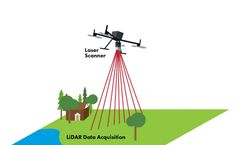
Forestry Management and its Technology Effective forest monitoring and management is significant for forest conservation and proper utilization. ...

The benefits to society overall is a reduction in - deforestation, illegal logging, costs of forest management, forest fires, and costs of forest mapping. Who Can Use Precision Forestry? ...
The range of applications of canopy cover analysis is truly astounding. Canopy analysis derives its usefulness from the vitality of the canopy. Many methods to measure canopy cover have been developed in the last 80 years to meet various objectives. Not surprisingly, there have been several comparisons of the tools in different parts of the world. A general knowledge of canopy cover and the ...
Canopy Analysis for Crop, Forest & Plant Research The range of applications of canopy cover analysis is truly astounding. ...

By blending resources from the Forest Investment Program (FIP) and other sources, Brazil aims to simultaneously address rural poverty and deforestation by conserving its fragile ‘cerrado’ ecosystem. It will use FIP money to improve the management of the ecosystem by deploying forest information tools such as remote sensing monitoring, ...
Key Challenges to Measuring Agricultural Emissions Reporting agricultural emissions in GHG inventories is a decidedly complex endeavor, which can hinder reduction efforts. ...
Forest carbon monitoring is critical to evaluating whether policies aiming to reduce carbon dioxide emissions from forest change are achieving their goals. ...
Four types of forest carbon offset projects exist—reforestation, afforestation, forest conservation/avoided conversion, and improved forest management. Forest carbon offsets can create an incentive for southern woodland owners to engage in land management practices that retain or restore forests and ...
The seven MCPFE sustainable forest management (SFM) indicators to be reported by forest types are presented (forest area, growing stock, age structure/diameter distribution, forest damage, tree species composition, naturalness, deadwood). ...

Abstract The biomass carbon (C) stock of forests is one of key parameters for the study of regional and global carbon cycles. Literature reviews shows that inventory-based forest C stocks documented for major countries in the middle and high northern latitudes fall within a narrow range of 36–56 Mg C ha−1 with an overall area-weighted ...
The objective of this study was to assess the influence of vegetation type, climate, topography, and management history on the distribution and abundance of eight selected nonnative plant taxa in forests in western Oregon. These eight taxa were selected as being reliably detected by a multi-resource inventory of 1127 systematically-placed plots on nonfederal ...