
Refine by
Forest Soil Articles & Analysis
86 articles found

It’s long overdue. The world’s forests, rivers, oceans and soils provide our food, air and water, as well as raw materials for the goods and services that power our economies. ...

As technology develops, sound has become an increasingly important way of measuring the health and biodiversity of ecosystems: our forests, soils and oceans all produce their own acoustic signatures. ...

For example, it is applicable for exploring the microbial physiological metabolism process of single-carbon compounds (such as methane) in forest soil and lake sediment, the microbial degradation process of pollutants, the microbial-mediated soil material and energy cycling process, and the microbial assimilation and utilization process of plant ...
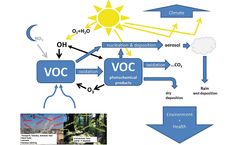
Common VOCs are benzene, toluene, xylene, styrene, trichloroethylene, chloroform, trichloroethane, diisocyanate (TDI), diisocyanatotoluene, etc.VOC SOURCE VOCs mainly come from two natural and anthropogenic factors, namely forests, oceans, soils and human activities. Industrial VOC emissions involve many industries. ...

Their exploration of the past in pursuit of new medicines even led to the collection of fungus in soil in remote rain forests. Scientists have used these intricate digital databases to research target molecular matches between diseases and cures. ...

Being unaware of various weather parameters and soil parameters that affect the quality and quantity of production and decreases profit. ...

Measuring forest soil carbon flux gives an insight into the health of forest ecosystems and provides feedback on the effects of global warming. ...
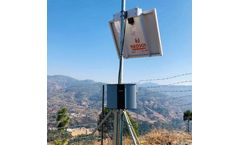
“Air pollution is turning Mother Nature prematurely gray“ Irv Kupcinet Contributing factors of Air Pollution in Mountains Lately, there is a rapid change in the mountain ecosystem. Air pollution in mountains, soil erosion, forest fires are some of the signs through which we observe this change. ...

Achieving Greater Terrain Flexibility Across Challenging PV Solar Sites with DuraTrack Utility-scale power plant projects around the world are running into a common challenge. The ideally flat sites are either drying up or being used for other purposes, meaning PV plants need to find solar solutions that enable terrain flexibility and allow EPCs, designers, developers, and operators to maximize ...

Whereas, the natural sources of particulate matter are wind-blown dust from open land, pollen, spores, mold, dirt, soil erosion, and forest fires. Meanwhile, anthropogenic sources of PM10 include: Burning fossil fuels such as gasoline, oil, diesel, or wood, Also, waste burning activities Dust emitted from unpaved and also the paved roads Crushing and ...
Simultaneously, the natural sources of particulate matter are wind-blown dust from open land, pollen, spores, mold, dirt, soil erosion, and forest fires. Whereas, anthropogenic sources of PM2.5 include: Burning fossil fuels such as gasoline, oil, diesel or wood, etc. ...

FutMon project Delta‐T Profile Probes have been installed at four sites across the U.K. to provide soil moisture data as part of FutMon, an EU Life+ project. The aim of FutMon is to create a Europe‐ wide long term forest monitoring system. ...

This study increases our knowledge of the quantities of mercury and methylmercury (MMHg) in water and of suspended matter in different contexts of disturbance of the soils, in French Guiana. The need Potential sources of mercury directly related to soils and sediments are both natural (leaf litter, sediments and colloids) and anthropogenic (mercury of historical and current anthropogenic origin ...
ByBRGM

Precision forestry takes advantage of the understanding of ecological processes in forests, which has been accumulated in the last decade. Instead of following a single plan for the entire area, accurate data and advanced analytics can optimize and fine-tune management decisions to suit site conditions, such as soil type and fertility, slope, etc. ...
The cover can be continuous, as in primary forests, or discontinuous - with gaps - as in orchards. Canopies in tropical and temperate forests can be important habitats for many animals and plants. ...

Waterways in the Cantareira forest north of São Paulo form part of the cities natural water infrastructure. ...

Haikarainen is part of a research group that focuses on emissions of CH4 (methane) from trees in boreal forest ecosystems. They are currently conducting research on greenhouse gases from soil and tree bark in Sweden. ...
Tupek’s research specializes in greenhouse gases, including measuring and modelling of CO2, CH4, N2O (carbon dioxide, methane and nitrous oxide, commonly known as laughing gas) in forests and peat lands and their interface, and modelling carbon capture in European forests, testing widely used soil carbon models with extensive datasets in ...

In various conceptual models, the shape parameter (β) of the storage capacity curve, representing the non-linear relationship between relative soil moisture and runoff, determines runoff yield given certain circumstances of rainfall and antecedent soil moisture. ...

Countries adopting the Kyoto Protocol can fulfill the carbon budget criteria by creating soil CO2 sinks on agricultural and forested lands. The global carbon cycle, weather and climate are all heavily influenced by soil moisture. ...