
Refine by
Forestry Articles & Analysis: This-Year
15 articles found
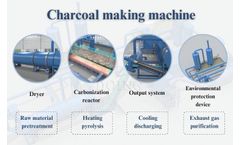
Continuous, High-efficiency Operation: Supports continuous feeding and discharging with high processing capacity; ideal for the large-scale processing of agricultural and forestry waste, thereby enhancing the project's overall return on investment. ...

Businesses located near agricultural regions or forestry operations often have access to low-cost or even free biomass waste. ...
Produced through the pyrolysis of agricultural and forestry biomass, biochar can permanently store carbon while creating valuable by-products such as renewable energy and bio-oil. ...
The transition toward sustainable resource management has increased the importance of technologies capable of converting agricultural and forestry residues into valuable products. Among these innovations, biochar production has emerged as a practical strategy for maximizing biomass utilization while reducing waste generation. ...

Introduction Road maintenance is chronically underfunded in most countries. The World Bank estimates that road agencies in developing countries receive, on average, only 30–50% of the funding needed to maintain their networks in good condition. The consequence is well-documented: roads deteriorate faster than they are maintained, rehabilitation backlogs grow, and the eventual ...
The increasing generation of agricultural residues, forestry byproducts, and organic waste has created significant challenges for waste biomass management. ...
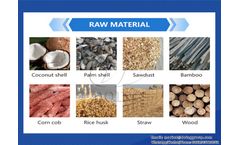
For biochar that improves soil, choose farming and forestry leftovers, like rice husks, crop stalks, and sawdust. For making activated carbon, the best choices are fruit shells-based raw materials, such as coconut shells, walnut shells, and apricot kernels. ...
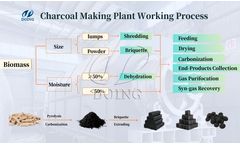
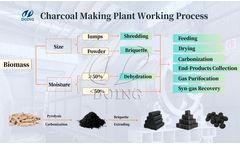
Although both utilize agricultural and forestry waste as raw materials, they differ fundamentally in terms of their manufacturing processes, physical forms, and final product value. ...
Biomass residues, including agricultural byproducts, forestry waste, and organic industrial discards, contain latent energy that can be efficiently recovered through carbonization processes. ...
Agricultural Processing Residues: Such as fruit pomace, soybean dregs, spent grains (brewery waste), residues from traditional Chinese medicine processing, etc. ② Forestry Waste Prunings from Fruit Trees and Timber Forests: Such as tree branches, vines, dead branches, fallen leaves, etc. ...
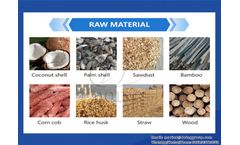
Abundant Biomass Feedstocks: Lowering Production Costs Indonesia possesses vast and diverse biomass resources, providing natural cost advantage for charcoal production. Whether in the form of agro-forestry residues—such as palm shells, coconut shells, and rice husks—or waste generated during wood processing, these materials serve as high-quality feedstocks for ...
While wood has traditionally been the primary source, there is an increasing focus on using agricultural waste, forestry residues, and even municipal solid waste for biochar production. ...
Moreover, biochar can neutralize acidic soils and immobilize heavy metals and pollutants, reducing their bioavailability to plants and preventing contamination of groundwater and surrounding ecosystems.Another notable advantage of biochar is its role in promoting circular economy by valorizing agricultural and forestry waste. Each year, the world generates approximately 1.4 ...
Understanding Biochar and Its Role in Carbon Sequestration Biochar is a stable form of carbon that is produced through the pyrolysis of organic materials, such as agricultural waste, forestry residues, or even municipal solid waste. The process involves heating the feedstock in a low-oxygen environment to create a solid, carbon-rich material that can be used for soil enhancement ...
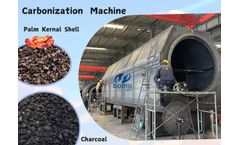
It can also efficiently convert biomass resources such as food waste and forestry waste, providing flexible and sustainable waste resource utilization solutions for plantations, agricultural processing enterprises, and the environmental protection industry. 2. ...